





Yellow Gold Heart Bracelet
A yellow gold heart bracelet carries centuries of sentiment, offering the warmth of gold alongside the enduring symbolism of the padlock motif.
Yellow Gold Heart Bracelet
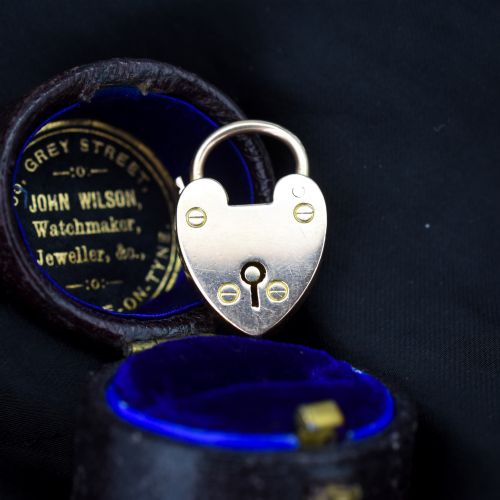
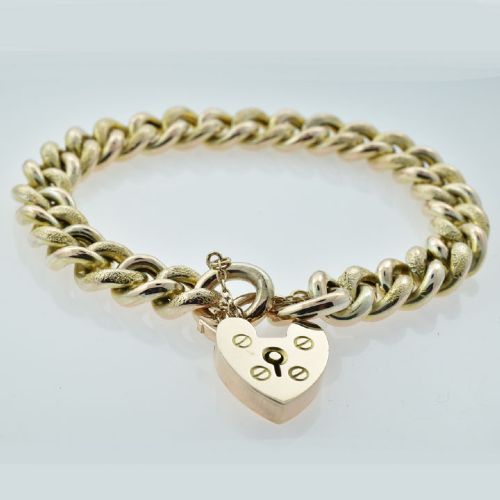
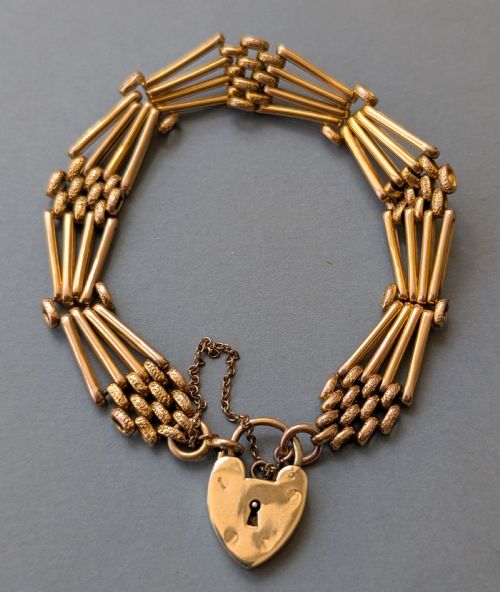
A yellow gold heart bracelet spans robust gate link constructions and delicate curb chains, frequently secured by a distinctive heart padlock. These pieces draw heavily on Victorian and Edwardian design, merging structural metalwork with romantic iconography.
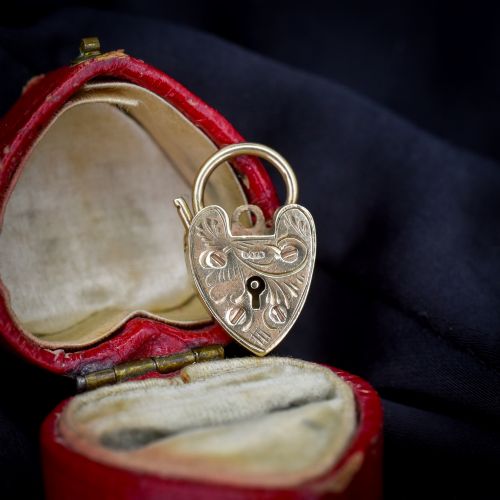
The version most commonly encountered on this page is the nineteenth or early twentieth-century gold bracelet, often featuring hand-engraved links or gem-set charms. Examples range from solid nine-carat yellow gold assemblies to rolled gold variants and hinged bangles.
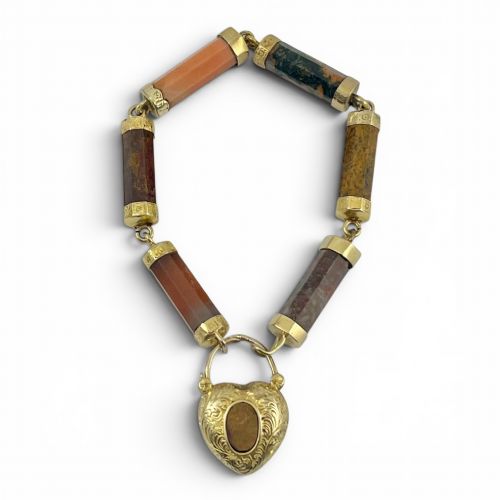
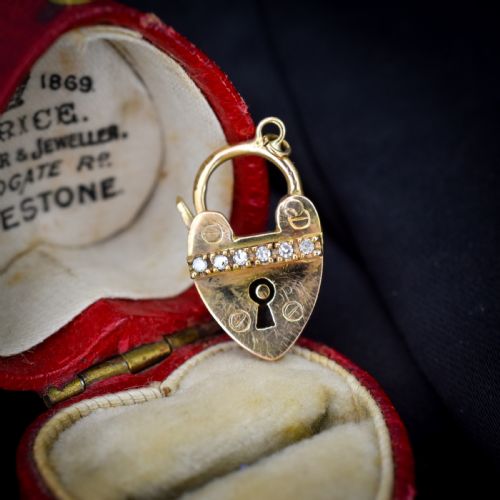
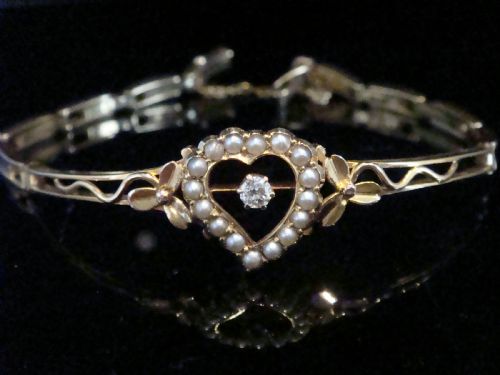
Many of these bracelets incorporate decorative elements such as seed pearls, rubies, diamonds, and Scottish agate alongside the central heart motif. The object types vary from traditional link bracelets to bangles and detachable padlock pendants.
What varies in quality
The calibre of a yellow gold heart bracelet depends on the integrity of the links, the crispness of the hand engraving, and the structural weight of the gold. Substantial solid gold gate links and well-preserved hinges command higher regard than hollow or heavily worn rolled gold alternatives.
Quality also rests on the selection and setting of secondary materials such as seed pearls, diamonds, and coloured stones. Secure claw or flush settings and intact decorative chasing distinguish finer Victorian and Edwardian workmanship from standard commercial output.
Yellow Gold Heart Bracelet Retail Price Guide 2026
Typical asking prices for yellow gold heart bracelet among the pieces listed under this phrase on Sellingantiques today, from the lower quarter to the upper quarter. They describe what is for sale here now, not the wider market.
The site's listings show periods spanning the Victorian era, Edwardian period, and the nineteen-sixties, utilising nine-carat and eighteen-carat yellow gold.
The Yellow Gold Heart Bracelet Glossary
- Padlock
- A functional clasp shaped like a padlock, frequently used as the central fastening on Victorian and Edwardian chain bracelets. It often opens via a hidden mechanism or small lever.
- Gate link
- A style of bracelet link formed of parallel metal bars connected by alternating smaller links, reminiscent of a traditional field gate. This design gained immense popularity during the Victorian era.
- Curb link
- A type of chain made of interlocking, uniform links that lie flat against the skin. It provides strength and flexibility for supporting heavy pendants and padlocks.
- Seed pearl
- A very small, natural or cultured pearl used in delicate clusters or floral motifs. They appear frequently in Edwardian and Victorian cluster settings.
- Rolled gold
- A material comprising a thin layer of gold mechanically bonded to a base metal core. It offers the appearance of solid gold at a different cost point.
Yellow Gold Heart Bracelet: Frequently Asked Questions
How do I open the heart padlock?
Most antique padlocks on these bracelets operate via a small push-button or a concealed spring lever on the side or bottom of the heart body. Gentle pressure releases the hinged shackle.
Avoid forcing the mechanism if it resists, as the internal springs can be delicate. A professional jeweller can assist if the clasp sticks.
Are these bracelets made of solid gold?
The evidence shows a mix of solid nine-carat yellow gold, eighteen-carat gold, and rolled gold materials. Hallmarks or specific item descriptions generally indicate the exact metal standard.
Solid pieces offer durability and weight, while rolled gold variants provide historical charm through a bonded metal layer over a base core.
Can I wear my bracelet every day?
While these pieces were built to last, antique gate link and charm bracelets require mindful care due to their age. Removing the bracelet during manual work prevents undue strain on the links and settings.
Gemstones like seed pearls are particularly sensitive to moisture and cosmetics, so keeping the piece dry prolongs its condition.
How can I tell the Victorian pieces apart from Edwardian ones?
Victorian pieces often feature heavier, bolder construction with chunky gate links, detailed chasing, and dark stones like agate or rich rubies. They reflect the romantic yet robust aesthetics of the nineteenth century.
Edwardian designs tend to display lighter, airier workmanship, frequently incorporating seed pearls, diamonds, and delicate openwork motifs influenced by garland style elegance.