



Yellow Gold Floral Ring
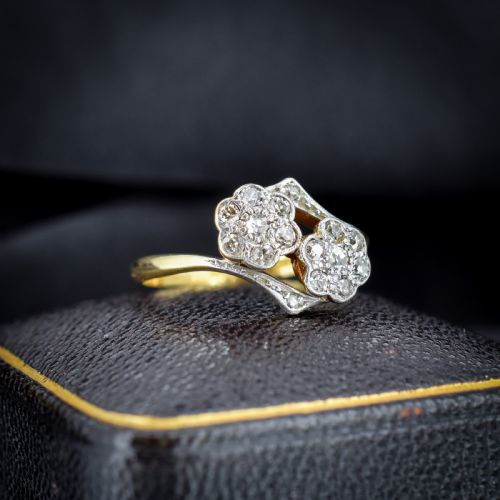
A yellow gold floral ring brings together warm metal and precious stones to form lasting botanical clusters that span Victorian to mid-century periods.
Yellow Gold Floral Ring
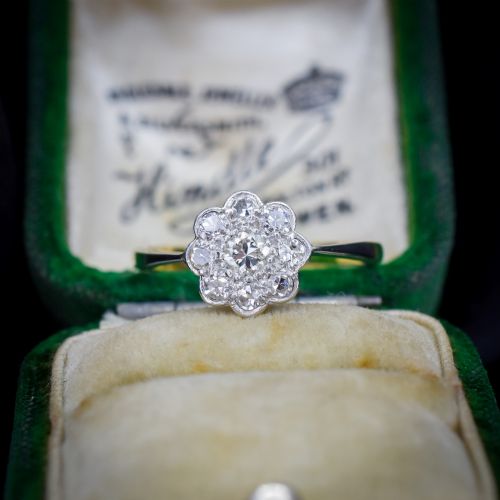
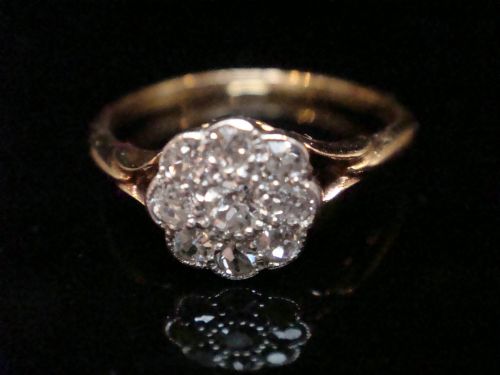
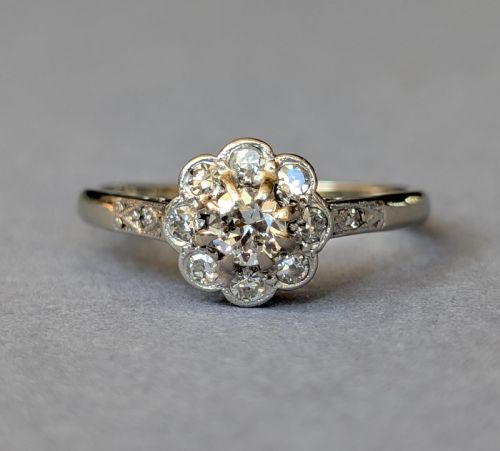
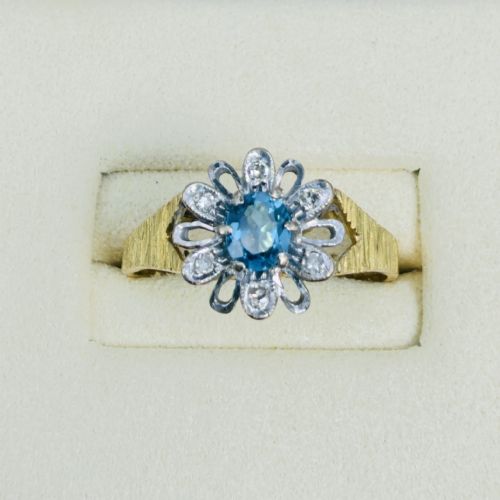
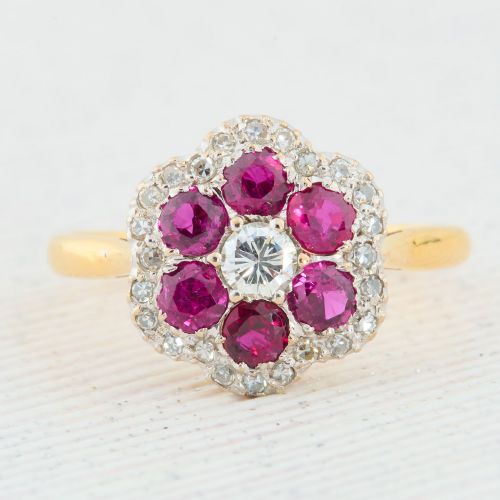
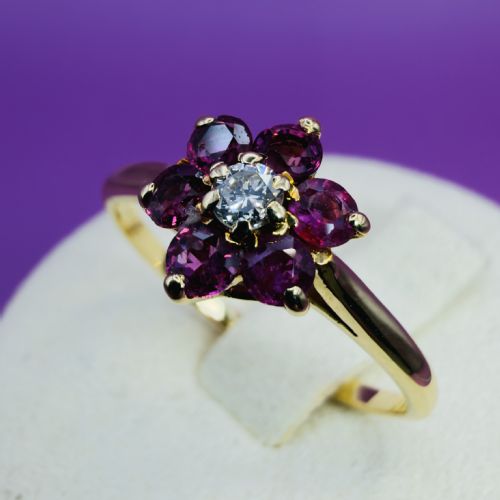
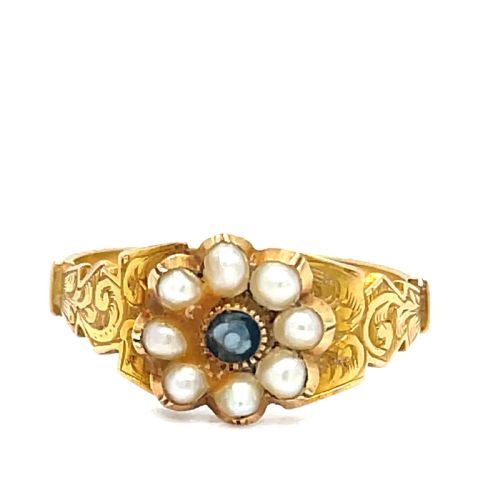
A yellow gold floral ring sits on the finger as a miniature garden, taking the form of daisy clusters, flower motifs and broader botanical shapes. These pieces emerge across Victorian, Edwardian, Art Deco and mid-century periods, showing how different eras interpreted natural forms in jewellery.
Most examples rely on a central stone surrounded by petals of diamonds, sapphires, rubies, aquamarines or emeralds, mounted in yellow gold often combined with platinum for the settings. Buyers encounter everything from early antique daisy rings to vintage cocktail iterations and mid-century designs.
Materials and construction
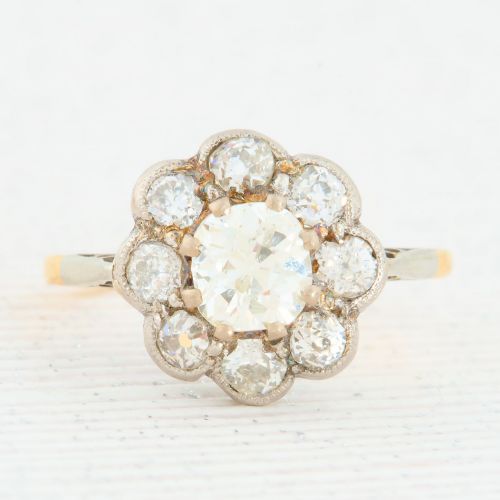
Goldsmiths utilised 9ct, 14ct, 15ct and 18ct yellow gold for the shanks and mounts, frequently pairing the gold with platinum to secure white diamonds and keep the claw work fine. Stones are set with old cut, old mine cut or brilliant cut facets that catch the light by hand rather than through modern mass production.
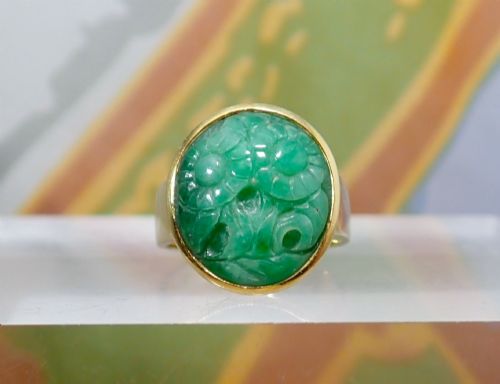
Gemstones such as pearls, turquoise, agate, garnets and jadeite are integrated alongside diamonds and sapphires, sometimes accented with enamel or delicate engraving along the band. These combinations reflect the traditional bench techniques of nineteenth and twentieth century workshops.
Current listings demonstrate periods ranging from the Victorian era and Edwardian epoch through the 1940s and mid-century.
What determines quality
The standard of a yellow gold floral ring rests on the harmony of its cluster arrangement and the crispness of the metalwork. Superior pieces display well-matched stones where old cut diamonds or coloured gems sit flush and secure in balanced petal formations.
Weight and presence also define the tier, from modest 9ct gold iterations to substantial 18ct gold and platinum settings housing larger old mine cut diamonds or rich sapphires. The finesse of the engraving and the integrity of the original claw settings separate everyday pieces from exceptional survivals.
The Yellow Gold Floral Ring Glossary
- Cluster ring
- A ring featuring a central gemstone surrounded by a border of smaller stones. This arrangement forms the core structural layout for floral and daisy designs.
- Old cut
- A hand-faceted diamond cut popular before modern brilliant cutting standards were established. These stones exhibit smaller tables and broader facets that produce a softer, candlelit sparkle.
- Daisy cluster
- A specific floral configuration where round stones encircle a central gem to mimic the petals of a daisy. It remains one of the most enduring motifs in antique jewellery.
- Platinum
- A dense, strong white metal utilised for jewellery settings from the Edwardian era onward. Its strength allowed jewellers to create minimal claws that maximise light entry into diamonds.
Yellow Gold Floral Ring: Frequently Asked Questions
How do I style a floral ring?
A yellow gold floral ring works well worn alone as a statement piece on the hand or stacked alongside plain bands that do not distract from the cluster motif.
The warm tone of the yellow gold pairs easily with modern or antique gold jewellery, making it straightforward to incorporate into everyday wear.
Are these rings suitable for daily wear?
Many examples are sturdy enough for regular use, provided they are checked periodically by a jeweller to ensure the stone settings remain secure.
Items featuring softer organic materials like pearls or turquoise require extra care and should be removed during strenuous manual tasks.
How can I tell the period of my ring?
Dating relies on examining the metal alloys, stone cuts, and overall manufacturing style visible in the mount. Edwardian pieces often combine yellow gold with platinum claw work, while Victorian versions may utilise lower carat golds or incorporate mourning elements.
Hallmarks and stamps inside the shank can provide further clues regarding the assay office and year of creation.
What is the difference between antique and vintage?
In general trade terms, antique pieces are over a century old, encompassing Victorian and early Edwardian creations. Vintage pieces typically date from later decades such as the 1940s, 1950s and 1960s.
Both categories share a history of hand craftsmanship that distinguishes them from modern manufactured jewellery.