

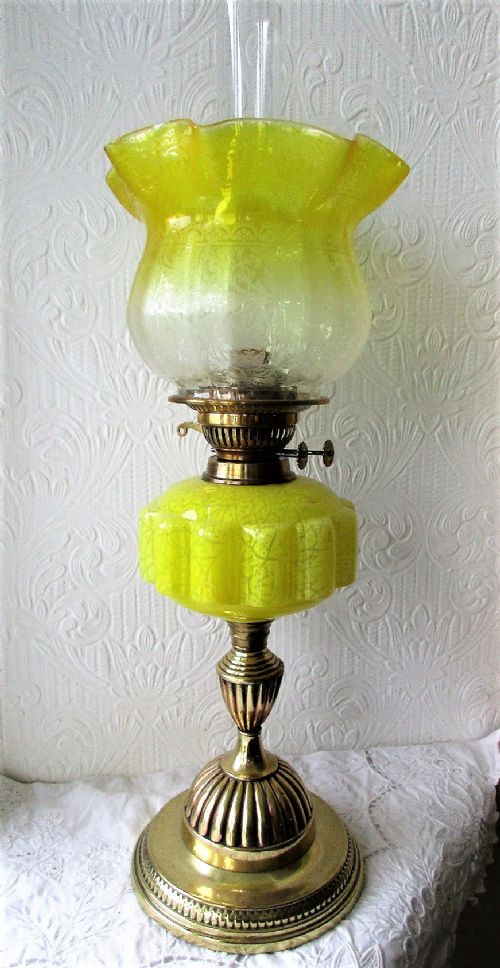


Yellow Glass Shades
Yellow glass shades bring a warm, inviting glow to a room, and these pieces span the Victorian, Art Deco and Mid-Century Modern eras in brass, gilt metal and glass.
Yellow Glass Shades
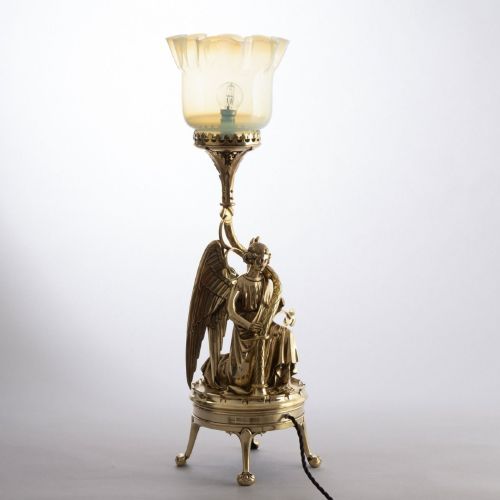
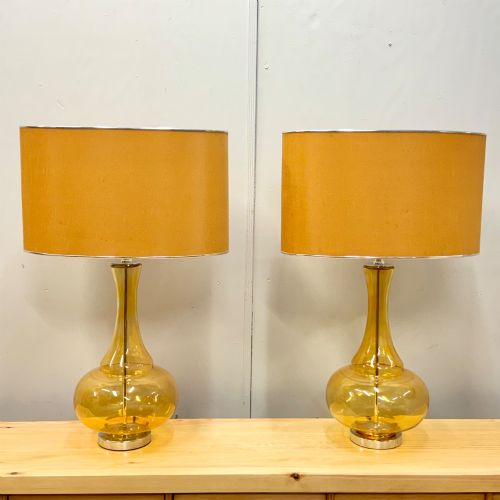
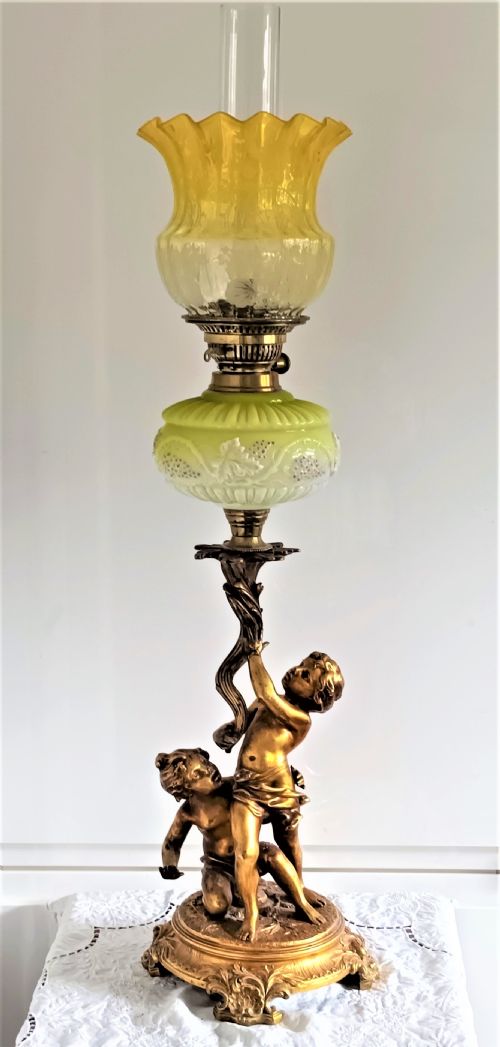
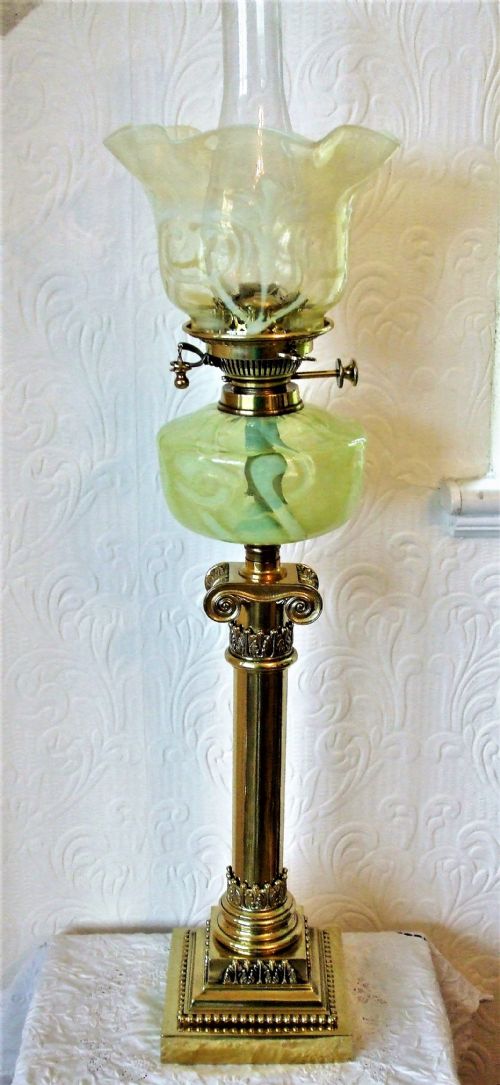
The assortment on this page leans heavily towards Victorian oil lamps and later table lamps, featuring variants in amber glass, Vaseline glass and satin glass. Forms range from monumental pairs of table lamps to hanging lamps and classical column designs. Each piece reflects the interior lighting preferences of its respective period, from ornate nineteenth-century domestic spaces to twentieth-century decorative schemes.
How they were made
The construction of these pieces relies on the combination of worked glass and cast or gilded metals. Glassmakers utilised techniques to produce amber, satin and Vaseline glass hues, shaping them into shades and fonts for domestic illumination. Metalworkers produced mounts, columns and bases in brass, ormolu, polished metal and silver plating to support the glass elements.
Assembly often involved mounting glass shades onto oil lamp burners or pairing glass bodies with metal fittings such as Hinks ionic columns. Silk shades also appear alongside glass components, demonstrating the mixed media approach used in period lighting manufacture.
Yellow Glass Shades Retail Price Guide 2026
Typical asking prices for yellow glass shades among the pieces listed under this phrase on Sellingantiques today, from the lower quarter to the upper quarter. They describe what is for sale here now, not the wider market.
Meissen porcelain cherubs occasionally find themselves moonlighting as oil lamp bases, keeping watch over nineteenth-century parlours.
What varies in quality
Quality in these lighting fixtures rests on the crispness of the metal casting and the depth of colour in the glass. Higher tier examples exhibit refined details in brass or ormolu mounts, such as intricate gilding and substantial weight in the structural columns.
The uniformity and finish of the glass components also distinguish finer pieces, whether through the distinct luminescence of Vaseline glass or the smooth texture of satin glass. The integration between metal fittings and glass elements dictates the overall harmony of the design.
The Yellow Glass Shades Glossary
- Vaseline glass
- A type of glass coloured with uranium dioxide that exhibits a characteristic yellow-green fluorescence under ultraviolet light. It appears frequently in nineteenth-century decorative items and lighting.
- Ormolu
- A technique of applying finely ground, high-carat gold to a bronze or brass object using a mercury amalgam. This process gives metal mounts a rich, golden appearance seen on decorative lamp bases.
- Peg lamp
- A small oil lamp fitted with a tapered metal or glass peg at the base designed to drop directly into the collar of a larger candlestick or stand. These were popular additions to nineteenth-century lighting arrangements.
- Ionic column
- An architectural order featuring scroll-shaped ornaments on the capital, adapted by Victorian lamp makers for brass oil lamp standards. This classical motif added formal dignity to domestic interiors.
- Satin glass
- Glass treated with hydrofluoric acid to produce a velvety, matte finish across the surface. It was widely used in Victorian glass production to soften the glare of interior lamps.
Yellow Glass Shades: Frequently Asked Questions
What periods do these shades come from?
The pieces on this page originate predominantly from the nineteenth century, encompassing Victorian and Gothic Revival designs, alongside twentieth-century Art Deco and 1930s examples.
Maker styles and manufacturing techniques reflect the shifting aesthetic preferences of these eras, moving from ornate Victorian brasswork to the streamlined forms of the 1920s.
How were oil lamps used?
Nineteenth-century oil lamps served as the primary source of domestic illumination in homes before the widespread adoption of electricity. They were placed on tables, hung from ceilings or mounted on stands to light living spaces.
Fuel such as paraffin or kerosene was burned in the font, regulated by a burner and chimney, while the glass shade helped diffuse the light.
How do I distinguish Vaseline glass?
Vaseline glass displays a distinctive transparent yellow or greenish-yellow colour in natural daylight. Its defining characteristic is a bright green glow emitted when exposed to ultraviolet light due to its uranium content.
This material was especially popular during the Victorian period for decorative shades and small tableware items.
Can these lamps be converted to electricity?
Many antique oil lamps and lighting fixtures have been adapted over time to house electrical wiring for modern use. This allows them to function as standard table or ceiling lamps while retaining their period appearance.
When living with these pieces, buyers often choose to retain the original burners or opt for professional rewiring depending on the intended placement.