
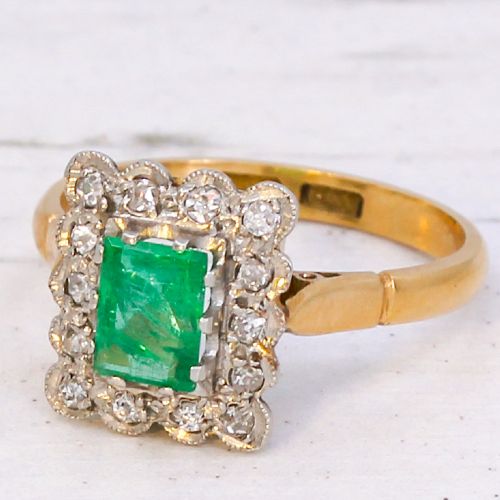
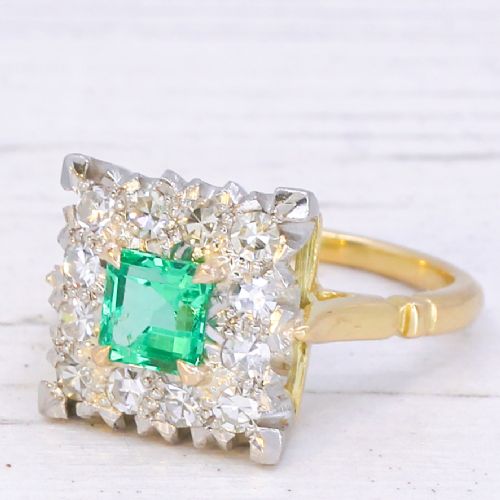
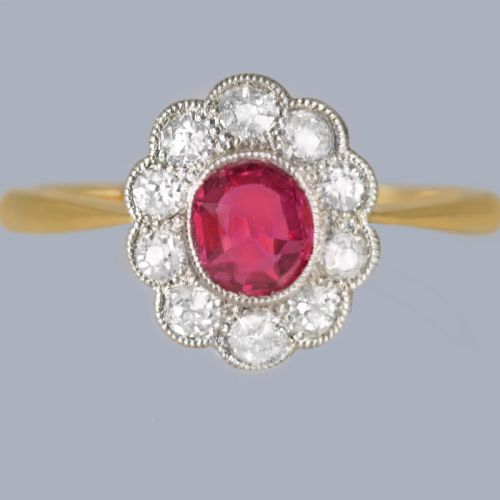


Yellow Gemstone Platinum Ring
These yellow gemstone platinum ring examples bring together bright coloured stones and durable metal, offering a striking centrepiece for everyday wear.
Yellow Gemstone Platinum Ring
When you search for a yellow gemstone platinum ring, you encounter jewels that span from the Edwardian era through Art Deco and Mid-Century periods. The selection includes clusters, daisy settings, and tailored mountings holding coloured stones alongside diamonds.
Yellow sapphires and chrysoberyls provide the bright yellow hues seen across these rings, paired frequently with platinum settings and yellow gold shanks. These designs reflect the distinct aesthetic shifts of the early to mid twentieth century.
How they were made
Platinum provides the strong, white foundation for securing stones in intricate cluster and Art Deco configurations. Combined with 18ct gold, the construction balances secure metalwork with traditional mounting techniques.
Gemstones such as yellow sapphire, emerald, ruby, and diamond are cut in various historical styles including old cuts, rose cuts, and standard facets. These stones are set into precious metal mountings designed to maximise light transmission.
Gemstones recorded on this page include yellow sapphire, emerald, ruby, chrysoberyl, blue zircon, and diamond.
What varies in quality
The distinction between tiers rests upon the clarity and saturation of the central yellow gemstone alongside the quality of accompanying diamonds. Finer examples display superior stone selection and precise geometric arrangement in the metalwork.
The integrity of the platinum and gold settings, as well as the preservation of original cluster configurations, influences the overall standard of each piece.
The Yellow Gemstone Platinum Ring Glossary
- Platinum
- A dense, strong, and durable white metal used for secure gemstone settings. It allows for delicate claw and bezel work without risking structural failure.
- Cluster ring
- A ring design featuring a central stone surrounded by a border of smaller gemstones, often diamonds. This layout creates maximum visual impact on the hand.
- Old cut
- A traditional diamond cutting style characterised by a high crown, small table, and deep pavilion. This cut produces distinctive light patterns under candlelight or low illumination.
- Cabochon
- A gemstone shaped and polished with a smooth, convex surface rather than faceted. This style is often utilised for emeralds and sapphires to highlight internal colour.
- Daisy ring
- A specific cluster formation where surrounding stones radiate outwards from a central gem like petals. This style appears frequently in Edwardian and Art Deco jewellery.
Yellow Gemstone Platinum Ring: Frequently Asked Questions
How do I clean a platinum ring?
Clean your platinum ring using warm soapy water and a soft brush to remove everyday oils and debris from the settings. Avoid harsh chemicals that might affect softer gemstones or older organic treatments.
Dry the piece thoroughly with a lint-free cloth to maintain the polish of the platinum and the brilliance of the stones.
Are these rings suitable for daily wear?
Platinum provides a robust and hard-wearing setting that securely holds gemstones during regular daily activities. Sapphire and diamond components offer high durability against surface scratching.
Weaker stones or intricate Edwardian and Art Deco mountings benefit from occasional mindfulness to prevent accidental knocks against hard surfaces.
How can I tell an Art Deco ring?
Art Deco rings display strong geometric lines, symmetrical patterns, and stylised motifs that break away from earlier flowing Edwardian curves. The integration of platinum with contrasting gemstones defines this visual language.
Settings from this period frequently utilise stepped tiers and channel or pave arrangements to emphasise architectural precision.
What is an Edwardian ring?
Edwardian rings typically exhibit lace-like platinum work, millegrain edging, and delicate floral or garland motifs. These pieces often pair diamonds with sapphires or emeralds in light, airy mountings.
The aesthetic focuses on grace and refinement, mirroring the fashion and decorative arts of the early twentieth century.