





Yellow French Accent Chair
A yellow french accent chair brings warmth and historic seating form into a room, spanning nineteenth-century salon chairs, armchairs, and slipper chairs.
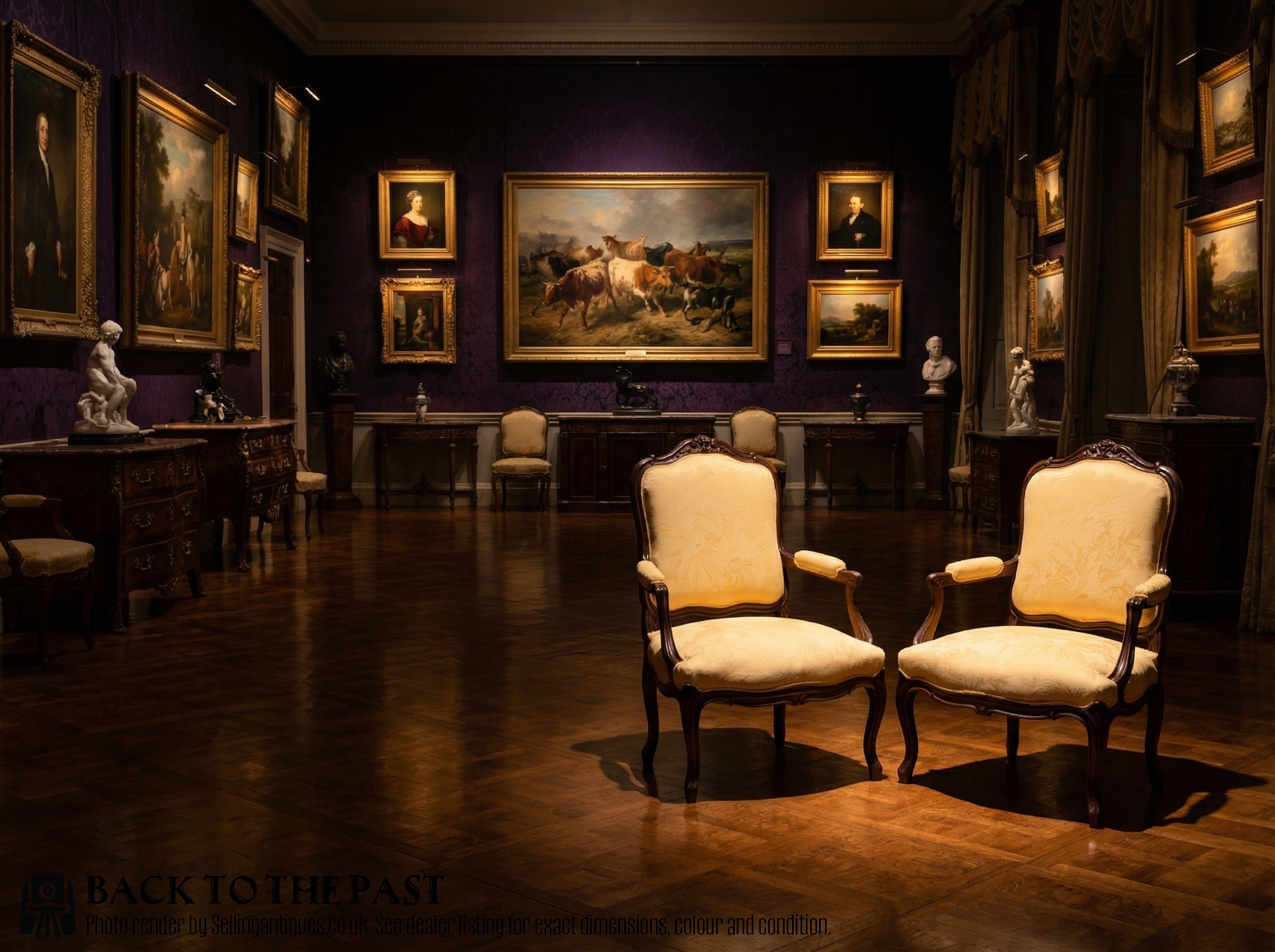
Yellow French Accent Chair
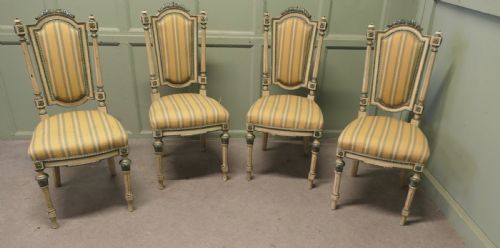
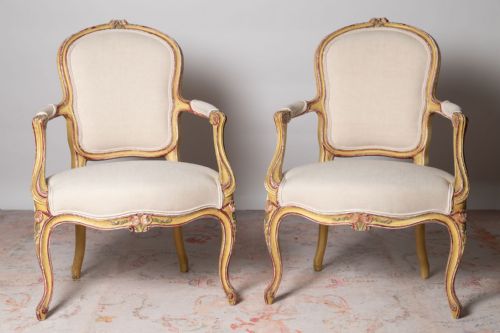
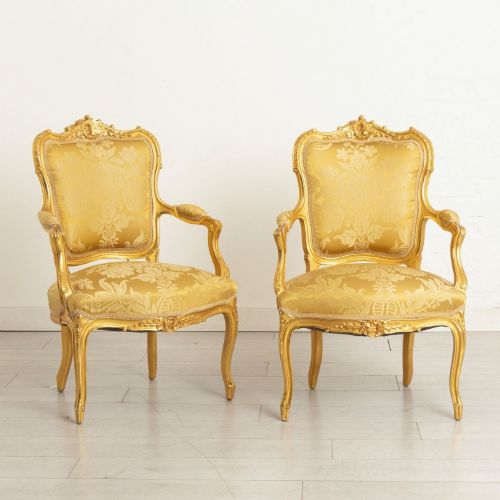
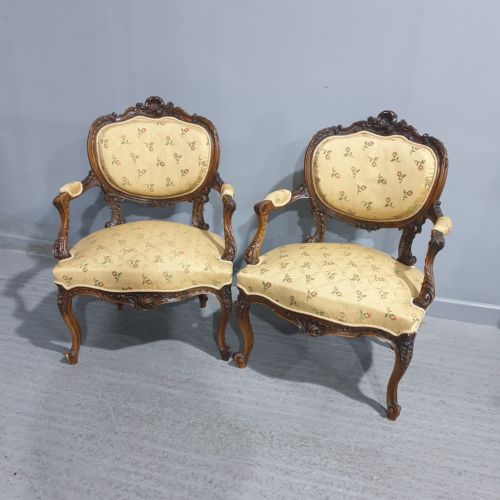
When you search for a yellow french accent chair, you encounter nineteenth-century seating forms that draw on classical French design. The inventory on this page ranges from salon chairs and side chairs to open armchairs and slipper chairs.
The periods represented stretch across the nineteenth century, including specific dates such as 1850, 1860, 1870, 1880, and 1900. These pieces often reflect the overarching influence of French Rococo, Louis XV, Louis XVI, and French Empire styles.
You are most likely to meet pairs of armchairs or individual salon chairs originating from French workshops of the period. Their forms include fauteuils and low slipper seats designed for nineteenth-century interiors.
How they were made
The structural framework of these chairs relies on traditional hardwoods such as beech, walnut, mahogany, and rosewood, alongside carved giltwood. Selected frames are enhanced with painted finishes, while others incorporate delicate bamboo or brass elements.
Upholstery techniques vary from silk fabric and textile coverings to detailed needlepoint panels and tapestry work. Many pieces retain or have been fitted with traditional sprung and stuffed padding housed within open arm or closed wooden frames.
Yellow French Accent Chair Retail Price Guide 2026
Typical asking prices for yellow french accent chair among the pieces listed under this phrase on Sellingantiques today, from the lower quarter to the upper quarter. They describe what is for sale here now, not the wider market.
The nineteenth-century timeline represented here spans decades from 1850 through to 1900.
What varies in quality
The distinction between standard examples and superior ones rests on the crispness of the wood carving and the integrity of the frame construction. Pieces exhibiting finer joinery, such as robust rosewood or giltwood framing, represent a higher order of nineteenth-century craftsmanship.
The choice of covering also defines the piece, with hand-worked needlepoint panels or bespoke silk fabric distinguishing more ambitious seating from simpler utilitarian frames.
The Yellow French Accent Chair Glossary
- Fauteuil
- An open-armed upholstered armchair originating in France, typically featuring exposed wood framing around the back and armrests. This form became a staple of nineteenth-century salon seating.
- Giltwood
- Timber that has been coated with a thin layer of gold leaf or gilt preparation. It is commonly found on decorative nineteenth-century framework.
- Needlepoint
- A type of canvas work embroidery executed with yarn, frequently utilised for historic chair seat and back panels. It adds texture and decorative pattern to nineteenth-century frames.
- Salon chair
- A light, movable chair designed for entertaining guests in a formal reception room. These pieces prioritise decorative presence alongside practical seating.
Yellow French Accent Chair: Frequently Asked Questions
Are these chairs comfortable for daily use?
Nineteenth-century seating was built with traditional padding and sprung interiors to support upright posture during social gatherings. Many examples provide a firm, supportive seat suited to periodic sitting.
Modern comfort depends on the condition of the internal stuffing and webbing. Pieces intended for upholstery allow you to tailor the seat squab to your preferred level of cushioning.
How do I identify a Louis XV style chair?
Louis XV style pieces are defined by curving lines, asymmetrical cartouche backs, and cabriole legs. These forms avoid straight edges in favour of organic, flowing contours.
Carved floral motifs and scrollwork typically adorn the crest rail and apron. The overall impression is one of lightness and movement characteristic of French Rococo revivalism.
Can I mix these chairs with modern furniture?
Placing a nineteenth-century French chair in a contemporary interior creates a deliberate contrast between historic form and modern minimalism. The carved wood and textured upholstery act as sculptural focal points.
Pairing a single salon chair or an armchair with simple modern tables allows the period piece to stand out. Neutral surroundings help draw attention to the painted or gilt frame.
What is the difference between an armchair and a slipper chair?
Armchairs feature structural armrests designed to support the arms while seated upright. They usually occupy a more prominent position in a room scheme.
Slipper chairs are built without arms and sit lower to the ground, originally intended for dressing rooms. Their compact profile makes them adaptable for smaller spaces.