

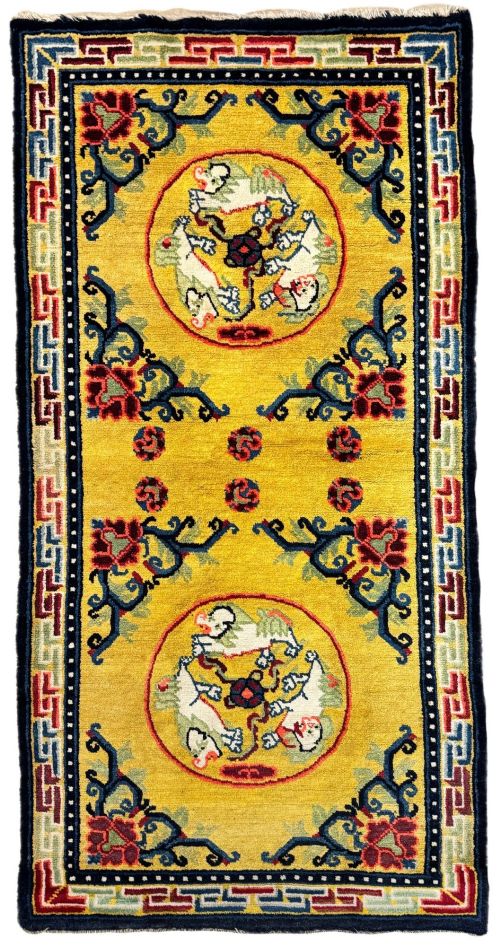
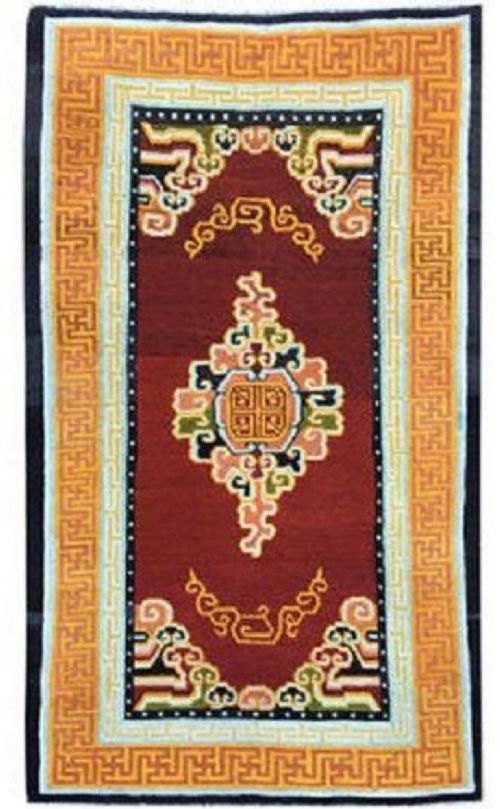
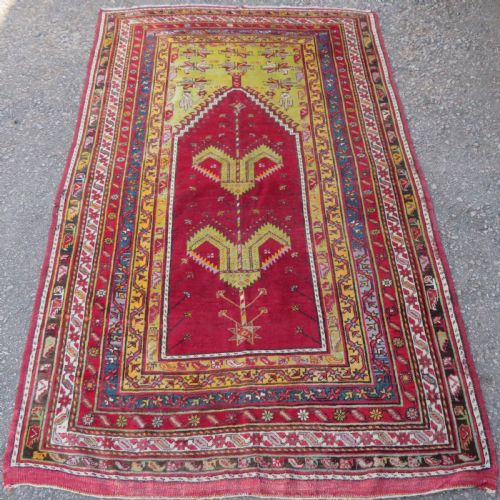


Yellow Carpet Runner
A yellow carpet runner brings warmth and distinct ground colour to a hallway, drawing the eye along long floor spaces with rich tribal and regional patterns.
Yellow Carpet Runner
When searching for a yellow carpet runner, buyers encounter elongated floor coverings originating from various weaving traditions. These examples span the nineteenth and early twentieth centuries, encompassing formats designed specifically for narrow spaces like hallways.
The selections appearing on this page include Caucasian, Kurdish, Afghan, and Central Asian tribal formats. Among these, long runner rugs and specific regional kilims provide the characteristic linear format associated with the search phrase.
Production dates range across the nineteenth century and into the 1920s and 1930s. Regional attribution connects them to workshops and tribal groups across Turkey, the Caucasus, Central Asia, and Tibet.
How they were made
Weavers utilised natural materials, predominantly wool, cotton, and hand-spun wool, to construct these runner formats. The choice of fibre dictates the weight and drape of each textile.
Construction techniques vary by region, incorporating pile knots as well as flatwoven kilim structures. These methods determine the surface texture and durability of the finished textile.
Yellow Carpet Runner Retail Price Guide 2026
Typical asking prices for yellow carpet runner among the pieces listed under this phrase on Sellingantiques today, from the lower quarter to the upper quarter. They describe what is for sale here now, not the wider market.
Listings span periods from the nineteenth century through to 1930, utilising wool, cotton, and hand-spun wool across various tribal styles.
What varies in quality
The standard of materials and dye saturation establishes the distinction between average and exceptional pieces. Finely spun wool and resilient natural dyes retain their vibrancy and structural integrity over decades of use.
Execution of design and knot density also separate individual rugs. Precise geometric motifs and balanced floral lattices reflect greater technical skill by the weaver.
The Yellow Carpet Runner Glossary
- Runner
- A long, narrow carpet format traditionally utilised in hallways and corridors. This shape dictates the proportions of the textile.
- Kilim
- A flatwoven textile produced without a pile. These pieces rely on warp and weft interweaving to create graphic patterns.
- Ground
- The background colour field of a rug upon which the primary design motifs sit. In this context, yellow serves as this foundational hue.
- Knot density
- The number of knots per square area on a pile rug. Higher counts typically permit greater intricacy in pattern work.
Yellow Carpet Runner: Frequently Asked Questions
How do I clean a fragile runner?
Gentle surface brushing and professional specialist washing preserve the natural fibres without causing dye bleed.
Avoid harsh chemical treatments or immersion in water unless handled by an experienced textile conservator.
Are these rugs suitable for heavy traffic?
Wool pile pieces withstand regular footfall in hallways when paired with a quality underlay to prevent slippage.
Flatwoven kilims experience more friction, so placing them in moderate traffic areas extends their working lifespan.
How do I date an antique runner?
Analysis of structural materials, natural dye palettes, and specific regional weaving traits helps determine the approximate period.
Stylistic conventions and structural wear offer further clues to place the piece within the nineteenth or early twentieth century.
Why choose a yellow ground rug?
A yellow ground introduces bright warmth and distinct illumination to narrow corridors or dark transitional spaces.
Specific examples feature scarce yellow backgrounds that make them visually striking additions to interior schemes.