



Yellow and Blue Brooch
A yellow and blue brooch brings together bright gemstones and rich metalwork, offering a striking splash of colour for your lapel.
Yellow and Blue Brooch
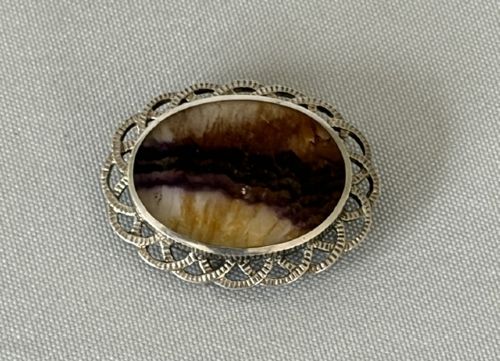
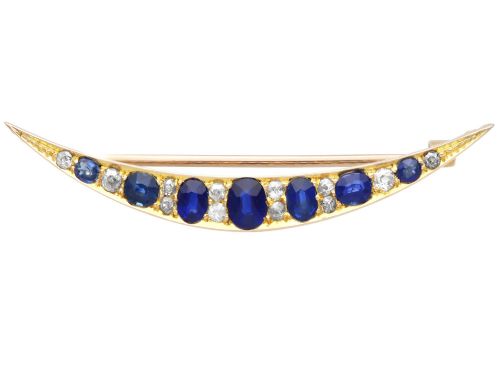
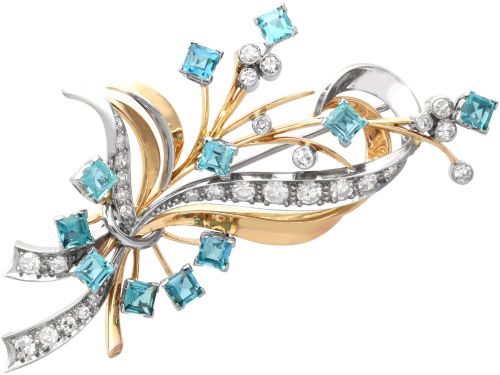
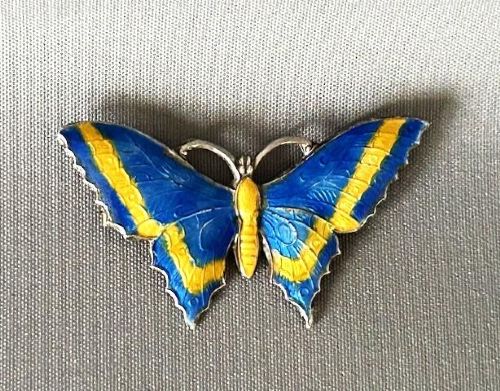
When you search for a yellow and blue brooch, you encounter a selection of historic jewels spanning the Victorian, Edwardian, Art Deco, and Mid-Century Modern periods. These pieces take various forms, including crescent brooches, bar brooches, butterfly motifs, and spray designs that double as pendants.
The yellow element typically arrives via 9ct, 12ct, 15ct, or 18ct yellow gold, whilst the blue is supplied by sapphires and aquamarines. You are most likely to meet sapphire and diamond pieces from the late nineteenth century alongside enamelled silver butterfly designs from the early twentieth century.
Makers shaped these items to serve as versatile dress ornaments, often combining precious stones with pearls or emeralds. Each period imparts its own distinct geometry, moving from ornate Victorian floral or celestial themes to clean Art Deco lines.
How they were made
Goldsmiths worked with varying purities of yellow gold, such as 9ct, 15ct, and 18ct, alongside sterling silver and palladium to set their stones. Stones were secured using traditional claw, bezel, or flush settings tailored to the specific shape of the sapphire or aquamarine.
Vitreous enamel was fused to silver bases in specific pieces to create vivid coloured wings on butterfly motifs. Gemstones including diamonds, sapphires, and aquamarines were hand-cut and arranged in balanced configurations like crescents and bars.
Yellow and Blue Brooch Retail Price Guide 2026
Typical asking prices for yellow and blue brooch among the pieces listed under this phrase on Sellingantiques today, from the lower quarter to the upper quarter. They describe what is for sale here now, not the wider market.
Some butterflies refuse to fly straight, preferring to land firmly on a Victorian lapel disguised as a sapphire.
What varies in quality
The calibre of the central stones largely dictates the standing of a piece, particularly the depth of colour in unheated sapphires or large aquamarines. Fine examples demonstrate crisp facet symmetry and harmonious proportions between the yellow gold mounts and the blue gems.
Artisanal execution in the metalwork and enamel preservation distinguish superior items from standard production. The integration of secondary stones, such as carefully matched diamond accents, signals higher workshops.
The Yellow and Blue Brooch Glossary
- Bar brooch
- A horizontal pin featuring gems or motifs mounted along a narrow metal rod. This form gained immense popularity during the late Victorian and Edwardian eras.
- Crescent brooch
- A curved ornament shaped like a waxing or waning moon, frequently set with graduated sapphires and pearls. It was often pinned near the collar or fastening of a jacket.
- Basaltic sapphire
- A sapphire originating from alkali basalt terrains, known for deep and saturated blue tones. These stones appear in late nineteenth-century gold settings.
- Vitreous enamel
- Glass powder melted at high temperatures onto a metal substrate to form a durable coloured surface. It creates smooth aquatic or wing-like tones on silver brooches.
Yellow and Blue Brooch: Frequently Asked Questions
How should I wear an antique brooch?
Pin the piece securely through sturdy fabrics such as wool lapels, heavy scarves, or structured coat collars. Using a backing clutch or proper anchor helps distribute the weight of heavier sapphire designs.
Ensure the pin mechanism fastens firmly before stepping out. Many historic brooches also include hidden loops, allowing them to transform into pendants worn on a chain.
How do I care for gold and sapphire jewellery?
Clean yellow gold and sapphire pieces using warm water, mild soap, and a soft brush to remove dust from behind stone settings. Avoid harsh chemical dips that might damage softer gems or antique enamel.
Store each item individually in a lined box to prevent scratching between different metal types. Periodic inspection by a specialist ensures prongs remain tight.
What defines an Edwardian yellow and blue brooch?
Edwardian jewels favour light, airy designs executed in yellow gold and platinum, often incorporating sapphires and pearls. These pieces reflect a delicate aesthetic focused on floral and crescent motifs.
The craftsmanship prioritises grace and fine detail over heavy metal bulk. Such items emerge from the early twentieth century before the onset of the First World War.
How do I identify Art Deco brooches?
Art Deco pieces display strong geometric patterns, symmetrical lines, and stylised natural forms. They frequently pair large aquamarines with yellow gold or platinum backings.
The aesthetic rejects Victorian sentimentality in favour of bold industrial modernity. Pieces from this era often date from the 1920s through the 1940s.