

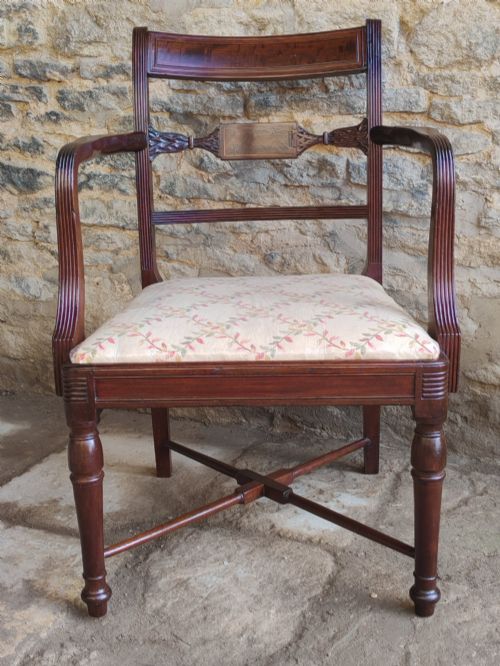


X Stretcher Desk Chair
An x stretcher desk chair brings sturdy regional character and time-worn timber into a study or workspace.
X Stretcher Desk Chair
The x stretcher desk chair groups robust wooden seating associated with country workshops, libraries, and farmhouses spanning the seventeenth through the nineteenth centuries. These sturdy forms include Windsor armchairs, carvers, and library desk chairs designed for daily seating at a desk or table.
Visitors browsing this page will most frequently encounter nineteenth-century yew and elm Windsor armchairs alongside mahogany library models and regional country chairs. The selection ranges from low-back Windsor variants to nineteenth-century ash and elm country seating.
Makers from regional centres such as Nottinghamshire and Worksop produced these chairs using native hardwoods tailored for domestic and commercial workspaces. The recurring presence of the criss-cross bracing underneath provides the structural integrity that defines the category.
Materials and construction
Cabinet makers and bodgers relied upon native timbers including yew, elm, ash, beech, oak, and mahogany to build the framework and seats. Combinations of yew and elm or ash and elm frequently appear in country vernacular pieces, balancing flexible spindles with solid carved seats.
Traditional turnery and steam-bending shaped the spindles, legs, and characteristic stretchers that lock the lower undercarriage together. Joinery techniques such as wedged through-tenons ensured that the seating could withstand heavy daily use in offices and homes.
X Stretcher Desk Chair Retail Price Guide 2026
Typical asking prices for x stretcher desk chair among the pieces listed under this phrase on Sellingantiques today, from the lower quarter to the upper quarter. They describe what is for sale here now, not the wider market.
Several makers from Worksop clearly took pride in marking their sturdy seats, ensuring nineteenth-century secretaries had robust lumbar support.
Judging quality and character
Excellence in these chairs rests upon the selection of timber, particularly the grain figuration in yew-wood backs and the depth of carving in solid elm seats. Rich patination accumulated through generations of use separates superior examples from plainer utility seating.
Proportion and the crispness of the turned stretchers dictate visual success, as does the retention of original timber components rather than replaced undercarriages. Regional variations from known maker districts add historical depth to individual specimens.
Gabbitass Worksop·Rockley Maker·Benjamin Gilling·Allsop Worksop
The X Stretcher Desk Chair Glossary
- Windsor chair
- A wooden chair constructed with a solid sculpted seat into which the legs and back spindles are separately bored and wedged. This form dominates regional English vernacular seating.
- Crinoline stretcher
- A curved iron or wooden brace connecting the legs of a chair in a loop, providing both foot support and rigidity. It is frequently seen on mid-nineteenth-century vernacular seating.
- Elm
- A tough, interlocking-grained timber used extensively for chair seats because it resists splitting under pressure. It forms the comfortable saddle-shaped seat of many regional armchairs.
- Carver
- An armchair designed in a matching style to a set of dining or office side chairs. They typically stand at the head of a table or desk.
- Splat
- A central vertical slat of wood set within the back of a chair, often shaped or pierced for decoration. In country chairs, these provide lumbar support.
X Stretcher Desk Chair: Frequently Asked Questions
What is an x stretcher desk chair?
An x stretcher desk chair is a traditional wooden seat featuring a criss-cross framework between the legs for added stability. These pieces draw on regional English vernacular designs built for practical workspace use.
They encompass styles from nineteenth-century Windsor armchairs to earlier mahogany library seating. The intersecting stretchers anchor the design visually and structurally.
Where were these chairs made?
Many of these chairs originated in English regional workshops, with particular traditions rooted in places like Nottinghamshire and Worksop. Country bodgers and local cabinet makers utilised native timbers close at hand.
Production spanned rural bodger operations up to established provincial workshops. This regional diversity accounts for the distinct regional traits found across the selection.
How do I care for antique timber?
Maintain wooden frames by keeping them away from direct heat sources and sudden humidity fluctuations to prevent splitting. Regular dusting with a dry cloth preserves the historic surface.
Applying microcrystalline wax occasionally helps nourish dry timber without building up heavy residues. Avoid harsh chemical cleaners that strip the historic patination.
How do I date a vernacular chair?
Dating relies upon examining tool marks, timber selection, construction methods, and the wear patterns on the seat and feet. Earlier seventeenth-century pieces show different joinery traditions compared to nineteenth-century Windsor variations.
Comparing regional turning styles and known maker signatures further refines the era of production. Subtle shifts in back splat design and undercarriage bracing assist in establishing age.