
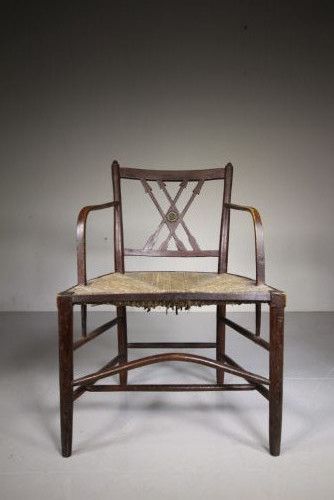
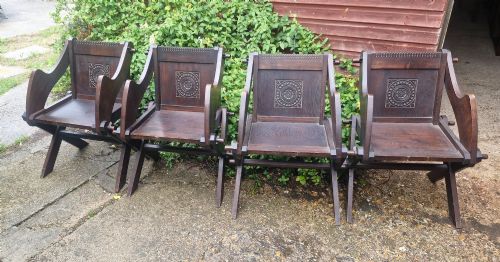


X Frame Back Armchair
An x frame back armchair offers structural strength and distinct geometry, bringing architectural form and comfortable seating into a room.
X Frame Back Armchair
An x frame back armchair unites structural timber supports with comfortable upholstered seating for daily use in a study or drawing room. The form borrows from classical cross-curved designs to create a rigid, supportive backrest.
The evidence shows examples spanning from the Georgian period through the Victorian era into the twentieth century. Walnut and mahogany frames appear frequently alongside sturdy oak and painted finishes.
Buyers often encounter styles ranging from Regency and French Napoleon III to Arts and Crafts and Art Deco interpretations. These chairs function as reading seats, desk chairs and library armchairs.
Materials and construction
Joiners and cabinet makers shaped dense hardwoods including mahogany, walnut and oak into rigid frame components using traditional mortise and tenon joints. Brass hardware occasionally reinforces structural stress points on reclining or pivoting mechanisms.
Upholsterers layered webbing, hessian and stuffing inside leather, velvet or woven fabric covers to build supportive seats and padded armrests. Needlework and buttoned finishes frequently secure the outer textile layer to the internal padding.
Listings feature oak, mahogany and walnut frames paired with leather, velvet, hessian and fabric upholstery across Victorian and twentieth-century periods.
Distinctions in quality
The distinction between ordinary and superior pieces rests on the precision of timber joinery and the integrity of the structural frame. Master cabinet makers selected dense, figured mahogany or walnut with harmonious grain patterns rather than lesser utility timbers.
Hand-carved detailing on the wooden framework and original upholstery techniques elevate certain examples above standard production pieces. Sustained structural rigidity in the crossing back supports indicates superior workshop execution.
Howard and Sons·Robert Kime
The X Frame Back Armchair Glossary
- X-frame
- A structural furniture design featuring intersecting diagonal wooden members that form an X shape. This configuration provides robust support to the backrest or base.
- Bergere
- An enclosed upholstered French armchair with wooden frames and exposed woodwork. The sides typically feature cane work or upholstered panels.
- Fauteuil
- An open-armed upholstered armchair with an exposed wooden frame originating in France. The arms usually feature padded elbow rests.
- Gainsborough
- A wide upholstered armchair with a low seat and padded arms designed in the eighteenth century. These chairs frequently appear in libraries and writing rooms.
- Hessian
- A coarse woven fabric typically manufactured from jute fibres. Upholsterers utilise this material as a durable foundation layer beneath outer coverings.
X Frame Back Armchair: Frequently Asked Questions
Where should I place an x frame back armchair?
These armchairs suit studies, libraries and drawing rooms where their structural frames and supportive seating receive regular use. Pairing them with a writing desk or reading table makes effective use of their ergonomic design.
Positioning the chair away from direct heat sources protects the timber frame and prevents the leather or fabric upholstery from drying out over time.
How do I identify the period of these chairs?
Dating relies on examining the timber species, joinery methods and stylistic motifs present on the wooden frame. Georgian and Regency examples display classical restraint, while Victorian pieces often incorporate heavier carvings or walnut construction.
Twentieth century pieces shift toward Art Deco geometry or Arts and Crafts simplicity. Comparing the framing techniques with documented historical furniture helps confirm the era of manufacture.
What maintenance do leather and fabric covers need?
Leather upholstery benefits from periodic treatment with appropriate conditioning balms to maintain flexibility and colour. Fabric and velvet surfaces require regular light vacuuming with a soft brush attachment to remove dust.
Avoiding direct sunlight preserves both the textiles and the polished wooden frame from fading. Professional cleaning is advisable for deep textile restoration.
How do I distinguish revival styles from original pieces?
Revival pieces manufactured in the late nineteenth or twentieth century emulate earlier Georgian or Regency aesthetics through machine-assisted joinery and standardised timber preparation. Original pieces display tool marks, timber shrinkage and construction traits consistent with their stated period.
Evaluating the internal webbing, stuffing materials and secondary woods beneath the upholstery provides further clues regarding the true age of the chair.