
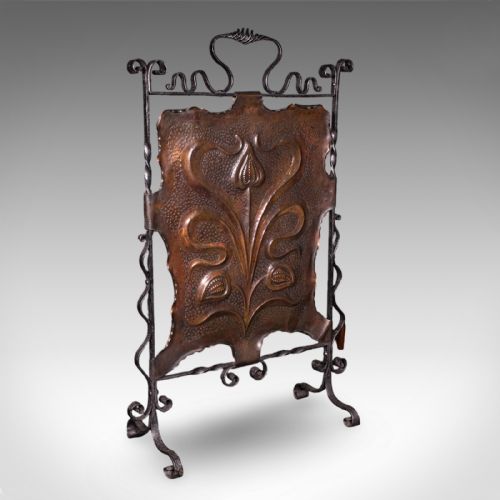


Wrought Iron Hearth Screen
These wrought iron hearth screen pieces bring functional warmth and period craft to the fireplace, offering a practical barrier against sparks.
Wrought Iron Hearth Screen
A wrought iron hearth screen serves as a protective guard before an open fire, taking forms such as folding fireguards, nursery fenders, and flat panels. When you search for wrought iron hearth screen, you encounter items designed to contain sparks whilst framing the fireplace.
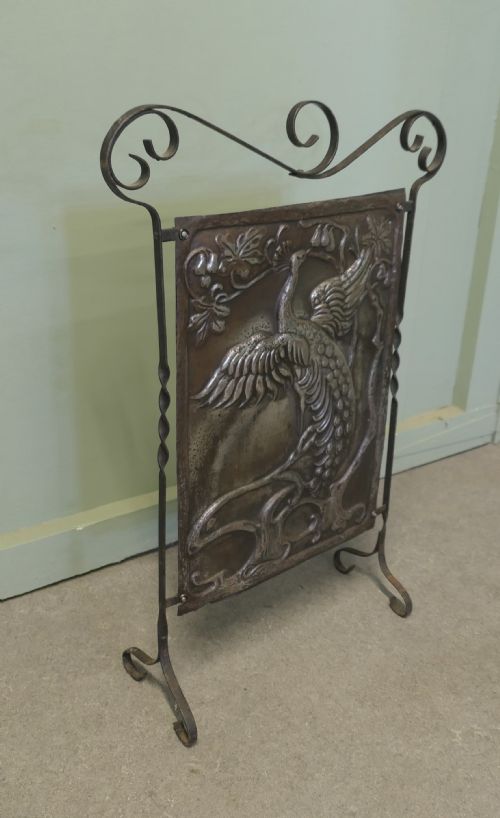
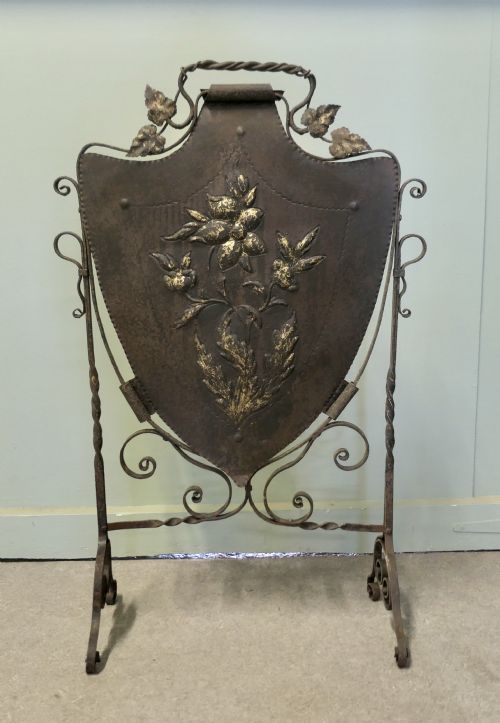
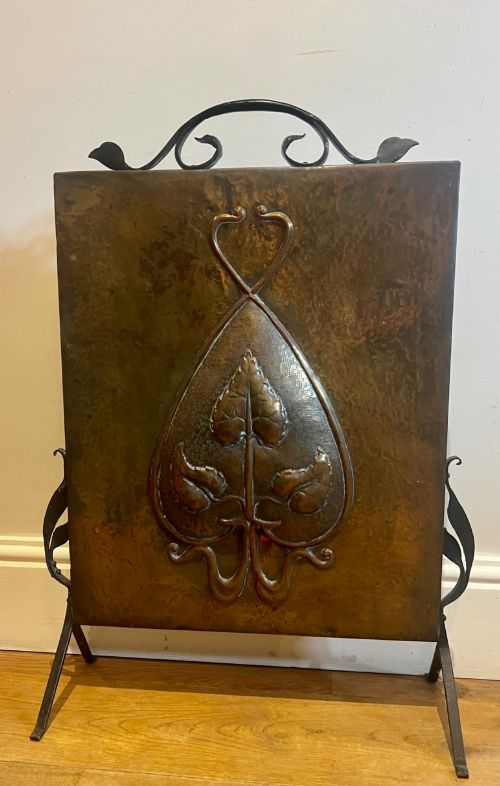
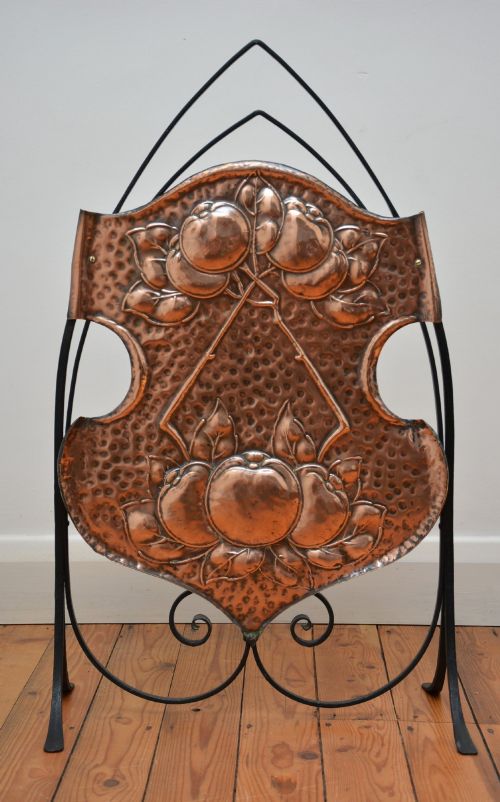
The pieces listed on this page span the Victorian and Edwardian eras through to the nineteen thirties, drawing on Arts and Crafts, Art Nouveau, and Gothic Revival styles. You are most likely to meet iron frames paired with copper panels, brass details, wire mesh, or steel mesh.
Many examples originate from English country house settings, reflecting both domestic utility and decorative ambition. Makers utilised heavy ironwork and lighter mesh to balance physical protection with visibility of the hearth flames.
How they were made
Makers shaped wrought iron and steel through traditional blacksmithing techniques, creating sturdy frames designed to withstand intense hearth heat. These metal structures were often combined with beaten copper panels or woven wire mesh.
Artisan workshops employed riveting and soldering to join iron supports to decorative metalwork, incorporating brass highlights or gilt finishes for visual contrast. Heavy iron bars provided structural integrity for large folding guards and nursery fenders.
Some nursery fenders double as clothes dryers, proving that Victorian practicality understood the supreme utility of a warm fireside.
What varies in quality
Quality rests in the weight of the ironwork and the precision of the assembly, distinguishing heavy hand-forged pieces from lighter commercial production. The gauge of the wire or steel mesh dictates the durability of the screen.
Artistic execution separates standard guards from those bearing distinct Arts and Crafts or Art Nouveau motifs, such as hand-hammered copper panels or intricate peacock designs. The integration of solid brass elements and refined surface finishes elevates the piece.
The Wrought Iron Hearth Screen Glossary
- Wrought iron
- A tough, malleable form of iron that blacksmiths heat and hammer into decorative and structural shapes. This material forms the primary skeleton of these hearth screens.
- Nursery fender
- A low metal barrier designed to encircle a hearth and keep children at a safe distance from the fire. These guards often incorporate mesh or clothes rails.
- Spark guard
- A fine wire or metal mesh screen intended to catch embers flying out from an open fire. They provide protection whilst maintaining visibility of the flames.
- Fireplace reflector
- A polished metal panel, often copper, placed behind or beside a fire to project heat and light into the room. They combine utility with decorative metalwork.
- Arts and Crafts
- A design movement valuing traditional craftsmanship, natural materials, and visible handwork over mass production. Pieces from this style frequently feature beaten copper and iron.
Wrought Iron Hearth Screen: Frequently Asked Questions
What is a wrought iron hearth screen used for?
These screens act as a physical barrier placed in front of an open fireplace to contain sparks and glowing embers. They protect flooring and furnishings from accidental burns while the fire is burning.
Beyond safety, many examples serve a decorative purpose, framing the hearth during warmer months when the fire is unlit. Some configurations include rails for airing clothes or companion tool sets.
How do I identify an Arts and Crafts hearth screen?
Arts and Crafts pieces typically feature hand-beaten copper panels, exposed riveted construction, and motifs inspired by nature, such as peacock designs or stylized floral patterns. The ironwork often displays visible hammer marks from the blacksmith.
These screens avoid excessive ornamentation in favour of honest materials and solid construction. They frequently date from the late nineteenth or early twentieth centuries.
Are nursery fenders different from standard fire screens?
Nursery fenders are low, enclosed barriers that extend further out around the hearth to create a protective perimeter for children. They often include integrated mesh panels and sometimes a top rail.
Standard fire screens are typically flat or folding panels designed to stand directly against the fireplace opening. Both utilise sturdy iron frames to ensure stability.
How do I care for antique iron and copper?
Dust iron frames gently with a dry cloth and apply a light coat of paste wax if rust prevention is needed. Avoid harsh chemical cleaners that strip historical patina.
Copper panels can be left with their natural aged finish or polished lightly depending on personal preference. Keep the mesh free of soot buildup with a soft brush.