



Wrought Iron Ceiling Fixture
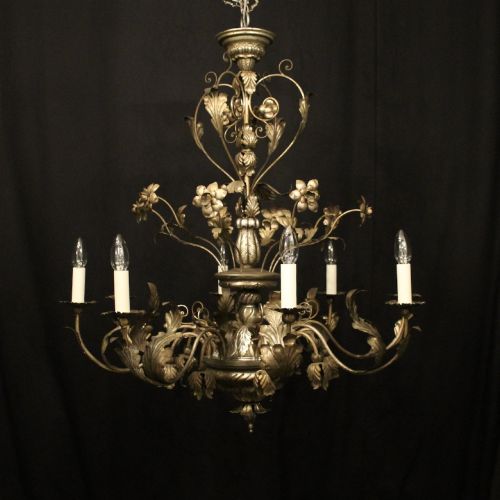
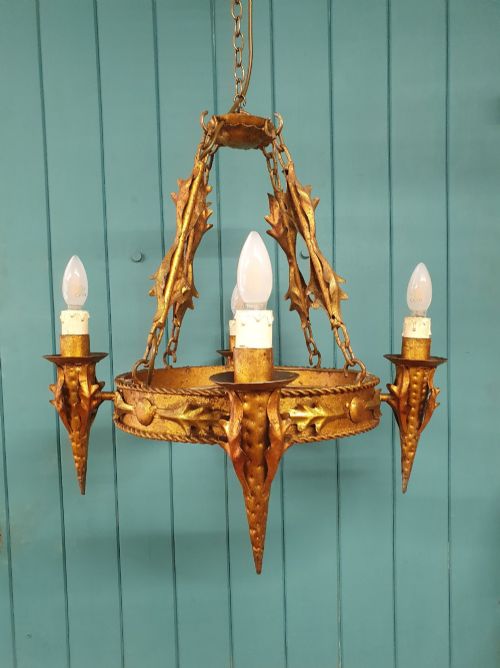
These wrought iron ceiling fixture options bring substantial historic character overhead, spanning French, Italian, and British workshops.
Wrought Iron Ceiling Fixture
When you search for a wrought iron ceiling fixture, you encounter overhead lighting shaped by blacksmiths and metalworkers across several centuries. The selections range from early rustic iron frameworks to elaborate multi-branched chandeliers decorated with glass and gilt.
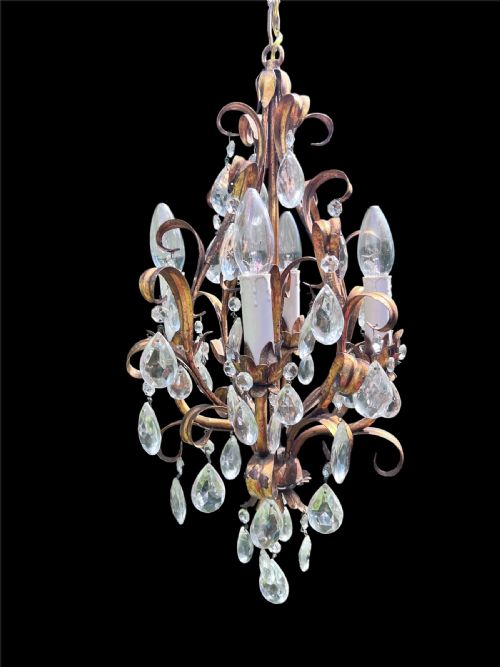
The most common examples on this page are French and Italian chandeliers and hanging lanterns dating from the Victorian era through the early twentieth century. These pieces frequently combine dark forged metal with contrasting glass drops, crystals, or coloured fruit ornaments.
Styles represented in the current selection include Arts and Crafts, Art Nouveau, French Gothic Revival, and rustic European designs. Buyers find everything from simple wagon wheel frames to ornate coronets and copper lanterns suited to period interiors.
How they were made
Makers shaped wrought iron by hand on the anvil, hammering hot bars into scrolls, leaves, and structural frames. Blacksmiths joined sections using traditional rivets, collars, and welds before applying protective or decorative surface finishes.
Many fixtures incorporate glass elements, such as frosted shades, cut glass cages, moulded pate de verre bowls, or coloured crystal fruits like grapes and apples. Metal components often feature supplementary gilding, polychrome paint, or patinated brass and copper highlights.
Wrought Iron Ceiling Fixture Retail Price Guide 2026
Typical asking prices for wrought iron ceiling fixture among the pieces listed under this phrase on Sellingantiques today, from the lower quarter to the upper quarter. They describe what is for sale here now, not the wider market.
Current listings span the 18th, 19th, and 20th centuries, featuring wrought iron paired with frosted glass, crystal, brass, and copper.
What varies in quality
The distinction between ordinary and superior pieces lies in the fluidity of the hand-forged scrollwork and the crispness of applied detail. Finer examples display deliberate proportions, cleanly tapered ironwork, and harmonious integration of glass or crystal components.
Workmanship in the decorative elements reveals much about a fixture's origins, from the delicate hand-tinting of polychrome surfaces to the quality of the glass diffusers produced by notable regional glasshouses.
Verrerie Des Vosge·Muller Freres
The Wrought Iron Ceiling Fixture Glossary
- Wrought iron
- Iron that has been heated and hammered into shape by hand, resulting in a fibrous texture and visible hammer marks. This material provides the strong structural framework for heavy hanging fixtures.
- Pate de verre
- A glass-making technique where crushed glass is packed into a mould and fused in a kiln to create richly coloured, textured vessels and shades. These translucent shades diffuse light softly across the room.
- Coronet chandelier
- A circular crown-shaped lighting fixture suspended by chains or rods, often embellished with gilt details and crystal drops. This form draws inspiration from royal headwear.
- Hall lantern
- An enclosed ceiling-hung light designed specifically for entryways and corridors, typically featuring glass panels set within a metal frame. They protect candles or bulbs from drafts.
- Gilt metal
- Metal coated with a thin layer of gold leaf or gold-coloured paint to add luminosity and contrast against darker iron elements. This finish catches candlelight and electric illumination alike.
Wrought Iron Ceiling Fixture: Frequently Asked Questions
Can these antique lights use modern bulbs?
Most antique fixtures accept standard modern screw or bayonet bulbs once the original internal wiring is updated.
Low-wattage LED lamps work well inside vintage glass shades without generating excessive heat that could damage old materials.
How do I clean wrought iron and crystal?
Dust the iron frame regularly with a dry microfibre cloth and remove glass components gently for washing in warm soapy water.
Avoid harsh chemical cleaners that can strip historic patinas from the metal or damage gilded surfaces.
How do I date a wrought iron chandelier?
Dating relies on stylistic markers like Art Nouveau whiplash curves, Arts and Crafts simplicity, or Victorian Gothic ornamentation.
Construction details such as hand-cut threads on screws and the composition of the glass also help establish the period.