


Woven Wicker Armchair
These woven wicker armchair examples span several decades of relaxed seating, bringing organic texture and comfort to indoor and outdoor spaces alike.
Woven Wicker Armchair
A woven wicker armchair brings natural, tactile materials and inviting seating into a room or garden. These chairs span early twentieth-century designs through to mid-century rustic styles, capturing an enduring tradition of woven seating.
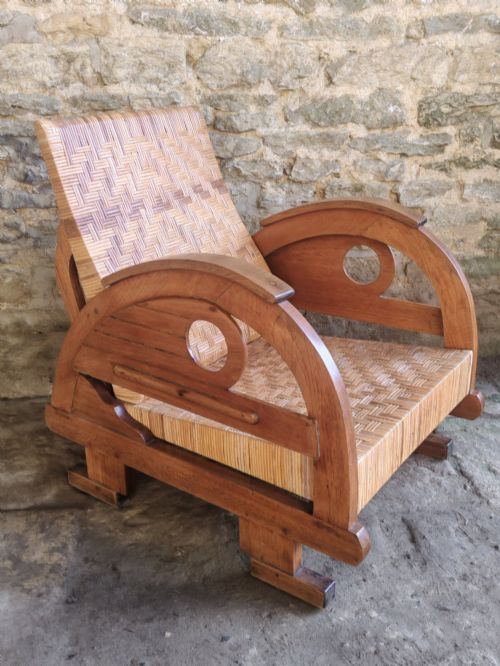
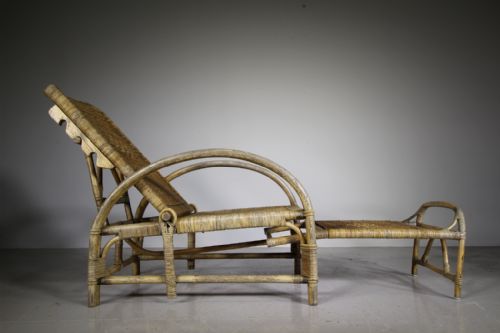
You will encounter pieces from the Edwardian period, the 1920s, and the 1930s, alongside examples in Anglo-Indian and Arts and Crafts styles. Forms range from standard armchairs and garden seating to rocking chairs and reclining models.
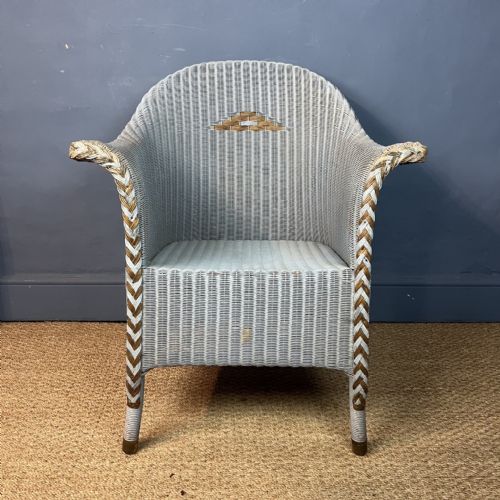
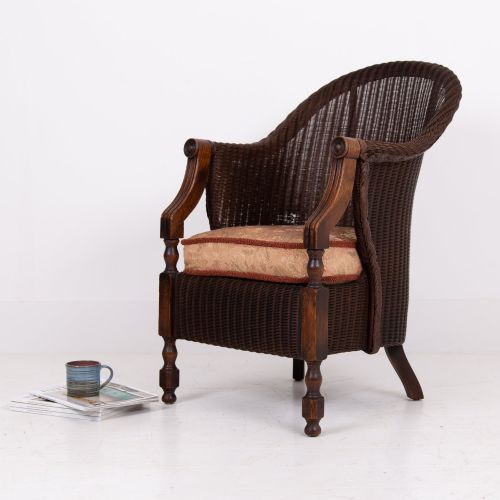
The selection includes specialised variations such as Lloyd Loom chairs, lounge chairs, and decorative garden room armchairs. Each piece utilises flexible plant materials to create supportive and resilient furniture.
How these chairs are constructed
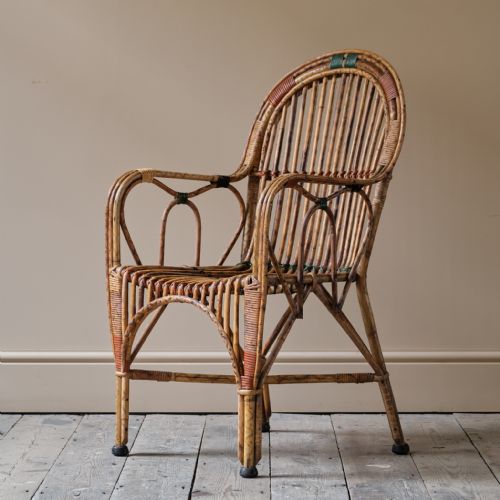
Construction relies heavily on pliable natural materials including cane, rattan, bamboo, willow, and wicker. Makers weave these flexible plant fibres around sturdy structural frames to achieve both strength and lightness.
Additional materials such as oak, mahogany, steel wire, and kraft paper appear in frames, bindings, and specialised components like Lloyd Loom weaves. Handwoven techniques allow artisans to shape complex curves for backs, seats, and armrests.
Listings feature pieces spanning the Edwardian period through to the 1940s, incorporating cane, rattan, bamboo, willow, and steel wire.
What separates standard pieces from the finest examples
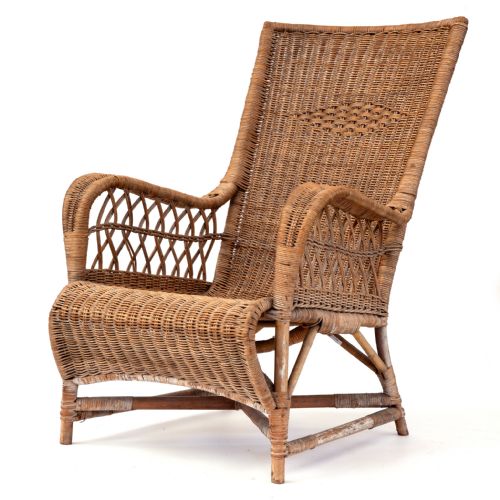
Quality in a woven wicker armchair is evident in the tightness and uniformity of the weave. Tighter, more complex handweaving requires greater skill and provides superior longevity under daily use.
The sophistication of the underlying frame architecture and the integrity of supplementary materials, such as solid oak or shaped bentwood, distinguish standard commercial output from workshop pieces produced by prominent makers.
Angraves of Leicester·Dryad of Leicester·Dryad & Co
The Woven Wicker Armchair Glossary
- Wicker
- A method of weaving pliable plant materials into furniture rather than a specific material itself. Willow, rattan, and reed are commonly employed in this technique.
- Cane
- Strips derived from the outer bark of the rattan palm, traditionally utilised for woven seats and back panels. It provides a smooth, durable surface.
- Rattan
- A climbing palm with strong, flexible stems that serve as both framing and weaving material in seating. It combines lightness with notable tensile strength.
- Lloyd Loom
- A patented process invented by Marshall Burns Lloyd in the early twentieth century, utilising twisted kraft paper woven over a steel wire core. This material replaced traditional wicker in many mass-produced chairs.
- Bergère
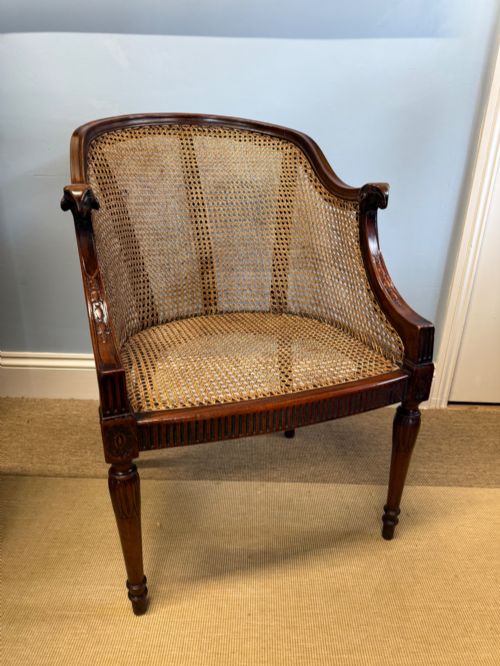
- An enclosed upholstered armchair featuring exposed wooden framing and cane-work side panels. Originating in France, the style reappeared in various British interpretations during the Edwardian era.
Woven Wicker Armchair: Frequently Asked Questions
What is a Lloyd Loom armchair?
A Lloyd Loom armchair utilises a patented textile made from twisted kraft paper woven over wire rather than traditional natural rattan. This innovation created a smooth, snag-free surface that resisted splitting.
Introduced in the early twentieth century, these chairs gained popularity for their durability and clean finish in sunrooms and domestic interiors.
How do I identify an Edwardian wicker chair?
Edwardian examples often exhibit lighter framing styles influenced by Arts and Crafts ideals or revived traditional forms. They frequently incorporate detailed handweaving alongside turned wooden elements.
Examining the construction of the joints and the tightness of the cane or wickerwork helps indicate this earlier twentieth-century period.
Are these chairs suitable for outdoor use?
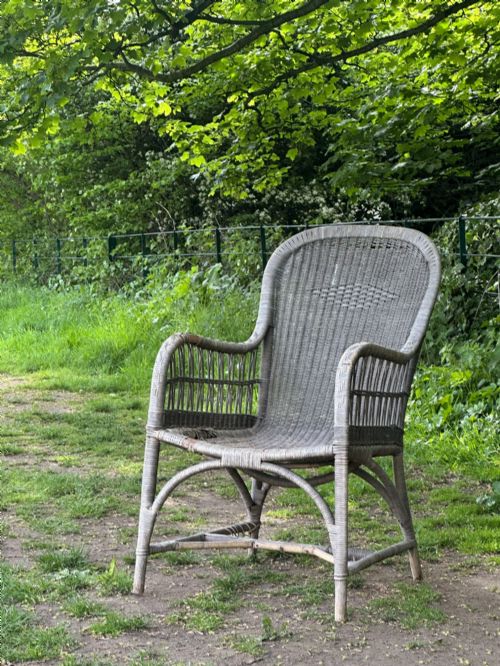
Many period pieces, particularly garden armchairs and reclining models, were designed for verandas and outdoor rooms. However, natural materials like cane and wicker remain vulnerable to prolonged dampness and direct weathering.
Protecting older wicker and rattan from moisture preserves the structural integrity of the weave and prevents the organic fibres from becoming brittle.