






Woven Storage Hamper
These woven storage hamper pieces bring honest utility to a room, offering robust natural texture and deep capacity for household organisation.
Woven Storage Hamper
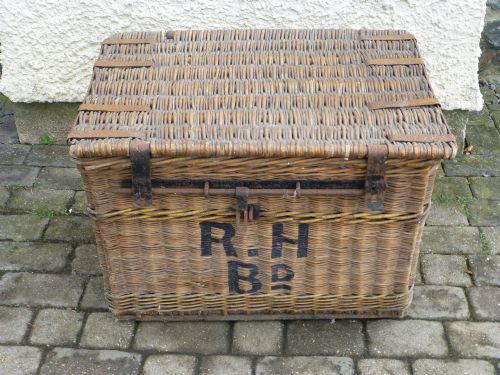
A woven storage hamper serves as both practical containment and tactile furniture, drawing on historical forms designed for heavy agricultural and industrial use. When you search for a woven storage hamper, you encounter pieces that began life as harvest baskets, travel trunks, or mill containers.
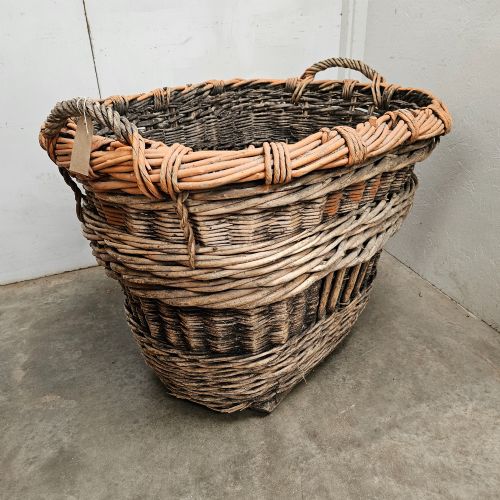
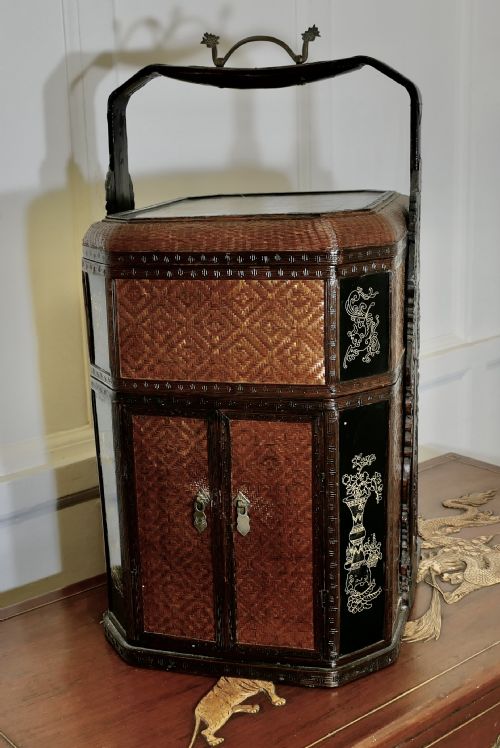
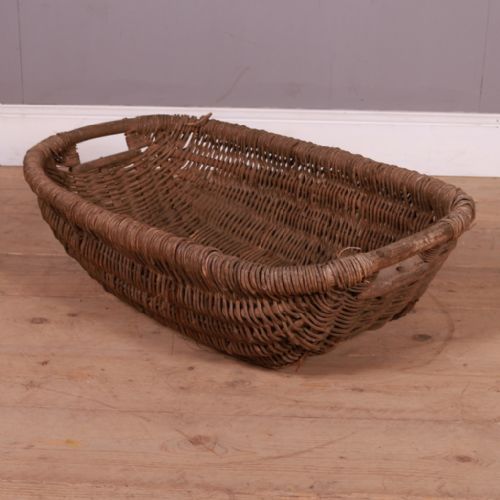
The pieces listed on this page originate from the nineteenth century up through the nineteen-thirties, spanning Scandinavian, French, and Chinese origins. You are most likely to meet substantial nineteenth-century examples fashioned in cane, wicker, and woven pine.
Many of these substantial containers function equally well today as log baskets beside a hearth or as low coffee tables in a living space. Their generous proportions and sturdy builds make them enduring additions to rustic or country interiors.
How they were made
Maker construction relies on flexible plant materials such as wicker, cane, willow, bamboo, and wood splint interlaced by hand over sturdy frames. Artisans built these containers to withstand heavy loads, often incorporating pine reinforcements or iron hardware.
Industrial and agricultural examples from the nineteenth and early twentieth centuries utilised local materials harvested for durability rather than decorative refinement. The resulting textures show the tight, purposeful interlacing necessary for hauling wine grapes, linen, or mill components.
Woven Storage Hamper Retail Price Guide 2026
Typical asking prices for woven storage hamper among the pieces listed under this phrase on Sellingantiques today, from the lower quarter to the upper quarter. They describe what is for sale here now, not the wider market.
The listings on this page span the nineteenth century through the nineteen-thirties, featuring materials like wicker, cane, pine, and iron.
What varies in quality
Quality in these containers rests on the tightness of the weave and the structural integrity of the base and rim. Superior pieces maintain their rigidity under pressure without sagging or losing their original geometric form.
The handling of natural materials also distinguishes the build, with evenly sized splints and secure lashings marking the more resilient examples. Uniformity in the plant fibres and sound attachment of any wooden or metal components elevate the standard of the piece.
The Woven Storage Hamper Glossary
- Wicker
- A method of weaving pliable plant materials into rigid items such as baskets and furniture. It describes the technique rather than a specific botanical species.
- Cane
- The thin, peeled bark of the rattan palm utilised for flexible and durable binding or weaving. It provides a smooth surface texture.
- Pine
- A softwood commonly utilised for the structural bases, lids, or rims of larger baskets and trunks. It adds stability to the woven body.
- Splint
- A thin strip of wood soaked and bent for interlacing in heavy-duty basketry. These elements form rigid, load-bearing grid structures.
Woven Storage Hamper: Frequently Asked Questions
How were woven storage hampers used originally?
These containers served demanding agricultural and industrial roles, transporting goods like champagne, grapes, linen, and factory materials. Their deep cavities and sturdy handles allowed workers to haul heavy loads efficiently.
Over time, many of these utilitarian vessels transitioned from farmyards and mills into domestic spaces for organising household items. Their robust construction made them ideal for storing bulky items like firewood and textiles.
How do I care for a vintage hamper?
Keep natural plant materials clean by gently dusting the weave with a soft brush or vacuum attachment on a low setting. Avoid placing them in areas with excessive moisture or direct sunlight, which can dry out and weaken the fibres.
Occasional light conditioning can help maintain the flexibility of older cane and wicker. Ensuring adequate ventilation around the piece prevents the accumulation of dampness in the denser sections of the weave.
Can I use a large basket as a coffee table?
Substantial nineteenth-century trunks and mill baskets possess flat tops or stable surfaces that lend themselves well to alternative furniture uses. Placing a large woven container centrally in a room creates an effective anchor for a seating area.
When utilising a basket in this manner, ensure the lid or top surface remains level enough to support trays and books safely. The internal cavity simultaneously provides hidden storage for blankets and cushions.
How do I date a woven hamper?
Dating relies on observing the specific materials, hardware, and construction methods employed in the piece. Nineteenth-century examples often display hand-split pine bases and heavier iron or wooden reinforcements.
Later twentieth-century pieces, such as those from the nineteen-thirties, frequently reflect industrial contexts with standardised sizing and machine-processed components. Comparing the weave density and wear patterns helps place the object within its historical period.