





Woven Rush Seat
Woven rush seat chairs and benches bring honest country craftsmanship and tactile texture into interiors, spanning simple farmhouse forms to iconic Arts and Crafts designs.
Woven Rush Seat
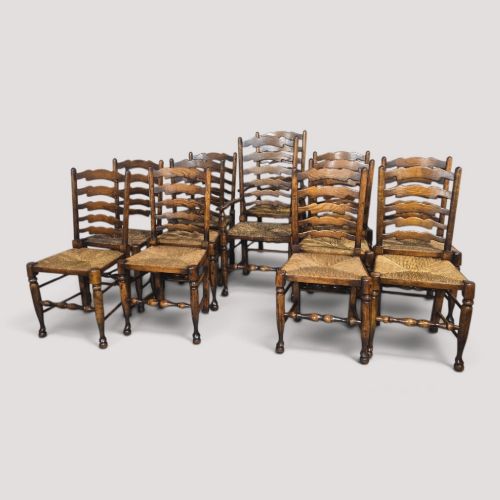
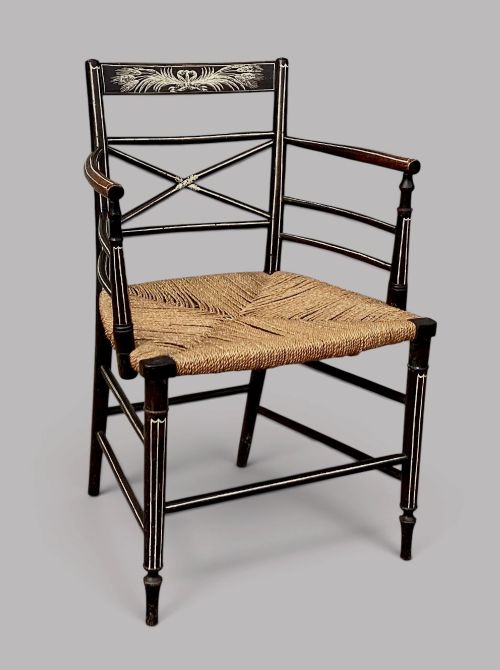
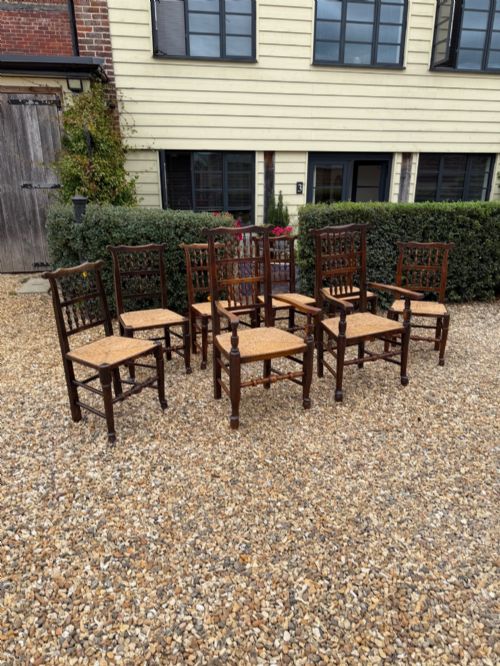
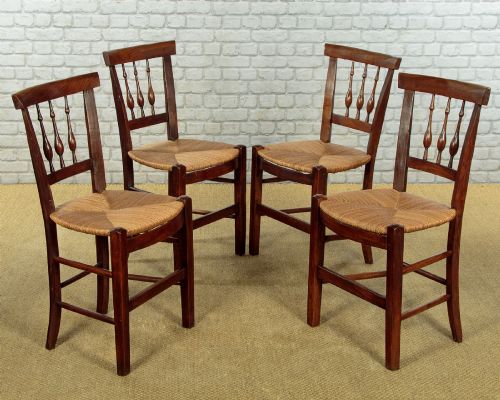
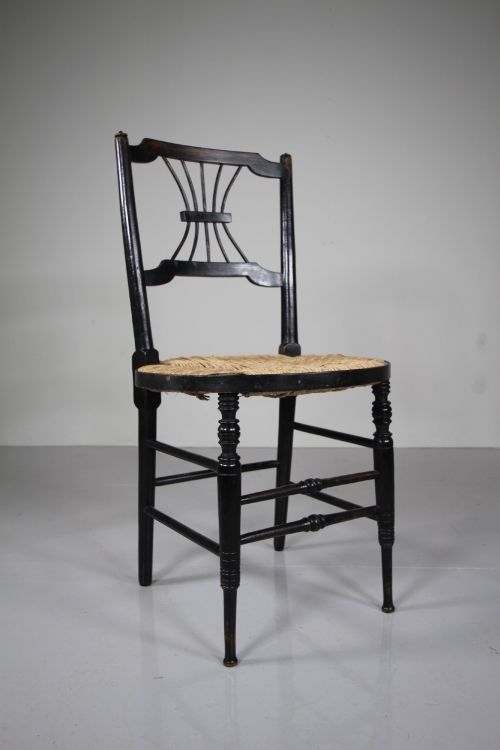
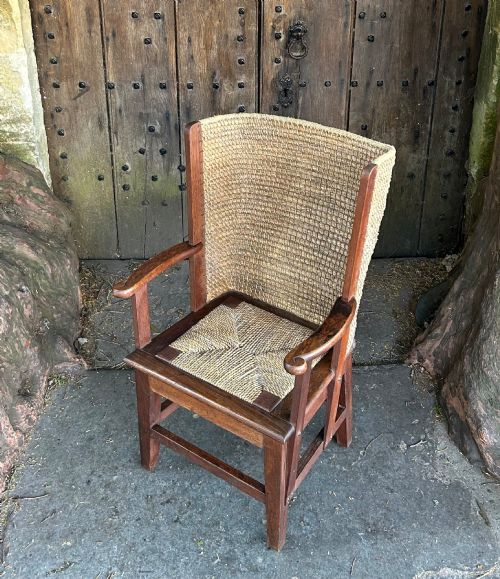
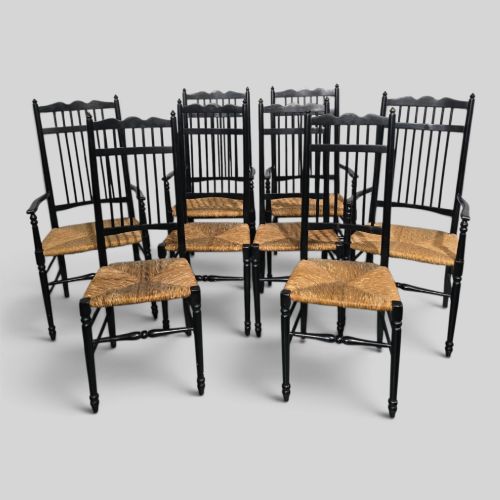
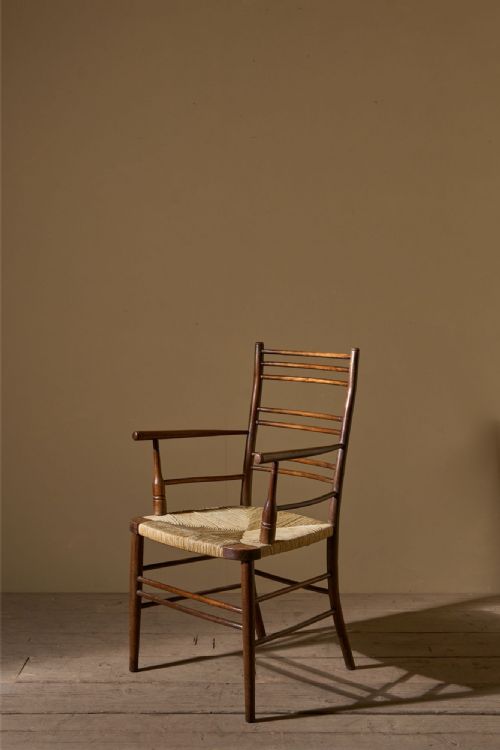
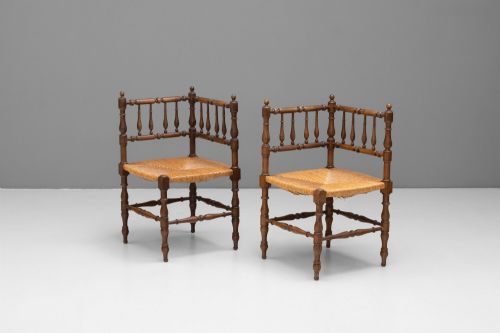
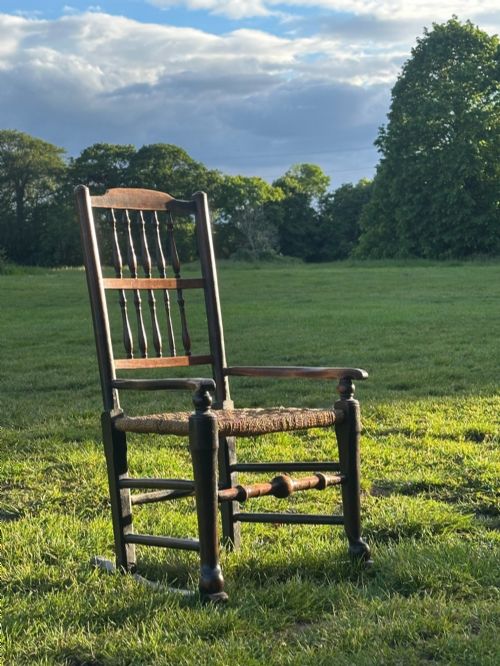
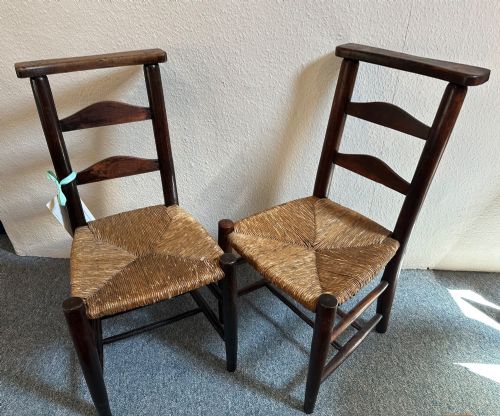
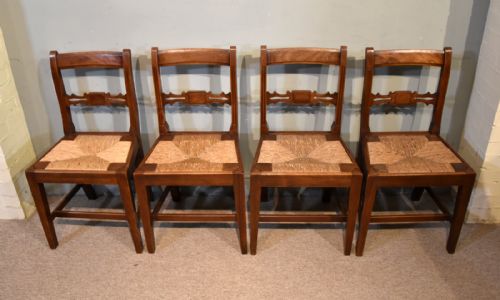
When you search for woven rush seat, you encounter a diverse range of seating forms rooted in vernacular and reform traditions. Dining chairs, armchairs, rocking chairs, stools, benches, and hall stands appear across periods from the eighteenth century through the twentieth century. The selection leans heavily toward English country dining chairs, Arts and Crafts seating, and regional variants like Lancashire, Dales, and Orkney pieces.
Most examples meet you as sturdy oak, elm, ash, beech, or fruitwood frames fitted with natural marsh-grass seating. You find everything from simple vernacular ladderbacks to branded institutional seating and workshop-designed armchairs. French provincial and Anglo-Indian variations also emerge, demonstrating the broad geographical spread of this seating tradition.
How they were made
Makers built these frames using traditional timbers like elm, oak, ash, beech, cherrywood, and fruitwood, often turning spindles and ladderbacks on a lathe or shaping components by hand. Frames join through mortise and tenon construction, sometimes reinforced with painted finishes or left as exposed timber.
The defining feature is the rush seating itself, plaited from dried marsh plants and tightly wound around the seat rails in geometric patterns. Artisans twisted the strands into durable cords before weaving them into a supportive, tensioned pad that flexes with use.
Woven Rush Seat Retail Price Guide 2026
Typical asking prices for woven rush seat among the pieces listed under this phrase on Sellingantiques today, from the lower quarter to the upper quarter. They describe what is for sale here now, not the wider market.
Listings feature timbers including oak, elm, ash, beech, fruitwood, and cherrywood alongside painted finishes.
What varies in quality
Quality rests in the harmony between the timber frame and the precision of the rush plaiting. A well-constructed frame retains tight joints and appropriate wood selection for its regional type, whether heavy oak or nimble fruitwood.
The integrity of the woven surface dictates much of the standard. Uniform tension, neat corner folding, and thick, tightly packed strands distinguish professional workshop execution from casual repairs.
Morris & Co·Liberty of London·Heals·Dicon Nance
The Woven Rush Seat Glossary
- Rush seat
- A seating surface woven from dried marsh reeds twisted into cord. This traditional method creates a durable, slightly springy pad common in vernacular furniture.
- Ladderback
- A chair style characterised by horizontal wooden slats set between the rear upright posts. This form provides sturdy back support in country dining chairs.
- Arts and Crafts
- A design movement valuing handcraft, natural materials, and simple utility over industrial mass production. Pieces from this circle often utilise exposed joints and rush seating.
- Súgán chair
- An Irish traditional chair type featuring a seat woven from straw or hay ropes. This regional variation shares the tactile appeal of rush work.
Woven Rush Seat: Frequently Asked Questions
How do I care for a rush seat?
Keep rush seating dry and away from direct heat sources to prevent the natural fibres from becoming brittle. Dust the weave gently with a soft brush and avoid sitting on them with sharp objects.
Applying a light, specialised wax to wooden frames helps maintain the timber without affecting the unsealed rush material. Treat spills immediately by blotting with a dry cloth rather than rubbing.
Are these chairs comfortable for daily dining?
Vernacular rush seat chairs were built for daily domestic use around farmhouse tables and workshop spaces. The woven rush yields slightly to the body, offering a comfortable surface for meals.
Back heights and seat depths vary by region and period, so matching chair dimensions to your table height ensures the best seating experience.
How do I distinguish regional chair types?
Regional chairs often display distinct turning patterns, timber choices, and back slat arrangements. Lancashire and Cheshire chairs, Dales chairs, and Irish súgán pieces each carry unique local vernacular traits.
Examining the turning of the stretchers and the rake of the back legs helps attribute an unmarked piece to its likely area of origin.
What is the difference between country and Arts and Crafts pieces?
Country vernacular pieces evolved organically to serve practical household needs over generations, using locally available woods like elm and ash. They prioritise rustic utility and regional building habits.
Arts and Crafts pieces are deliberate artistic revivals designed by named makers or firms like Morris and Co, focusing on simplified historic forms and honest handcraft.