


Workbench Kitchen Island
A workbench kitchen island brings practical workspace and historical character into a modern room through solid timber construction and honest utility.
Workbench Kitchen Island
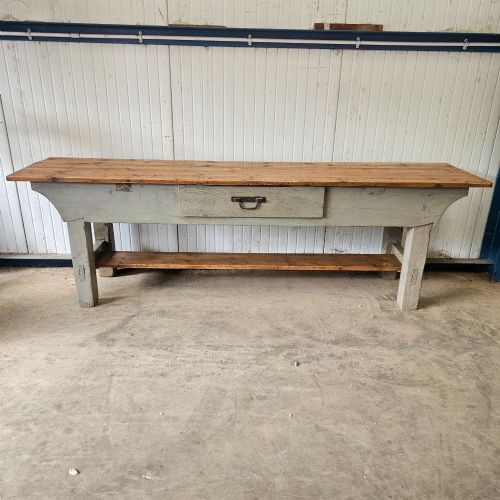
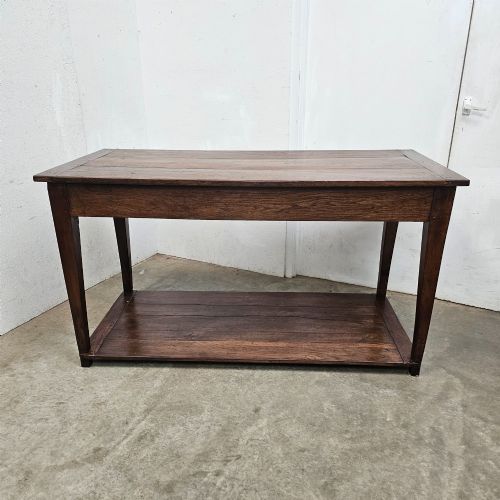
A workbench kitchen island takes a heavy-duty industrial or agricultural work surface and repurposes it as the central preparation hub in a kitchen. When you search for a workbench kitchen island, you encounter robust tables and benches built for manual labour rather than formal dining.
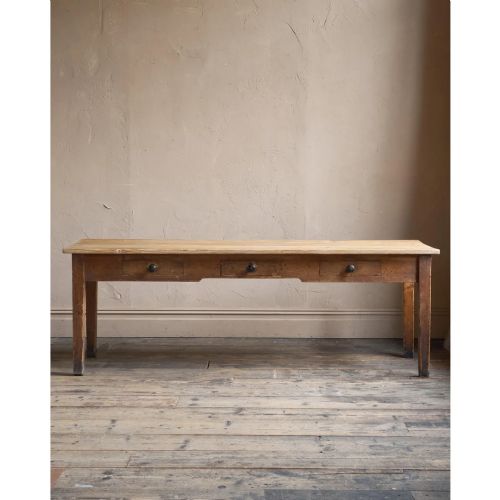
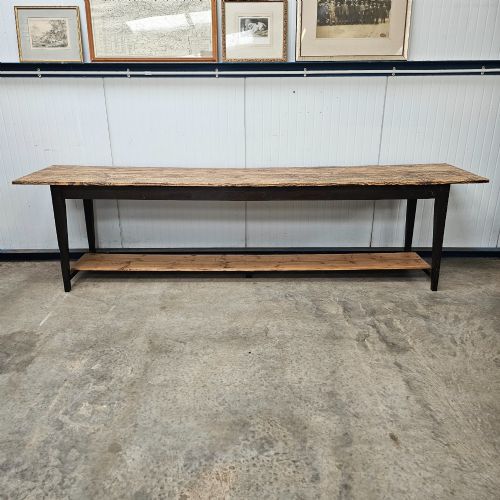
The pieces available span the nineteenth century up to the early twentieth century, originating from French, Scandinavian and British workshops. You will frequently find forms such as artisans' workbenches fitted with vices, long scullery tables, painted drapers tables and two-tier harvest tables.
These items range from compact primitive work benches to substantial country house tables measuring up to nine and a half feet in length. They provide deep timber boards and open lower shelves or drawers that suit modern storage needs while retaining their original patination.
How they were made
Makers constructed these tables from resilient native timbers, predominantly relying on solid pine, oak, beech and mahogany for the main frames and heavy tops. Iron and cast iron components such as vices, brackets and bracing provide mechanical strength and operational utility.
Surfaces often show layers of original paint or aged bare wood that has darkened through decades of daily use in workshops and scullery kitchens. Joinery prioritises structural endurance, utilising thick planks, sturdy aprons and integrated wooden or iron vices.
Regional styles represented include French provincial, Scandinavian country, rustic farmhouse and industrial designs.
What varies in quality
Quality in a workbench kitchen island rests upon the integrity of the original timber and the survival of working mechanisms like wooden vices. Pieces that retain their unstripped patination and original painted finishes stand apart from those that have been heavily sanded or modernised.
Proportion and scale also define the better examples, with longer harvest tables and substantial architectural workbenches offering greater utility and presence than standard utility tables. The presence of maker adjustments, original drawers and deep-working tops indicates a higher grade of utilitarian design.
The Workbench Kitchen Island Glossary
- Scullery table
- A heavy utilitarian table traditionally used in the preparation of food and washing tasks in large domestic houses. These pieces feature thick scrubbed timber tops designed to withstand constant water exposure and heavy use.
- Drapers table
- A long, narrow table historically used in textile shops for folding and measuring cloth, often fitted with multiple drawers beneath the top. Their generous length and shallow depth make them particularly suited for narrow kitchen spaces.
- Harvest table
- A long dining or work table designed to accommodate large groups during seasonal agricultural work. They typically feature slim profiles with substantial length and multiple supporting legs.
- Artisans workbench
- A heavy wooden bench equipped with integrated vices and dog holes designed for woodworking and craft trades. In a kitchen setting, the operational vice and thick top provide unique character and physical utility.
Workbench Kitchen Island: Frequently Asked Questions
How do I use a workbench in a kitchen?
These pieces serve as central islands for food preparation, offering deep wooden surfaces for chopping and heavy-duty tasks. The lower tiers and built-in drawers provide practical storage space for cookware and kitchen utensils.
Because many examples measure over eight feet long, they also function naturally as casual dining spots or gathering spaces. Their sturdy construction handles the daily demands of a busy kitchen environment without issue.
Are these tables waterproof?
Most surfaces consist of untreated or lightly waxed solid pine, oak or beech rather than modern sealed finishes. Spills should be wiped promptly to prevent moisture rings and staining on the aged timber.
Regular application of natural oils or beeswax helps protect the wood while preserving its historical patina. The centuries of previous wear are part of the character rather than defects to be hidden.
How do I date an antique workbench?
Dating relies on examining the construction methods, tool marks left on the timber, and the type of hardware used. Nineteenth-century examples often feature hand-cut joints and forged iron components, while early twentieth-century pieces may show slightly more standardised manufacturing.
Painted surfaces can also indicate age through craquelure and the specific mineral composition of historical pigments. Comparing the timber species and regional style helps narrow down the origin.
Can I fit a sink into one?
Altering an antique work table to take modern plumbing requires careful consideration of the original structure and framing. Cutting into a historical workbench destroys its original integrity and removes the flat surface that defines its character.
Most buyers prefer to use them as freestanding islands rather than permanent fitted units. This preserves the historical value and allows the piece to move with you.