


Wooden Workbench Console
These wooden workbench console tables bring honest utility and historic character into modern rooms.
Wooden Workbench Console
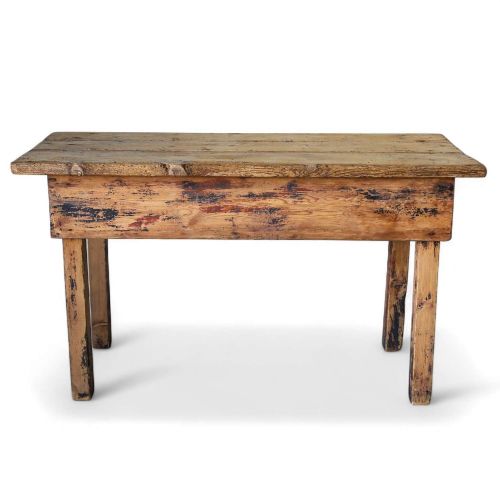
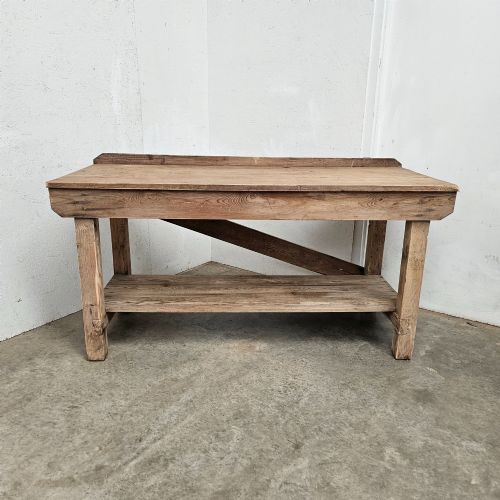
A wooden workbench console functions as a striking hybrid between a utilitarian workspace and a narrow display surface. These pieces emerge from working origins such as French country workshops, sculleries, and dairies, bringing functional history directly into domestic interiors.
Materials and construction methods
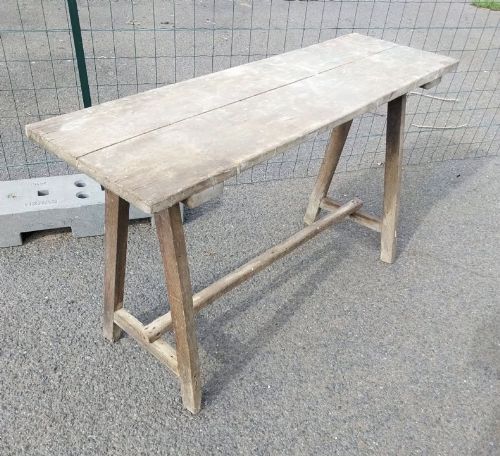
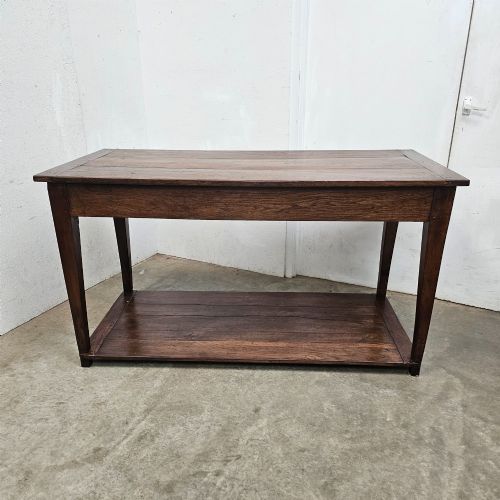
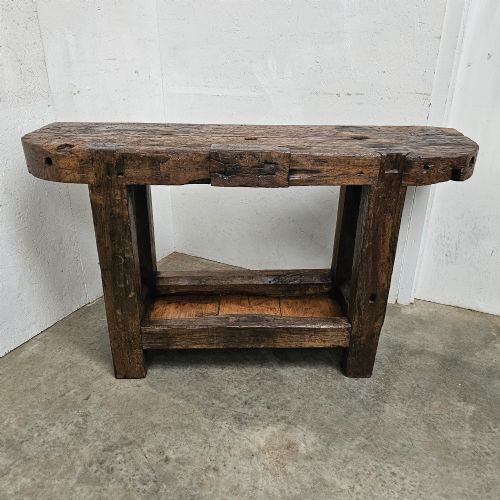
Construction relies heavily on durable timbers including pine, oak, ash, sycamore, and elm, often supported by cast iron or heavy wooden trestle frames. Artisans built these tables to withstand rigorous daily labour using thick tops and sturdy mortise and tenon joints.
Surfaces typically display the natural wear of manual work, sometimes scrubbed clean or bleached over decades of practical use. Original vices and multi-tiered shelving reflect the specific vocational demands placed upon each individual bench.
The selection spans multiple periods, featuring pieces dated from eighteen hundred through the nineteenth and early twentieth centuries in pine, oak, elm, and iron.
Distinctions in quality and character
Quality rests in the integrity of the timber and the honesty of the surface patination accumulated through active working lives. Untouched historic surfaces with genuine tool marks and deep grain variation stand apart from heavily altered examples.
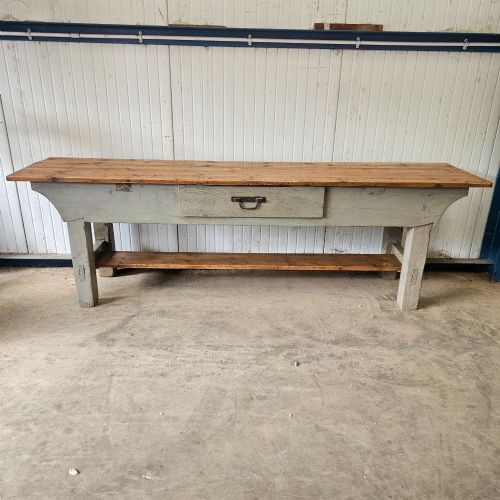
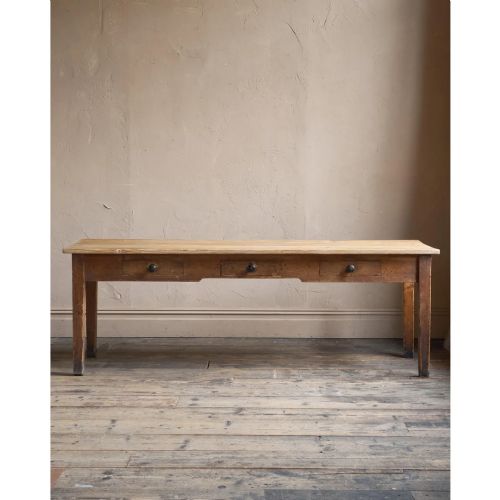
Proportion and scale dictate the visual weight of each piece, ranging from small primitive elm benches to substantial eight-foot French country house consoles. The presence of original working components, such as wooden vices or integrated drawers, elevates the structural interest.
The Wooden Workbench Console Glossary
- Scullery table
- A heavy utilitarian table traditionally used for kitchen preparation and washing tasks. These pieces usually feature sturdy pine construction and generous proportions.
- Trestle table
- A table design featuring a horizontal beam supported by two pairs of sloping legs. This format offers stable support across various lengths of timber.
- Potting table
- A functional working surface designed for gardening tasks, frequently incorporating lower open shelves for storage. They are typically fashioned from pine.
- Vice
- A mechanical screw device attached to workbenches for holding materials securely in place. Surviving vices demonstrate the original workshop function of the console.
Wooden Workbench Console: Frequently Asked Questions
Are these tables suitable for kitchen prep?
Many of these pieces originated as scullery, dairy, or work tables designed precisely for domestic food preparation and manual tasks. Their robust timber tops easily accommodate contemporary kitchen use.
Consider the existing finish of the wood, as scrubbed pine or bleached oak surfaces require appropriate care to maintain their historic appearance against moisture.
What periods do these consoles date from?
The selection spans from around eighteen hundred through the nineteenth century and into the early twentieth century. Pieces from this timeframe showcase traditional craftsmanship and regional European styles.
Construction details, such as hand-cut joints and timber choice, help indicate the age and origin of each individual workbench.
How do I care for historic work surfaces?
Preserve the dry scrubbed or waxed finish by avoiding harsh chemical cleaners and excessive moisture. Regular dusting and occasional natural wax application will maintain the timber patination.
Accept minor marks and historical dents as part of the narrative, since these surface irregularities record the working life of the bench.