



Work Horse Art
Work horse art captures the heavy toil of rural labour through paintings and carvings of shire horses, plough teams, and haulage carts.
Work Horse Art
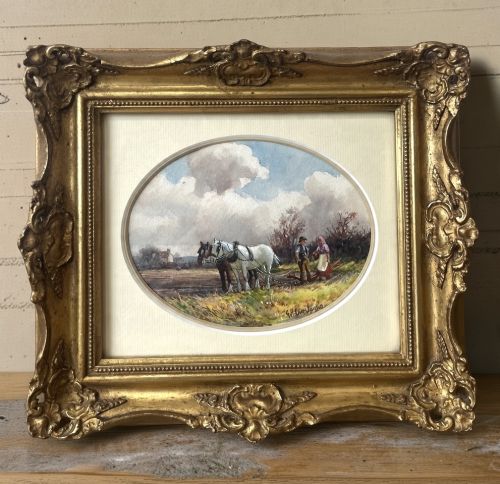
When buyers search for work horse art, they encounter Victorian and Edwardian portrayals of heavy horses labouring on farms, pulling timber carts, and hauling seaweed along the coast. These pieces record an agricultural era powered by animal strength before mechanisation took over the countryside.
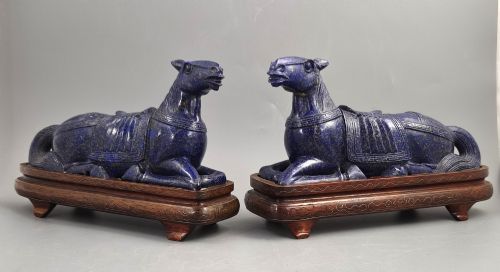
The selections on this page lean heavily towards oil paintings on canvas and watercolours on paper, capturing rural landscapes from British, French, and Belgian artists. Alongside two-dimensional paintings, the category includes carved lapis lazuli figures and iron weathervanes.
Rural genre scenes dominate the listings, showing shire horses at troughs, ploughing fields, and resting beneath oak trees alongside farm labourers. These works celebrate the vital partnership between worker, beast, and the land across the nineteenth and early twentieth centuries.
Factors of Quality
Quality rests upon the artist's command of equine anatomy and the believable weight of the animal straining against the harness. Superior works capture the heavy muscle structure and tired stance of a working shire horse rather than presenting a generic or stiff silhouette.
The integration of the horse within its atmospheric landscape separates standard decorative watercolours from distinguished works. Master hands balance the texture of mud, timber, and fur with natural light, whereas lesser pieces treat the background as a flat backdrop.
Work Horse Art Retail Price Guide 2026
Typical asking prices for work horse art among the pieces listed under this phrase on Sellingantiques today, from the lower quarter to the upper quarter. They describe what is for sale here now, not the wider market.
Canvas and paper serve as the primary supports for depictions of shire horses working in Yorkshire, Normandy, and rural Ireland.
John Frederick Herring·John Linnell·James William Booth·George Wright·Frederick J. Knowles
The Work Horse Art Glossary
- Oil on Canvas
- A painting medium where pigments suspended in oil are applied to stretched canvas cloth. This technique allows for rich colour depth and layered textures suitable for depicting rural British landscapes.
- Watercolour
- A paint consisting of pigment suspended in a water-based solution, typically applied to paper. It offers translucent washes that create light-filled depictions of skies and fields.
- Weathervane
- An instrument mounted on roofs to show the direction of the wind, often featuring decorative metal or silhouette figures. Antique examples frequently take the form of horses or huntsmen.
- Genre Painting
- A style of art depicting scenes from everyday life, ordinary people, and agricultural labour. These works document historical farming practices without idealising the toil.
- Gesso
- A plaster-like mixture used as a base for painting or moulding frames and decorative objects. It provides a smooth surface for gilding and fine detailing.
Work Horse Art: Frequently Asked Questions
What periods do these pieces come from?
The works span from the Georgian era through the Victorian and Edwardian periods up to the mid-twentieth century. Most examples cluster around the late nineteenth and early twentieth centuries when rural realism flourished.
Buyers will also find occasional pieces from the late Qing dynasty and mid-century British studios, reflecting varied global interpretations of working animals.
How were these paintings originally displayed?
Paintings of this scale were typically housed in substantial wooden frames and hung in Victorian country homes, farmhouses, and drawing rooms. They served as celebrations of rural industry and agrarian wealth.
Watercolours on paper required glass protection to shield the pigments from light and moisture, a traditional mounting method that persists in modern collections.
How do I care for antique watercolours?
Watercolours on paper demand protection from direct sunlight to prevent the pigments from fading over time. Keeping them in stable humidity environments preserves the paper support.
Glazing with UV-filtering glass helps shield the delicate washes while allowing the artwork to be safely displayed in domestic interiors.
What subjects accompany the horses?
The animals appear alongside farm labourers, ploughmen, and carters engaged in daily estate tasks such as harvesting, timber hauling, and gathering seaweed. Pigs, ducks, and farm dogs frequently populate the background landscapes.
These additions place the workhorse firmly within the context of a busy working farmyard or rural village life.