

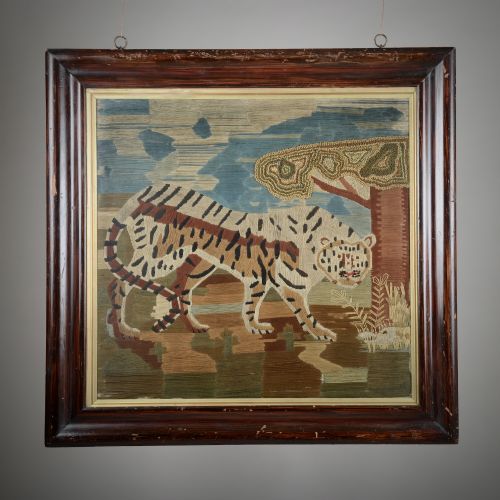


Wool Work Tapestry
These wool work tapestry pieces are tactile textiles worked in wool on canvas and linen, offering rich colour and historic character for any wall or interior.
Wool Work Tapestry
When you search for wool work tapestry, you encounter needlework pictures, framed textile art and wall hangings spanning the nineteenth century. These items include Victorian Berlin work, plushwork, samplers and crewelwork embroidered panels.
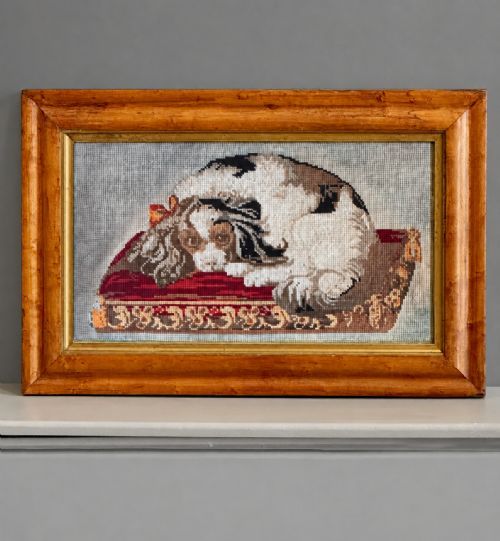
The pieces on this page range from early nineteenth century felt and wool work pictures to Edwardian interpretations after Constable. You will also find side chairs fitted with wool work seats and large German gilt-framed wall hangings.
Makers and stitchers utilised wool, silk and felt on supportive grounds of linen and canvas. Many survive preserved in their original burr maple, rosewood or giltwood frames.
How they were made
Stitchers worked dyed wool and silk yarns through open-weave canvas or tightly woven linen grounds. Techniques span Berlin wool work, gros point, petit point and plushwork, creating textured surfaces with varied pile and depth.
Applied elements such as felt and silk applique added dimension to pictorial scenes depicting animals, landscapes and historical subjects. Finished textiles were stretched and mounted into timber frames of mahogany, maple and giltwood.
Wool Work Tapestry Retail Price Guide 2026
Typical asking prices for wool work tapestry among the pieces listed under this phrase on Sellingantiques today, from the lower quarter to the upper quarter. They describe what is for sale here now, not the wider market.
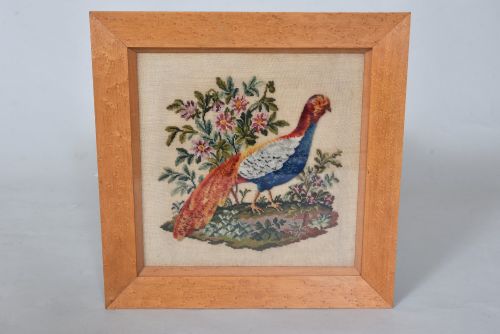
Several Victorian stitchers immortalised beloved pets in wool, ensuring King Charles spaniels and plush pheasants outlived their owners by centuries.
What varies in quality
Quality rests in the precision of the stitch work and the complexity of the colour palette. Finer examples display meticulous shading and tightly packed stitches that render pictorial details with exceptional clarity.
The survival of original framing, whether burr maple, rosewood or gilded wood, influences the integrity of the piece. Superior textiles retain vibrant wool colours without significant fading or moth damage across the canvas.
The Wool Work Tapestry Glossary
- Berlin work
- A style of counted-thread embroidery popular in the nineteenth century using painted paper patterns. It typically utilised brightly coloured wools on a canvas ground.
- Gros point
- A coarse needlepoint stitch worked on canvas that creates a durable, textured surface. It often forms the background or bold elements of a textile picture.
- Petit point
- A fine needlepoint stitch worked over a single thread of canvas, allowing for high detail and shading. It frequently appears alongside gros point in nineteenth century work.
- Plushwork
- A variant of needlework featuring raised, cut pile loops that create a tactile, velvety surface. This technique was used to render animals and textures realistically.
- Crewelwork
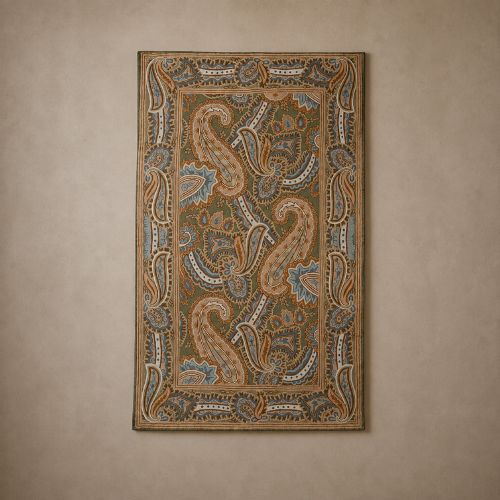
- Embroidery executed with wool yarn on a linen or cotton twill ground. It employs traditional curving stitches to build elaborate floral and paisley motifs.
Wool Work Tapestry: Frequently Asked Questions
What is a wool work tapestry?
A wool work tapestry is a needlework picture or wall hanging stitched in wool yarn on a canvas or linen backing. These decorative textiles date primarily from the nineteenth century and depict animals, landscapes, and portraits.
They were created using various embroidery techniques, including Berlin work, gros point, and plushwork. Most examples are mounted behind glass within period timber frames.
How do I date an antique wool work piece?
Dating relies upon stylistic clues, framing materials, and the type of canvas or linen support. Nineteenth-century pieces often feature characteristic Berlin work patterns, floral motifs, or animal subjects associated with the Victorian era.
Secondary indicators include the wood of the frame, such as burr maple, rosewood, or mahogany. Construction methods on the reverse also provide evidence of the period of manufacture.
Were these pieces always framed?
Many wool work items were framed as pictures shortly after completion to protect the delicate textile from dust and handling. Wall hangings and textile panels were often displayed directly on walls.
Some functional pieces, such as chair seats, integrated the embroidery into furniture. Surviving frames are frequently original to the textile, adding historic context.
How should I care for a wool work tapestry?
Keep textile pieces away from direct sunlight to prevent the dyed wool yarns from fading. Display them in rooms with stable humidity to protect both the fabric ground and the wooden frame.
Avoid hanging needlework in damp environments or areas subject to extreme temperature fluctuations. Gentle dusting of the frame is usually sufficient for routine maintenance.