

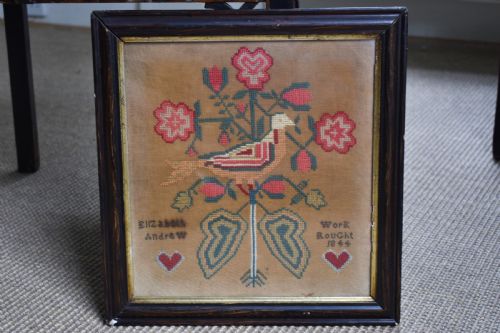


Wool Work Embroidery
These wool work embroidery pieces are needle-worked textiles spanning nineteenth-century folk art to Persian wall hangings, bringing rich texture and heritage to interior walls.
Wool Work Embroidery
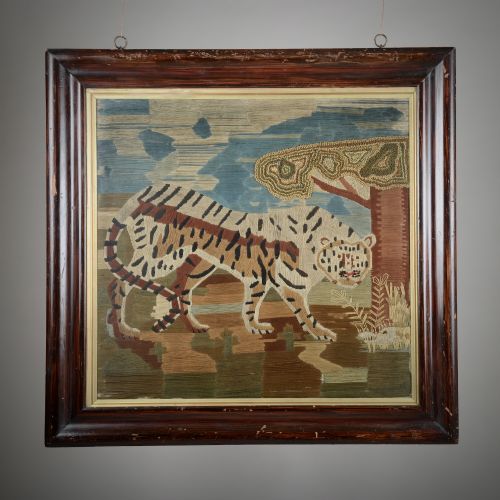
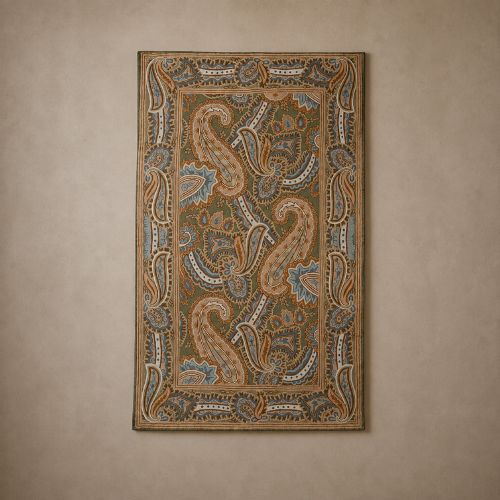
When you search for wool work embroidery, you encounter a diverse array of framed textiles, wall art, and hanging panels dating from the early nineteenth century through to the early twentieth century. The selection ranges from domestic samplers and Berlin work animal portraits to large Persian Rasht embroideries and crewelwork wall hangings.
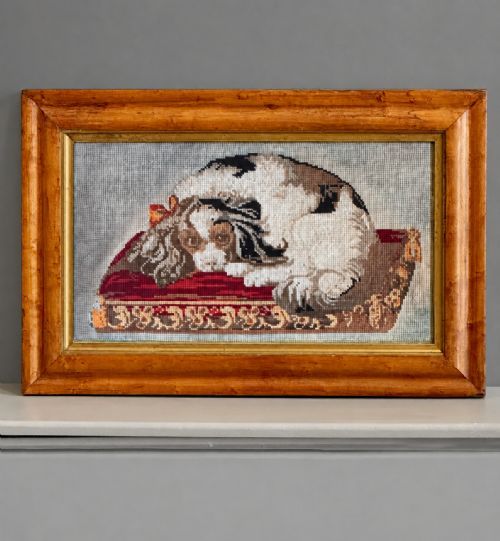
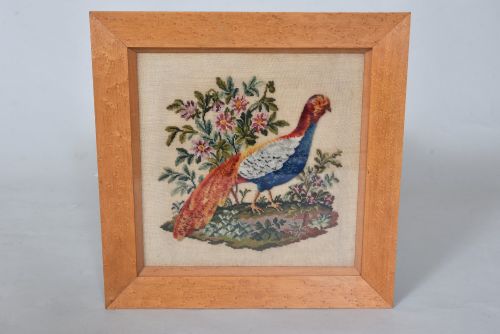
The Victorian pieces form a significant part of the available selection, frequently featuring subjects such as dogs, birds, and pastoral scenes executed in plushwork or gros and petit point. Alongside these British works, Persian silk-on-felt embroideries and German tapestries demonstrate the wide geographic spread of textile artistry from the period.
How they were made
The construction of these pieces relies heavily on wool, silk, and felt worked across canvas or linen foundations. Artisans utilised needlework techniques such as crewelwork, plushwork, and Berlin work to build dense, textured surfaces and pictorial depth.
Framing materials play an integral role in the presentation of these textiles, with original burr maple, rosewood, and giltwood frames frequently housing the panels and pictures.
Wool Work Embroidery Retail Price Guide 2026
Typical asking prices for wool work embroidery among the pieces listed under this phrase on Sellingantiques today, from the lower quarter to the upper quarter. They describe what is for sale here now, not the wider market.
Listings feature textiles from the nineteenth and early twentieth centuries, incorporating materials such as wool, silk, felt, and canvas within wood and giltwood frames.
What varies in quality
Quality in these textiles rests upon the fineness of the stitch execution and the preservation of the materials, whether the wool retains its vibrant tone or the silk applique remains intact upon the felt base. The complexity of the pictorial subject, from detailed depictions of animals to expansive landscapes, also distinguishes the more ambitious pieces.
The integrity of the framing contributes significantly to the overall character, particularly when original surrounds like burr maple or rosewood accompany the textile panel.
The Wool Work Embroidery Glossary
- Berlin work
- A style of counted-thread embroidery popular in the nineteenth century that used charted patterns and brightly coloured wools. It allowed makers to create detailed pictorial scenes and portraits.
- Crewelwork
- An ancient surface embroidery technique using wool yarn to create flowing designs on linen or twill. It frequently appears in large-scale wall hangings and textile panels.
- Plushwork
- A needlework technique involving looped stitches that are cut to create a velvet-like, three-dimensional pile. This method was often employed to render animal coats with realistic texture.
- Gros point
- A coarse needlepoint stitch worked on canvas, typically used for the background or less detailed areas of a tapestry. It provides a sturdy and durable foundation for pictorial wall hangings.
Wool Work Embroidery: Frequently Asked Questions
What is Berlin work?
Berlin work is a type of nineteenth-century counted-thread embroidery created using painted paper patterns and wool yarn. It became immensely popular for producing decorative pictures and furnishings.
Makers followed the mapped grids to build up dense pictorial scenes, often featuring animals, domestic subjects, or copies of famous paintings.
How should I hang a textile panel?
Framed wool work pictures can be hung directly on walls using standard picture hooks, provided the weight of the wood frame is properly supported. Wall hangings without rigid frames require specialised mounting methods.
Keep textile art away from direct sunlight and excessive moisture to protect the wool and silk fibres from fading and degradation.
What is the difference between crewelwork and wool work?
Crewelwork specifically refers to surface embroidery executed with wool yarn on a linen or twill foundation, often featuring organic or scrolling patterns. Wool work is a broader term encompassing any textile art primarily created using wool threads.
This includes counted-thread tapestries, Berlin work, plushwork, and samplers alongside traditional crewel embroidery.
How do I date an antique needlework?
Dating these textiles involves examining the materials, framing styles, and subject matter characteristic of different periods. Nineteenth-century examples often utilise specific wool types, canvas weaves, and original wood frames like burr maple or rosewood.
Stylistic cues, such as Victorian folk art motifs or Edwardian design elements, further help narrow down the decade of creation.