


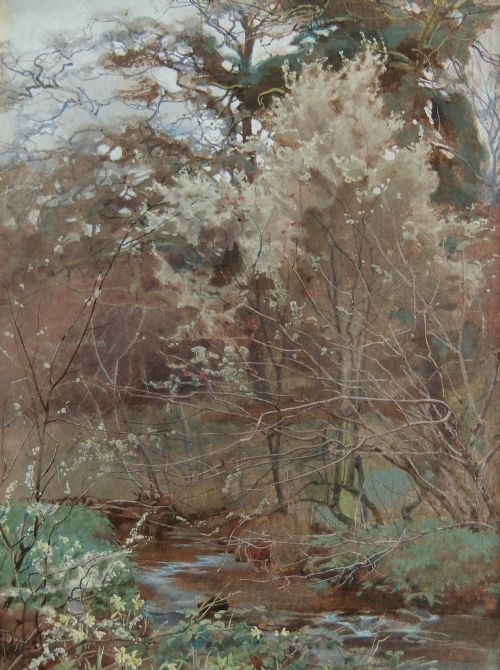


Woodland Nature Painting
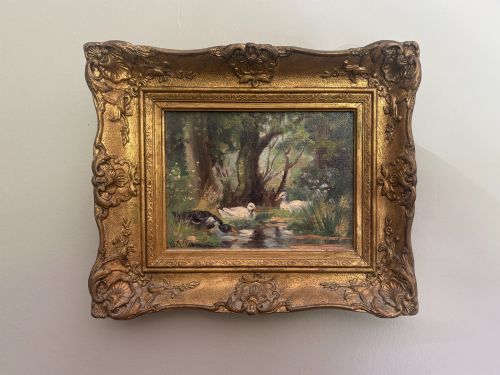
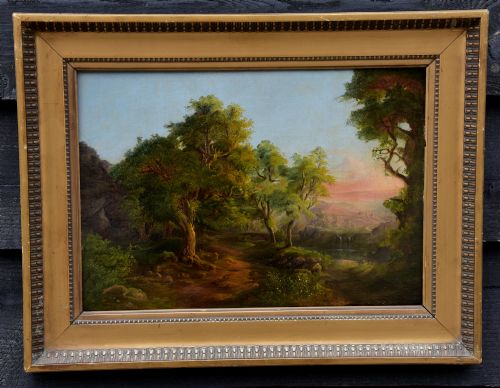
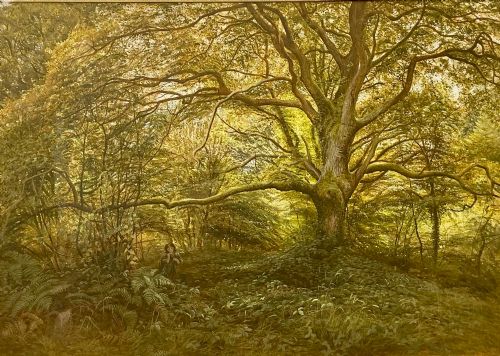
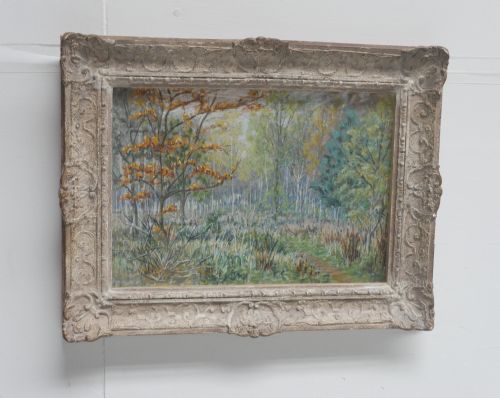
These woodland nature painting examples capture forest floors and leafy glades, offering a quiet window into the natural world for any room.
Woodland Nature Painting
A woodland nature painting brings the quiet atmosphere of the forest indoors, recording trees, leafy tracks, and shaded glades. These works range from the detailed naturalism of the nineteenth century to early twentieth-century impressionist interpretations.
Most pieces encountered here date from the Victorian era up to the mid-twentieth century, capturing rural landscapes and wooded riversides. Artists use various formats, from expansive oil on canvas compositions to intimate watercolours on paper.
Subjects often focus on specific woodland moments, such as bluebell woods in spring or sunset light filtering through branches. Buyers will find both signed works by known nineteenth and twentieth-century painters and accomplished unsigned watercolours or oils.
How They Were Made
Painters build these scenes using oil paint or watercolour applied to stretched canvas, wooden board, or heavyweight paper. Oil pigment allows for rich, layered textures that capture the depth of thick foliage and tree trunks.
Watercolour works rely on fluid washes of colour on paper to create luminous effects of light filtering through a woodland canopy. Many pieces are preserved behind glass within wooden frames, sometimes accented with gold leaf moulding.
Grounds of canvas or paper are prepared to hold fine pigments, allowing artists to render intricate details of bark, leaves, and forest floors. The physical support dictates the longevity and handling of each individual artwork.
Several canvases manage to capture the exact rustle of bluebells beneath ancient oaks without spilling a single drop of paint.
What Varies in Quality
The strength of a woodland nature painting rests on the artist's ability to handle light and shadow within dense vegetation. Superior examples demonstrate confident brushwork and a balanced composition that draws the eye deep into the grove.
Material preservation significantly affects the standing of a piece, particularly the stability of oil paint on canvas or board. Works showing careful retention of original pigment colour and framing without excessive restoration hold greater visual integrity.
Thomas W Lascelles·John Wright Oakes·William Mellor·Rowland Henry Hill·Alfred W Parsons·George F Wetherbee·Donald Watson
The Woodland Nature Painting Glossary
- Oil Paint
- A slow-drying paint made of pigment particles suspended in a drying oil, typically linseed. This medium allows artists to blend tones smoothly and build rich impasto textures.
- Watercolour
- A painting method in which the paints are made of pigments suspended in a water-soluble vehicle. It yields translucent washes that let the bright paper ground reflect light through the colour.
- Canvas
- A closely woven heavy fabric used as a support surface for oil paintings. It is typically stretched tightly over a wooden frame before painting begins.
- Impressionist
- A style of painting emphasising light and its changing qualities rather than precise details. Artists use small, visible brushstrokes to capture the immediate visual sensation of a scene.
Woodland Nature Painting: Frequently Asked Questions
How do I date a woodland painting?
Examine the materials, framing style, and any signatures or inscriptions on the reverse of the canvas or board. Nineteenth-century works often use heavier stretchers and specific canvas stamps compared to mid-century pieces.
Compare the artistic style and subject matter with known periods, noting whether the handling leans toward Victorian naturalism or later impressionist looseness.
Where should I hang a landscape painting?
Choose a wall with indirect natural light to protect the pigments from fading over time, avoiding direct sunlight. Keep paintings away from damp areas or sudden temperature changes, such as active fireplaces.
Ensure the hanging height places the centre of the canvas at eye level for comfortable viewing within your living space.
Are these paintings original artworks?
Yes, the selection consists of original hand-painted works created directly by the artist on canvas, board, or paper. Each piece represents a unique application of paint rather than a mechanical reproduction or print.
Signatures, artist ciphers, and distinct brush textures confirm the hand-painted nature of these historical artworks.
How do I care for antique watercolours?
Protect watercolours from bright sunlight, as the pigments used on paper are particularly sensitive to ultraviolet fading. Ensure they remain framed behind glass with acid-free mounts to prevent paper degradation.
Maintain stable indoor humidity levels to protect both the paper support and the antique wooden or gilded frames.