


Wooden Wine Storage Cabinet
These wooden wine storage cabinet pieces are period cellarettes and coolers designed to hold bottles securely, bringing historic craftsmanship to modern dining rooms.
Wooden Wine Storage Cabinet
When you search for a wooden wine storage cabinet, you encounter historic cellarettes, wine coolers, and drinks cabinets spanning several centuries. These vessels originate primarily from the Georgian, Regency, and Edwardian periods, serving the practical purpose of storing and chilling wine bottles.
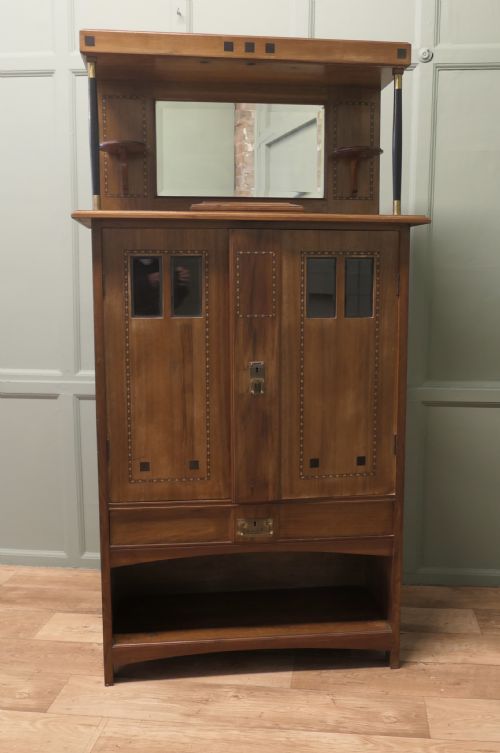
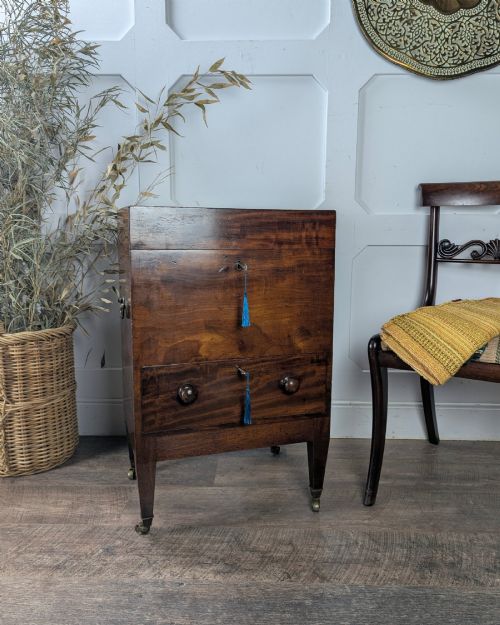
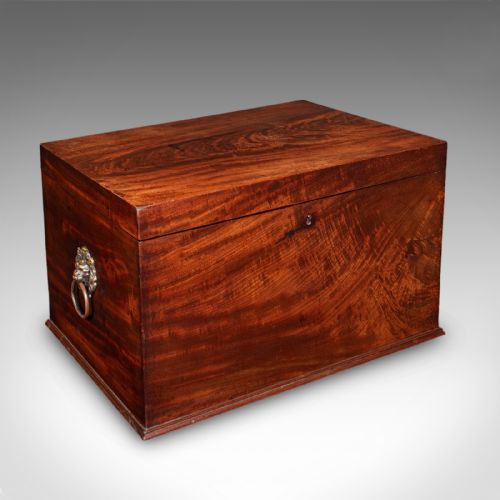
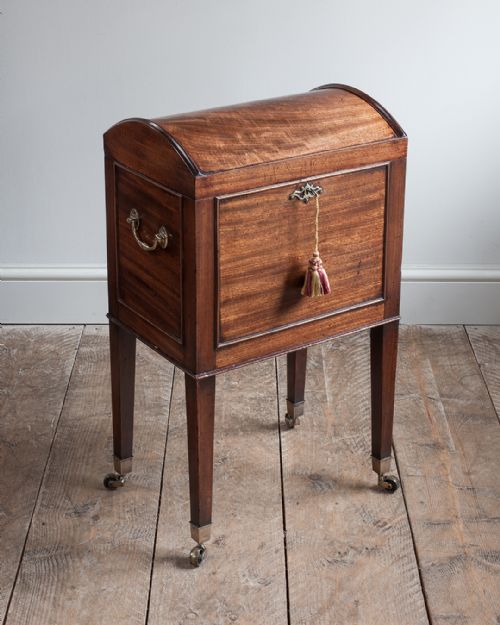
The pieces on this page range from grand George III mahogany chests to rustic pine cupboards and inlaid Edwardian examples. You will frequently find forms such as sarcophagus wine coolers, box cellarettes, and specialised bottle storage chests alongside cocktail cabinets.
Makers and workshops of the eighteenth and nineteenth centuries applied considerable artistry to these functional items. Whether selecting a vernacular pine wine rack or an exhibition quality burr elm piece, collectors acquire significant social history alongside functional bottle storage.
Materials and construction methods
Makers relied heavily on dense timbers such as mahogany, oak, and burr elm to construct sturdy bodies capable of holding heavy liquid loads. Flame mahogany and fine veneers appear on formal Regency and Georgian examples, whilst pine serves for more utilitarian storage furniture.
Metal fittings provide essential structural support and functional hardware. Brass bands reinforce barrel and box forms, while mirror glass and specialised internal metal racks feature in later cocktail and display cabinets.
Materials represented across the collection include traditional hardwoods like mahogany and oak alongside brass, mirror glass, and pine.
Distinguishing quality in construction and design
The finest examples display superior timber selection, such as richly figured flame mahogany or burr elm, paired with meticulous cabinetmaking joinery. Lesser pieces rely on simpler construction and plain timbers without decorative grain matching.
Hardware and internal detailing separate standard storage from exceptional pieces. Original brass carrying handles, secure lock mechanisms, and intact internal bottle dividers indicate higher workshop standards and better preservation.
Gillingtons·Gillows of Lancaster and London·Whytock & Reid·Waring & Gillows
The Wooden Wine Storage Cabinet Glossary
- Cellarette
- A lockable box, chest, or cabinet designed to hold wine bottles near the dining table. They became particularly popular during the Georgian and Regency eras.
- Sarcophagus wine cooler
- A grand nineteenth-century cellarette shaped like a classical stone coffin, often featuring carved paw feet and lead-lined interiors for ice.
- Flame mahogany
- A decorative veneer cut from the branch junction of a mahogany tree, creating a distinctive rippled, flame-like grain pattern.
- Brass bound
- A method of reinforcing wooden staves or box corners with structural brass bands, frequently seen on campaign and bottle storage barrels.
- Secessionist
- An early twentieth-century design movement rejecting historicism in favour of cleaner geometric lines and modernist aesthetic principles.
Wooden Wine Storage Cabinet: Frequently Asked Questions
What is a wooden wine storage cabinet?
A wooden wine storage cabinet is a historic piece of furniture designed to safely hold and organise wine bottles. These range from antique Georgian cellarettes to Edwardian bottle storage chests.
Historically used in dining rooms to keep wine close at hand, today they offer characterful and secure bottle storage for modern collectors.
How were antique wine coolers used?
Antique wine coolers and cellarettes were typically kept in the dining room during formal meals. Servants placed ice and water inside the lead-lined interiors to chill bottles before serving.
Over time, the function shifted from active cooling to secure storage, locking away valuable vintages from household staff.
How do I date a wooden cellarette?
Dating a cellarette involves examining the timber species, construction techniques, and decorative style. Georgian and Regency pieces often feature solid mahogany, dovetail joints, and classical brass hardware.
Later Edwardian and twentieth-century cabinets display different veneers, inlay work, and internal configurations that reflect the manufacturing standards of their era.
Will modern wine bottles fit inside?
Many antique cellarettes and wine coolers feature internal wooden dividers sized for historic bottle dimensions. Standard Bordeaux bottles often fit well, though unusual shapes may require careful checking.
Collectors should inspect the internal compartment dimensions to ensure compatibility with contemporary bottle sizes.
How do I care for antique mahogany?
Caring for antique mahogany involves keeping the timber away from direct heat sources and sudden humidity changes. Regular dusting with a soft, dry cloth preserves the polished surface.
Applying traditional beeswax occasionally helps nourish the wood and maintain the natural lustre of the vintage finish.