



Wooden Whatnot Table
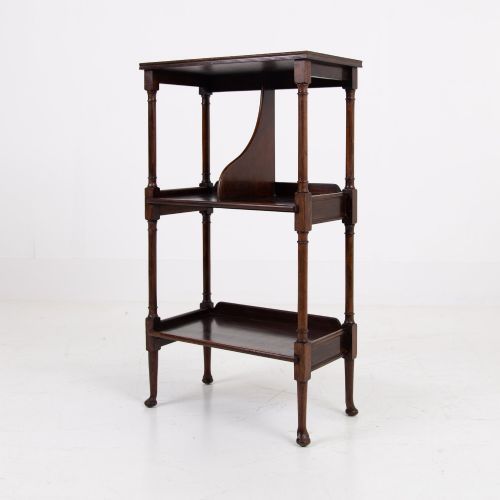
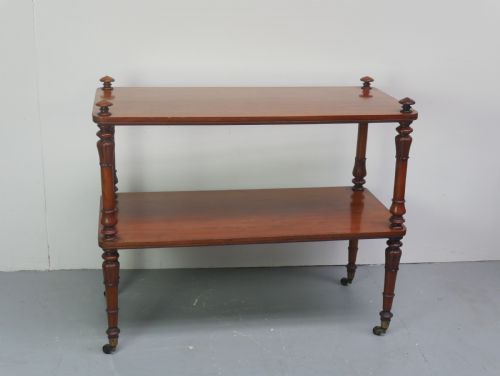
A wooden whatnot table brings tiered display and practical surface space into a room, offering multiple shelves to hold books, small ornaments or everyday items.
Wooden Whatnot Table
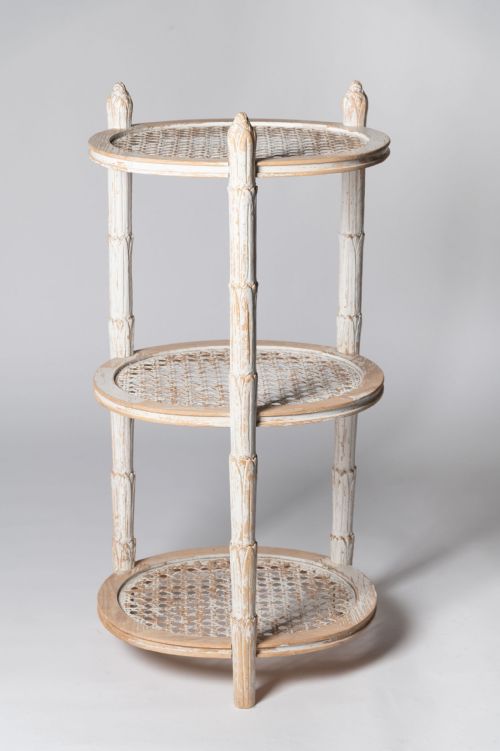
When someone searches for a wooden whatnot table, they encounter multi-tiered display stands and serving pieces originating primarily from the Victorian, Georgian, and Regency periods. These tiered items include étagères, side tables, small bookshelves, and dumb waiters designed to maximise vertical space in domestic interiors.
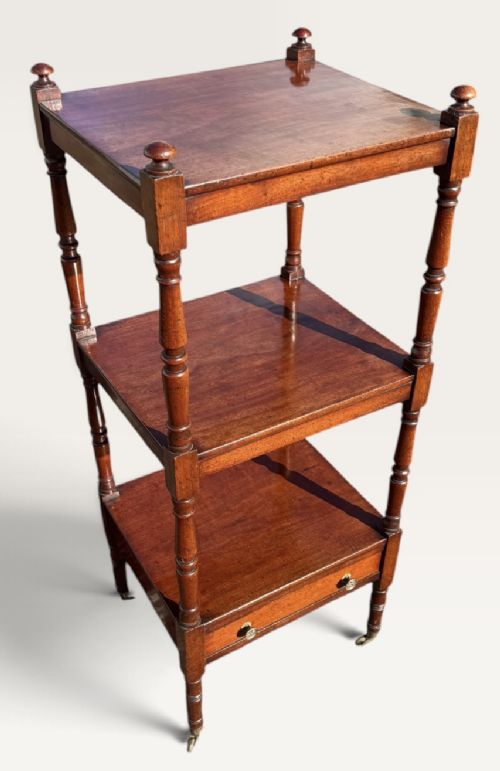
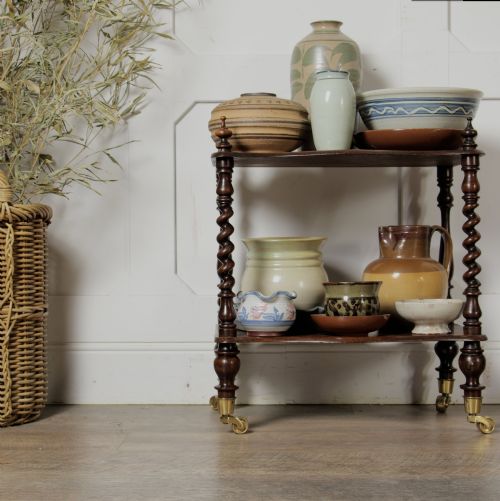
The most common versions met on this page span the nineteenth century, taking the form of three or four-tier mahogany, walnut, or rosewood stands. Makers constructed these items with graduated shelves supported by slender turned columns, uprights, or barley twist supports.
How they were made
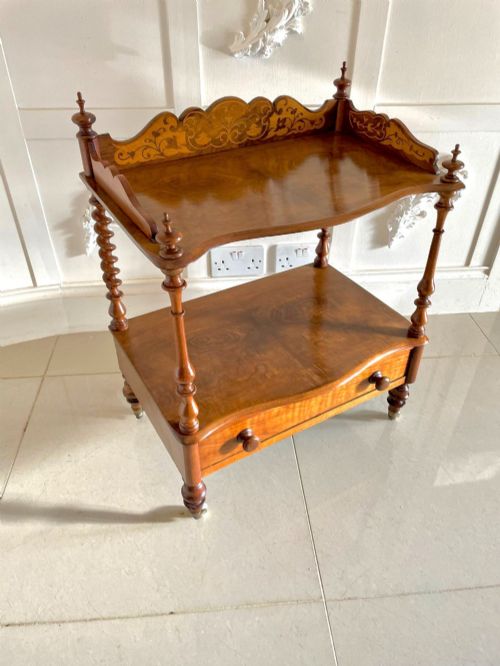
Craftsmen built these pieces predominantly using solid timbers and decorative veneers such as mahogany, walnut, burr walnut, rosewood, and birdseye maple. They frequently applied intricate marquetry inlay, satinwood banding, and brass castors to the feet for mobility.
Structural support relies on turned wooden pillars, carved uprights, and barley twist columns that separate each horizontal tier. Finer examples integrate ormolu mounts, brass galleries around the shelves, and specialised fitted compartments like cellarettes or canterbury dividers.
Wooden Whatnot Table Retail Price Guide 2026
Typical asking prices for wooden whatnot table among the pieces listed under this phrase on Sellingantiques today, from the lower quarter to the upper quarter. They describe what is for sale here now, not the wider market.
Current listings demonstrate a prevalence of mahogany and walnut timber, spanning periods from the Georgian era through to the Edwardian period.
What varies in quality
The choice of primary timber and secondary veneers establishes the baseline quality, with figured burr walnut, richly grained rosewood, and dense mahogany standing above standard domestic woods. The deployment of detailed marquetry inlay, satinwood stringing, or cast ormolu mounts further separates simpler utility pieces from finer parlour furniture.
Proportion and construction rigour dictate the long-term stability of multi-tiered stands, where slender uprights must support heavy timber shelves without wobble. Elegant turning on columns, clean joints between tiers, and original brass castors indicate a higher standard of workshop production.
The Wooden Whatnot Table Glossary
- Étagère
- A piece of furniture consisting of a set of open shelves for displaying small articles. This term often appears interchangeably with whatnot.
- Canterbury
- A low stand fitted with partitions for holding sheet music, books, or newspapers. Some variations combine this compartment with standard whatnot tiers above.
- Cellarette
- A lockable container or compartment designed for holding bottles of wine or spirits. These occasionally appear integrated into the lower section of nineteenth-century pieces.
- Marquetry
- The art and craft of applying pieces of veneer to a structure to form decorative designs and patterns. Cabinet makers utilised contrasting woods to create intricate surface ornamentation.
Wooden Whatnot Table: Frequently Asked Questions
What is a wooden whatnot table used for?
These tiered stands served historically to display ornaments, books, and small personal belongings in principal rooms. Today, they function effectively as lamp tables, bedside night stands, or compact display surfaces.
Their multi-shelf design allows owners to organise reading materials and decorative items without occupying significant floor space in smaller rooms.
How do I date a wooden whatnot?
Dating relies on identifying the prevailing timber choices, hardware, and structural styles associated with periods like the Georgian, Regency, and Victorian eras. Earlier pieces often utilise solid mahogany with delicate turnings, while mid-nineteenth-century examples frequently feature burr walnut veneers and marquetry.
Examining the construction methods underneath the shelves and the design of any supporting columns or feet provides further chronological clues.
Are all wooden whatnots multi-tiered?
Most pieces matching this description feature at least three graduated shelves supported by upright pillars or columns. Variations can include additional fitted compartments such as small drawers, cellarettes, or canterbury sections.
The defining characteristic remains the vertical tiered arrangement rather than a single flat surface.
Where should I place a whatnot in my home?
These compact stands suit corners, alcoves, or bedside spaces where vertical storage is required rather than a wide footprint. Their open shelving makes them ideal for holding lamps, books, and collections of small objects.
Placing them away from direct heat sources helps protect the polished timber surfaces and any delicate decorative veneers.