




Wooden Weather Instrument
A wooden weather instrument brings the science of atmospheric pressure into the home through carved timber, brass dials and mercury columns.
Wooden Weather Instrument
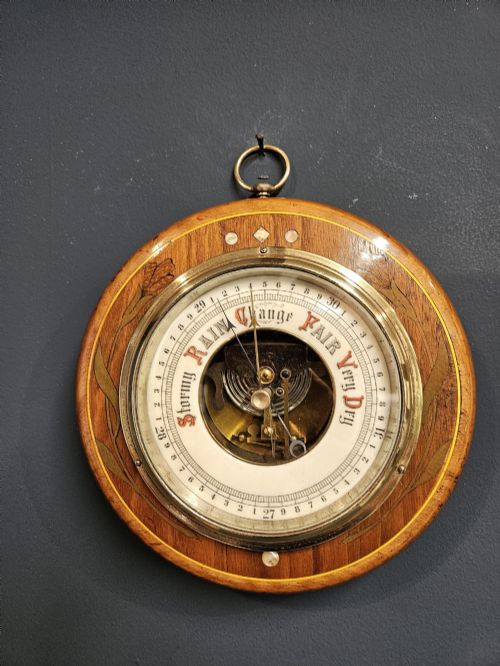
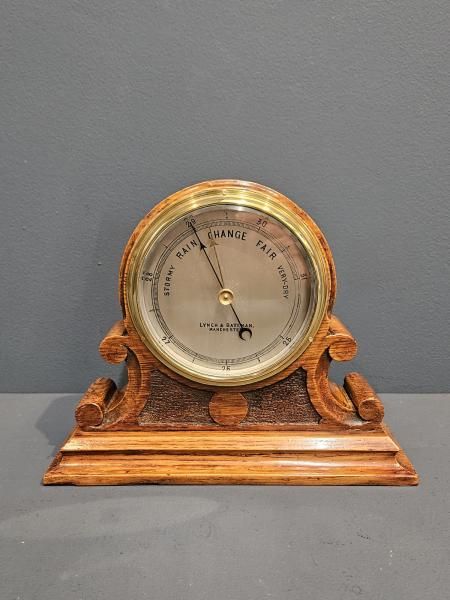
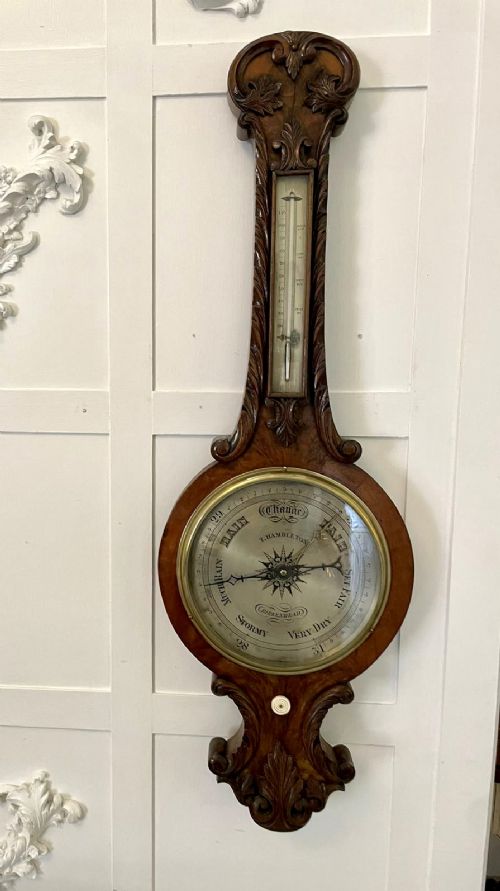
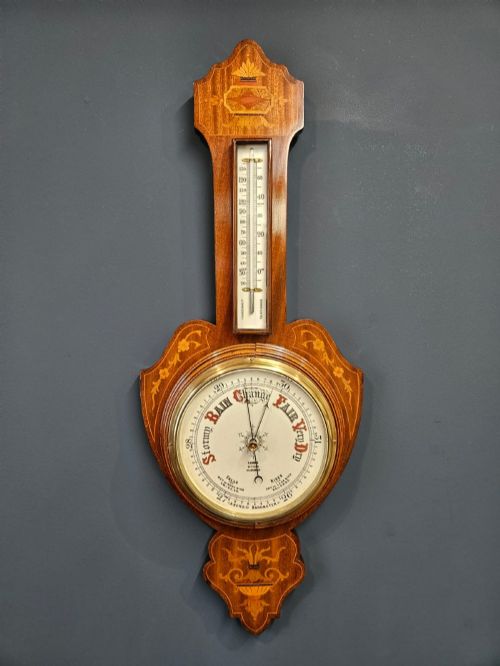
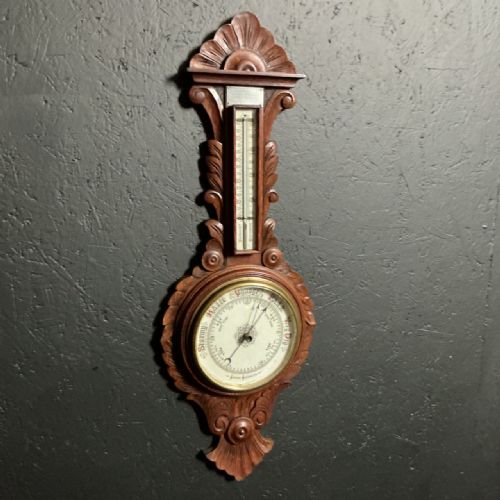
A wooden weather instrument encompasses domestic barometers, barographs, and thermometer combinations housed in timber cases. These pieces range from upright stick barometers to sweeping banjo formats and compact desk pieces.
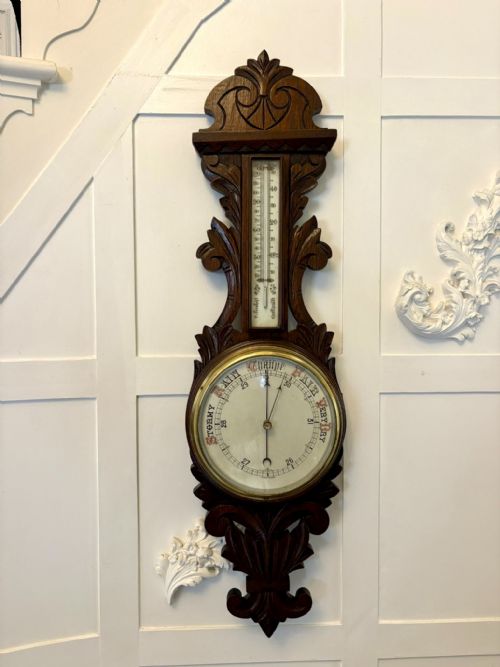
The most common examples on this page are Victorian and Edwardian banjo barometers featuring carved crests and silvered brass dials. Wall-mounted oak, walnut, and mahogany cases dominate the selection, reflecting domestic British interior tastes of the nineteenth and early twentieth centuries.
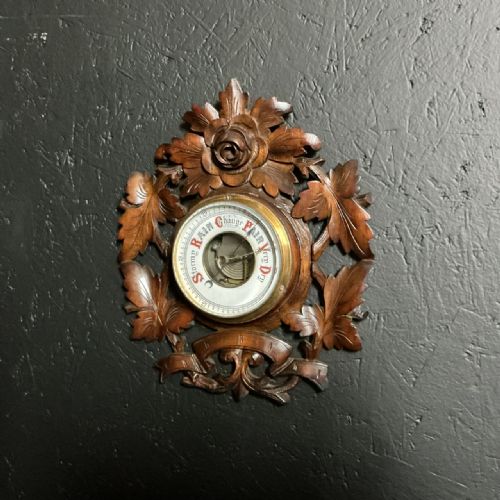
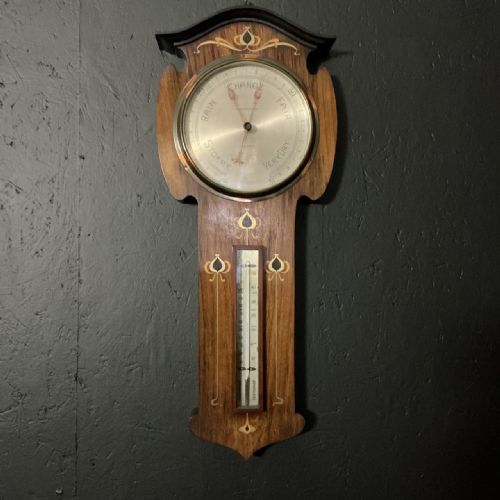
Makers housed these instruments in regional styles including Black Forest carved foliage, Regency wheel formats, and later Art Deco geometric designs. Wall clocks and maritime bulkhead pieces also appear alongside traditional weather metres.
Materials and construction
Cabinetmakers utilised dense hardwoods like mahogany, walnut, oak, and rosewood to house sensitive internal movements. These timbers were selected for stability and grain figure, often enhanced with marquetry inlay or deep relief carving depicting birds and foliage.
Metals including brass and silvered bronze form the visible dials, bezels, and thermometer scales. Glass protects the delicate pointers and paper or metal indicator cards, while mercury or aneroid capsules drive the internal mechanical response to atmospheric changes.
Wooden Weather Instrument Retail Price Guide 2026
Typical asking prices for wooden weather instrument among the pieces listed under this phrase on Sellingantiques today, from the lower quarter to the upper quarter. They describe what is for sale here now, not the wider market.
Listings feature timber cases in mahogany, walnut, oak, rosewood, and beechwood spanning the Victorian, Regency, Edwardian, and Art Deco periods.
Distinctions in quality
The standard of a wooden weather instrument depends on the depth and crispness of the timber carving, especially on Black Forest and Victorian oak examples. Superior pieces display hand-chased brass bezels, finely engraved silvered dials, and robust cabinet joinery rather than pressed ornamentation.
The reputation of the maker, whether a provincial English retailer or a specialised London instrument house, elevates a piece significantly. Intricate marquetry work and intact, legible maker signatures on the dial separate standard domestic items from high-grade scientific pieces.
Bramwell & Harbron of Darlington·W Watson & Sons·Negretti & Zambra·Jules Richard·L Casatelli of Liverpool·Vecchio & Co of Shaftsbury·Pillischer London·Ciresa of Milan
The Wooden Weather Instrument Glossary
- Banjo barometer
- A domestic wall barometer housed in a case shaped like a banjo, typically combining a hygrometer, thermometer, and large round dial. This format became popular during the Regency and Victorian periods.
- Aneroid barometer
- A weather instrument that measures atmospheric pressure through the expansion and contraction of a flexible metal capsule, eliminating the need for liquid mercury. Most nineteenth-century wheel and desk models utilise this mechanism.
- Stick barometer
- A vertical wall instrument containing an open tube of mercury that rises and falls against a calibrated scale. These pieces offer a direct and traditional reading of barometric pressure.
- Barograph
- A recording meteorological instrument that draws a continuous graph of atmospheric pressure onto a rotating paper drum over the course of a week. They are typically enclosed in glass and mahogany table cases.
- Silvered dial
- A brass dial plate treated with a silver solution to produce a matte white metallic finish with engraved black lettering. This treatment reduces glare and ensures high legibility for the readings.
Wooden Weather Instrument: Frequently Asked Questions
How do I read a wooden barometer?
Read the primary dial using the pointer hand, then align the movable indicator needle over it to track whether pressure rises or falls over the course of a day. Higher pressure generally indicates fair weather, while falling pressure suggests approaching rain or wind.
Traditional stick barometers require noting the exact height of the mercury column against the scale. Many banjo and wheel models also incorporate secondary dials for humidity and temperature to provide a complete atmospheric summary.
Can I hang these instruments on any wall?
Mount wooden weather instruments securely to a solid wall using appropriate fixings suited to the weight of the timber case and glass components. Avoid placing them near direct heat sources, radiators, or damp exterior walls that could warp the wood or affect internal mechanisms.
Allow the internal aneroid capsule or mercury tube time to acclimate to the room temperature after installation. Periodic checking against a known local forecast helps determine if calibration adjustments are necessary.
How do I date a wooden barometer?
Examine the timber species, dial typography, and overall case style to establish an approximate period. Regency and early nineteenth-century pieces often feature simple wheel designs in mahogany, whereas Victorian and Edwardian examples lean toward heavy oak carving, walnut marquetry, or Black Forest foliage.
Maker signatures engraved on the brass dial provide a reliable reference point for cross-referencing working dates. Screws, backboards, and glass bezels also offer clues regarding the manufacturing era.
What is the difference between aneroid and mercury barometers?
Mercury barometers rely on a column of liquid metal balancing against atmospheric pressure in a sealed glass tube. They represent the traditional scientific approach and are valued for their direct physical measurement.
Aneroid barometers use an internal sealed metal box that flexes with pressure changes, moving needles through mechanical linkages. This design made barometers safer and easier to mount in domestic wall cases without the risk of liquid spills.