





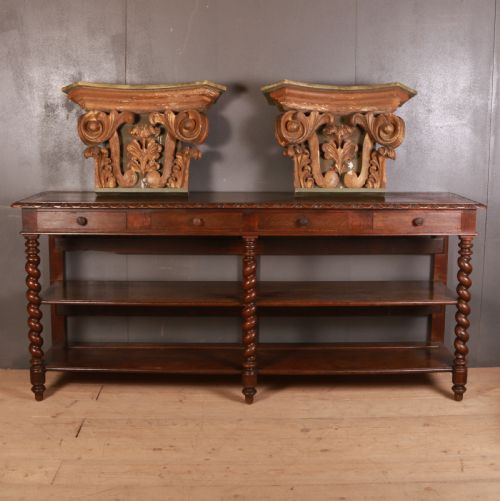


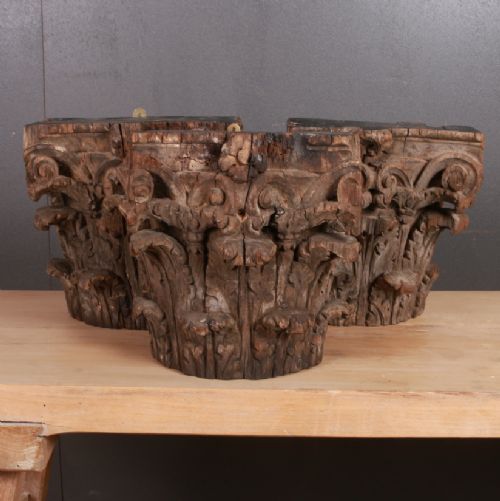


Wooden Wall Corbels
Wooden wall corbels bring immediate architectural weight to a room, acting as structural supports or decorative ledges carved from solid timber.
Wooden Wall Corbels
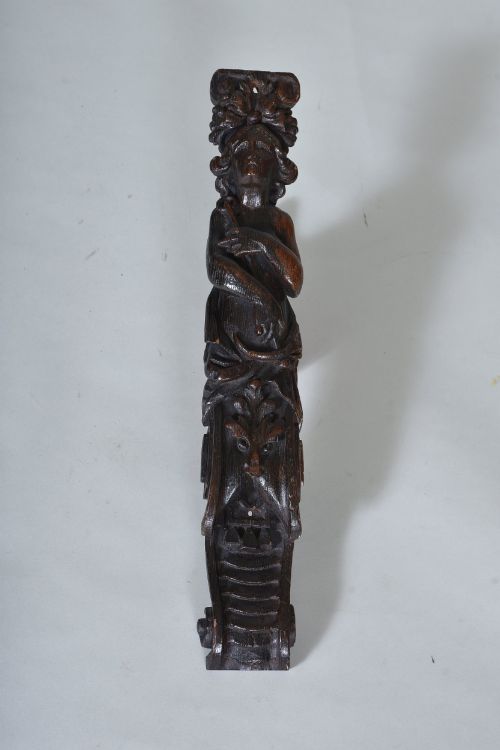
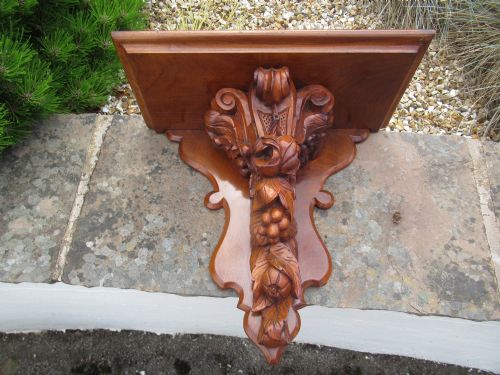
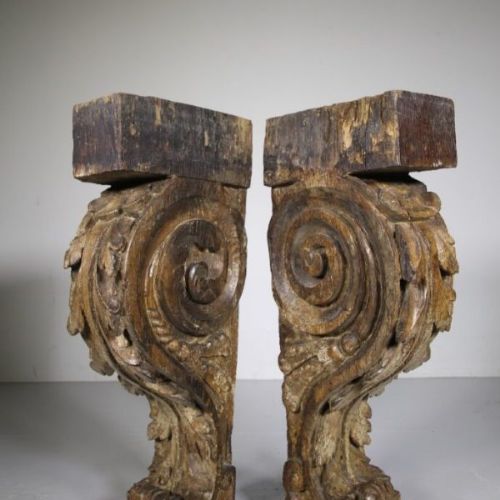
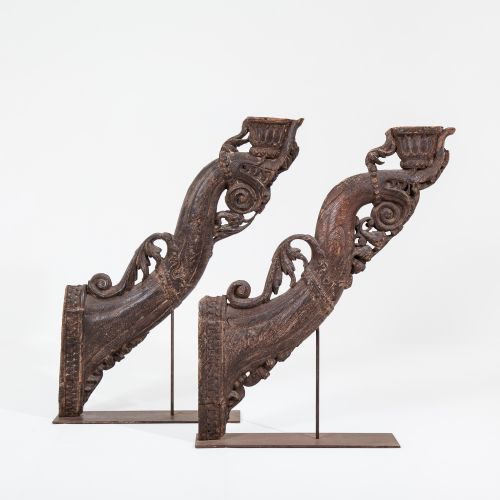
Wooden wall corbels encompass architectural salvage, wall brackets, and carved wood sculptures spanning from the sixteenth century through the Victorian era. When searching for wooden wall corbels, buyers encounter structural supports, display shelves, and decorative capitals rescued from historic interiors. Pieces range from simple seventeenth century oak fragments to ornate eighteenth century Italian gilded brackets and nineteenth century Black Forest animal carvings.
The selection on this page relies heavily on walnut and oak, alongside painted finishes, gesso, and gold leaf. Formats vary from pairs of cherub brackets to single lion heads and architectural fragments originating from Britain, Continental Europe, and Anglo-Indian workshops.
Materials and carving techniques
These items are shaped from dense hardwoods such as oak, walnut, limewood, and pine, chosen for their ability to hold deep, crisp chisel work. Master carvers worked the timber by hand, often rendering complex figurative details like angels, cherubs, lions, and human figures straight into the solid block.
Many pieces receive additional surface treatments including gilding with gold leaf, layers of gesso preparation, or applied paint. The integration of structural timber with intricate surface ornamentation defines the construction of these historical supports.
Wooden Wall Corbels Retail Price Guide 2026
Typical asking prices for wooden wall corbels among the pieces listed under this phrase on Sellingantiques today, from the lower quarter to the upper quarter. They describe what is for sale here now, not the wider market.
Current listings feature items spanning the 16th, 17th, 18th, and 19th centuries, alongside Georgian and Victorian pieces.
Distinguishing quality in carving
The choice of material and finish also dictates distinction, with dense woods like red walnut or well-preserved giltwood surfaces holding finer definition than plain painted softwood. Originality of surface, whether aged oak or intact gilding, elevates the standing of an architectural fragment.
Luigi Frullini
The Wooden Wall Corbels Glossary
- Corbel
- A structural piece of stone, wood, or metal projecting from a wall to carry a weight. In woodwork, it often serves a purely decorative bracket role.
- Capital
- The uppermost member of a column, frequently adapted as a wall bracket or corbel in architectural salvage.
- Gesso
- A plaster-based mixture used as a smooth base for paint or gold leaf application on wooden carvings.
- Black Forest carving
- Highly detailed Swiss and German woodwork from the nineteenth century, typically featuring animals and deep naturalistic foliage.
- Architectural fragment
- A surviving portion of a larger dismantled building or structure, retained for its artistic or historical merit.
Wooden Wall Corbels: Frequently Asked Questions
How do I mount a wooden corbel?
Most antique corbels feature mounting points, flat rear surfaces, or concealed fixing channels adapted for secure wall attachment. Heavy wooden brackets require proper wall anchors to support both the weight of the timber and any displayed items.
Consult a professional restorer if the piece lacks modern hanging hardware to ensure the historic structure remains undamaged during installation.
Were these always used as shelves?
Historically, many of these pieces functioned as structural load-bearing supports beneath beams, mantelpieces, or wall projections rather than standalone display ledges. Over time, architectural salvage pieces and decorative brackets were repurposed to hold clocks, figures, or small ornaments.
Examine the top flat surface of a bracket to determine whether it was designed to carry a projecting shelf or meant to support an architectural overhang.
How do I care for antique carved wood?
Maintain antique wooden corbels by dusting gently with a dry, soft brush to protect delicate carved recesses and gilt surfaces. Avoid liquid cleaners, polishes, or placement near direct heat sources that can dry out historic timber and crack gesso.
Stable indoor humidity preserves both the integrity of the solid wood and the adherence of original painted or gilded finishes.
How can I tell the period of a corbel?
Dating relies on tool marks, timber selection, stylistic cues such as Baroque scrolls or Gothic tracery, and the natural oxidation of the wood. Sixteenth and seventeenth century pieces typically display heavy, dark oak with hand-adzed or early chisel marks, while Victorian examples often utilise walnut or limewood with machine-assisted preparation.
Comparing the stylistic motifs, such as cherubs, lion heads, or acanthus leaves, against known historical periods clarifies the age of the carving.