

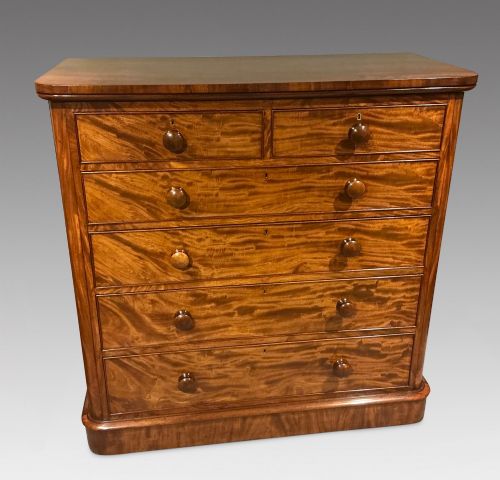
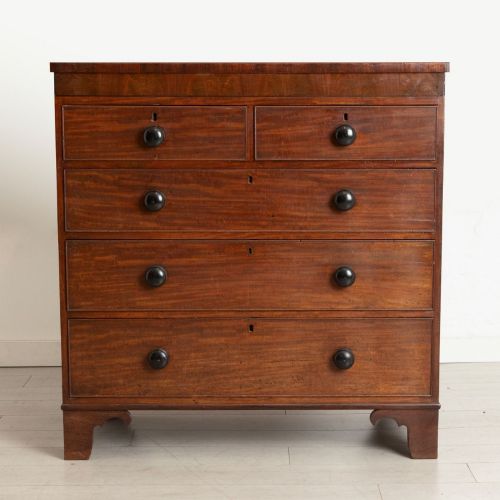
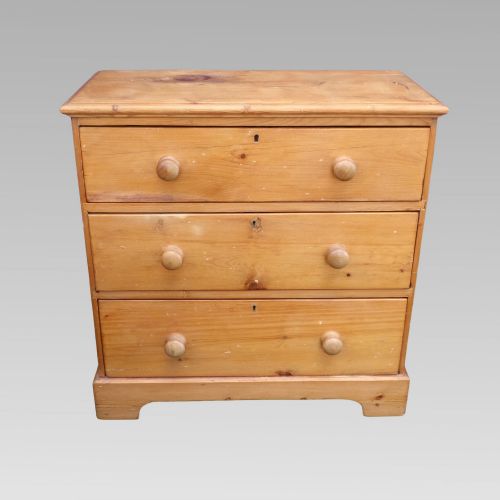


Wooden Turned Knob Dresser
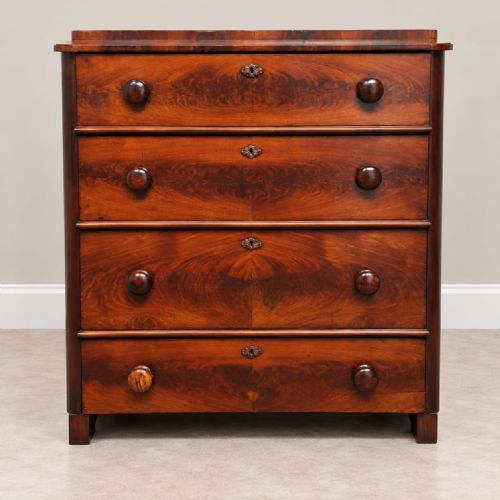
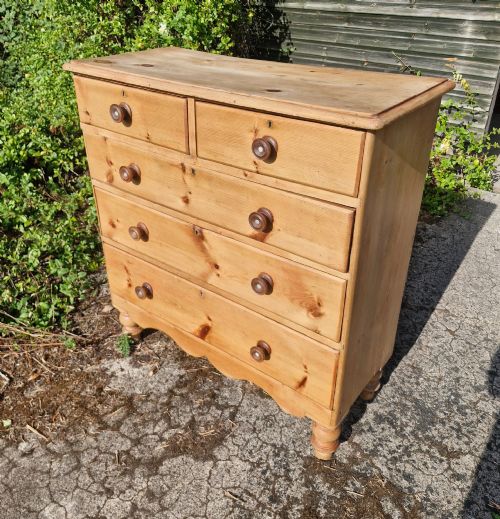
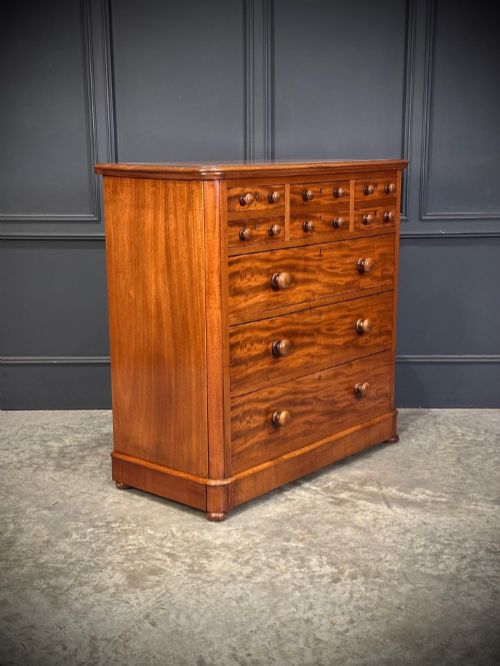
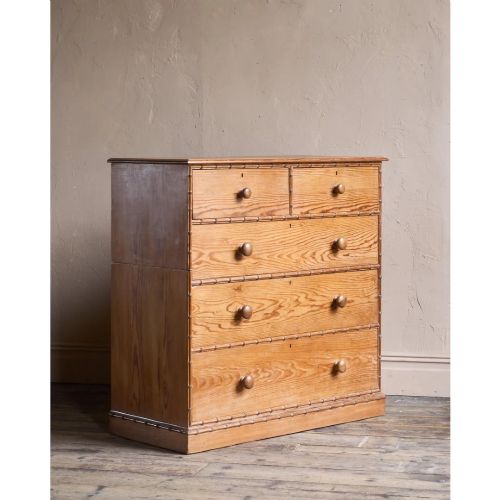
A wooden turned knob dresser brings solid storage and tactile wooden handles to a room, rooted in nineteenth century craftsmanship.
Wooden Turned Knob Dresser
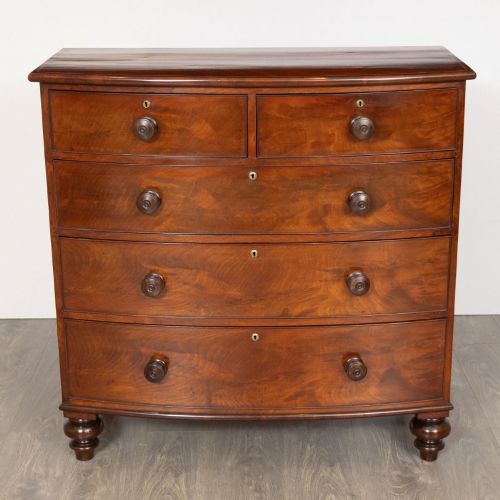
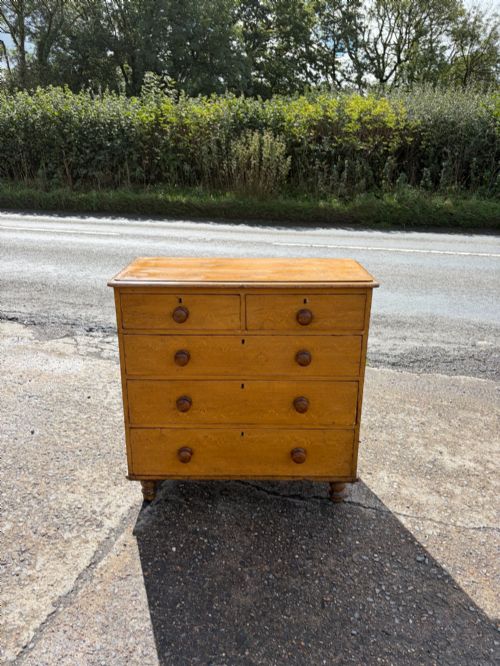
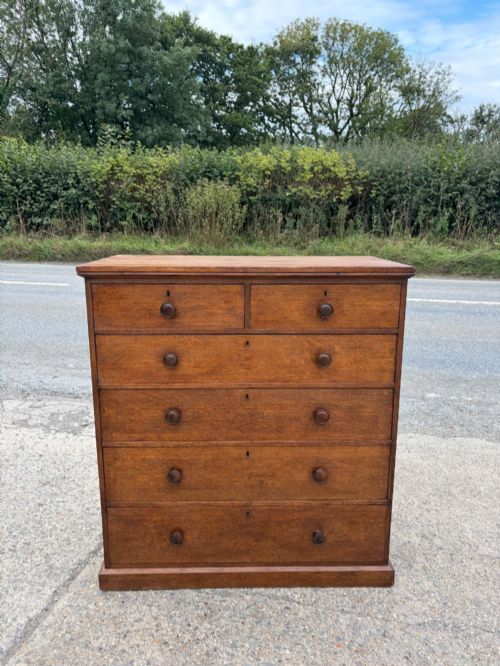
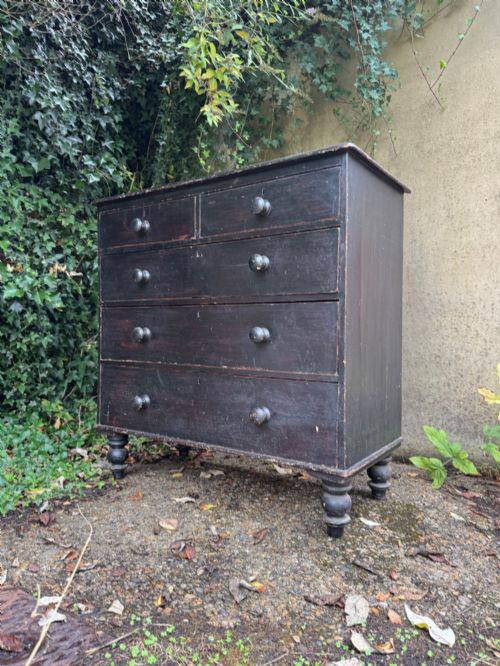
A wooden turned knob dresser centres on chests of drawers built predominantly in pine and mahogany across Victorian, Georgian, and Arts and Crafts periods. These storage forms appear in multiple heights and configurations, often featuring distinctive turned wooden handles that define their tactile character.
The most common pieces encountered here date from the nineteenth century, ranging from waxed country pine to polished mahogany and bow front designs. Buyers find utilitarian pine chests alongside more formal mahogany and inlaid examples carrying multiple drawer tiers.
Materials and construction methods
Makers utilised solid pine and mahogany for primary carcases, occasionally incorporating flame mahogany veneer or brass and iron hardware details. Wood selection dictated whether a piece took a waxed country finish or a formal polished appearance.
Turned wooden knobs were shaped individually on lathes to provide robust, tactile pulls for each drawer. Construction frequently involved dovetailed drawer joints and applied feet tailored to the specific period style.
Listings span Victorian, Georgian, and Arts and Crafts periods, utilising pine, mahogany, and oak with turned wooden knobs.
Distinctions in craftsmanship and condition
Quality rests in the precision of the drawer construction and the integrity of the timber selection, such as well matched flame mahogany veneer or clean, solid pine boards. Superior examples maintain original turned knobs and feet without modern replacement parts.
The sophistication of the design, from simple country pine to inlaid facades or bow front contours, separates utilitarian workshop output from finer cabinet work.
Howard and Sons
The Wooden Turned Knob Dresser Glossary
- Bow front
- A curved cabinet front that swells outward in the centre, common in nineteenth century mahogany pieces. This shape required precise joinery to follow the sweeping contour.
- Pine
- A softwood commonly utilised for country furniture and painted finishes throughout the Victorian period. It offers a lighter weight and a distinct grain pattern compared to hardwoods.
- Biedermeier
- A Central European style emphasising utilitarian comfort and clean lines without excessive ornamentation. Pieces in this aesthetic feature warm fruitwoods or mahogany.
- Arts and Crafts
- A movement prioritising traditional craftsmanship and simple construction over mass production. Chests from this style often display honest waxed pine surfaces.
Wooden Turned Knob Dresser: Frequently Asked Questions
How do I date a wooden turned knob dresser?
Dating relies on examining the timber types, construction methods like dovetailing, and the overall stylistic period. Nineteenth century pieces often show hand-cut joints and distinct turning profiles.
Changes in hardware, secondary woods, and finish types also help establish the decade of manufacture.
Are pine chests durable for daily use?
Solid pine offers robust construction suited for everyday bedroom storage. Waxed finishes protect the wood while allowing simple maintenance over decades of use.
Drawer runners and internal frames determine how smoothly the drawers operate under regular loads.
What is the difference between pine and mahogany chests?
Pine provides a lighter, often rustic aesthetic associated with country workshops and painted finishes. Mahogany offers a denser hardwood suitable for formal polished surfaces and curved bow fronts.
Both materials utilise turned wooden knobs, but the visual weight and interior status of the piece differ significantly.
How should I care for a waxed wooden surface?
Regular applications of natural beeswax maintain the moisture and sheen of traditional pine and mahogany surfaces. Avoid placing wooden furniture near direct heat sources to prevent timber splitting.
Gentle dusting with a soft cloth preserves the historic patina without stripping the finish.