

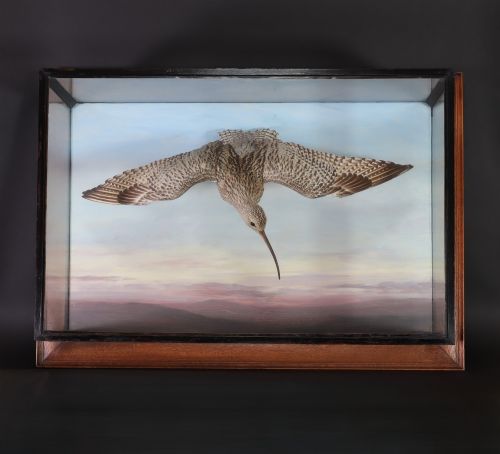
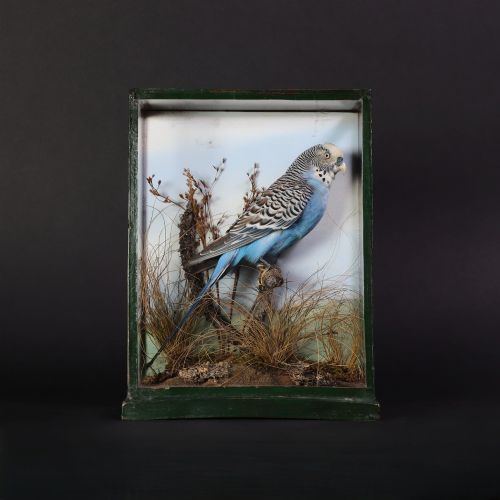


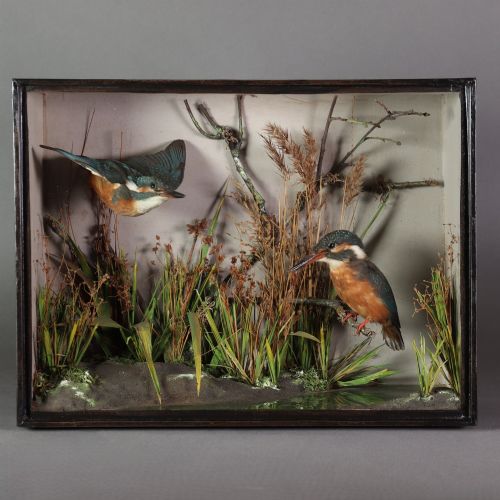



Wooden Taxidermy Case
A wooden taxidermy case brings the meticulous natural history of the Victorian and Edwardian parlours into modern rooms.
Wooden Taxidermy Case
When you search for a wooden taxidermy case, you are looking at domestic enclosures designed to preserve and display mounted specimens. These pieces encompass wall cabinets, glazed showcases, and table domes set upon timber bases.
The versions most commonly met on this page date from the Victorian and Edwardian eras. They range from compact oval clock domes with pine bases to substantial mahogany wall display cabinets built for birds and mammals.
Origins stretch from local English provincial workshops to prominent London establishments. The objects house everything from single kingfishers and jackdaws to complex tableaux of mixed exotic birds.
Materials and construction
Makers utilised timber such as mahogany, oak, and pine to construct the foundational frames, wall cabinets, and display bases. Glass forms the primary viewing panels, shaped into blown domes or fitted into straight-sided cases.
Internal styling often incorporates natural specimens, moss, fabric backgrounds, and paper linings to simulate the habitat of the creature. Brass fittings and hinges frequently secure the opening doors and glazed panels.
Wooden Taxidermy Case Retail Price Guide 2026
Typical asking prices for wooden taxidermy case among the pieces listed under this phrase on Sellingantiques today, from the lower quarter to the upper quarter. They describe what is for sale here now, not the wider market.
Listings span the nineteenth and twentieth centuries, featuring materials such as glass, wood, brass, moss, and natural specimens housed in Victorian and Edwardian styles.
Judging quality and provenance
The distinction between standard commercial work and superior craftsmanship rests upon the reputation of the taxidermist and the complexity of the internal arrangement. Pieces bearing the signature of established practitioners command greater attention from collectors.
The clarity and thickness of the original glass dome, coupled with the solidity of the timber base, indicate the standard of the manufacture. Intact natural elements and harmonious composition within the case preserve the integrity of the display.
J Griffiths of Burford·T E Gunn·S King·Hutchings of Aberystwyth·Rowland Ward of London·W F Homer London·J Dobson·Cooper and Sons
The Wooden Taxidermy Case Glossary
- Taxidermy
- The art of preparing, stuffing, and mounting the skins of animals for display. In these pieces, birds and mammals are posed within glazed enclosures.
- Display Dome
- A blown glass cover, often oval or circular, mounted on a wooden base to protect delicate specimens. These were common accessories in nineteenth-century interiors.
- Cloche
- A bell-shaped glass cover utilised for protecting specimens or botanical items. The term is frequently applied interchangeably with display domes on this page.
- Wall Display Cabinet
- A wooden cabinet featuring glazed doors or panels designed to be hung securely on a wall. They provide vertical presentation space for taxidermy and curiosities.
Wooden Taxidermy Case: Frequently Asked Questions
How should I clean the glass on a taxidermy case?
Clean the exterior glass carefully with a mild glass cleaner applied to a cloth rather than sprayed directly onto the surface. Avoid moisture near the wooden joints or older paper linings.
Keep the interior sealed if possible, as disturbing the historic glass or the seals can let in dust and insects that harm the specimens inside.
Where were these cases placed in Victorian homes?
These enclosures sat upon mantelpieces, side tables, or hung directly on walls within the principal rooms of the house. They served as conversation pieces that reflected the owner's interest in natural history.
Larger cabinets occupied hallways or studies, protecting complex dioramas from daily household wear.
Can I open the wooden case to touch the specimen?
Opening older cases is generally discouraged unless necessary for minor maintenance. The historic materials, including moss, paper, and the mounted skin itself, are fragile and sensitive to handling.
Leaving the enclosure sealed preserves the internal microclimate that has protected the specimen for over a century.
How do I distinguish Victorian cases from Edwardian ones?
Victorian examples often feature heavier timber frames, darker finishes, and more elaborate internal habitats with painted or papered backdrops. The taxidermy style from this period tends toward dense, dramatic groupings.
Edwardian pieces frequently display simpler lines, lighter woods like oak, and a cleaner aesthetic that anticipates twentieth-century display methods.