





Wooden Tavern Bench
A wooden tavern bench anchors an interior with honest craftsmanship, offering sturdy communal seating shaped by generations of public house use.
Wooden Tavern Bench
A wooden tavern bench brings rugged domestic utility into residential spaces, functioning as long seating designed for high-traffic public houses and rural homes. You encounter examples spanning from the eighteenth century through the nineteenth century, encompassing regional vernacular traditions like the Welsh vernacular and English country styles.
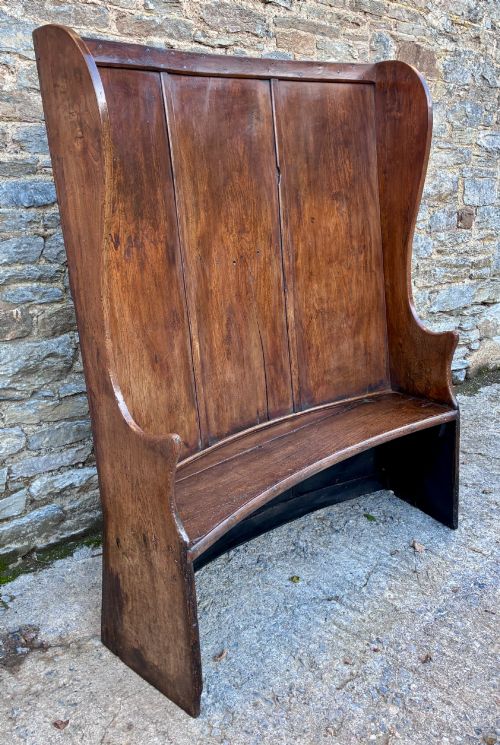
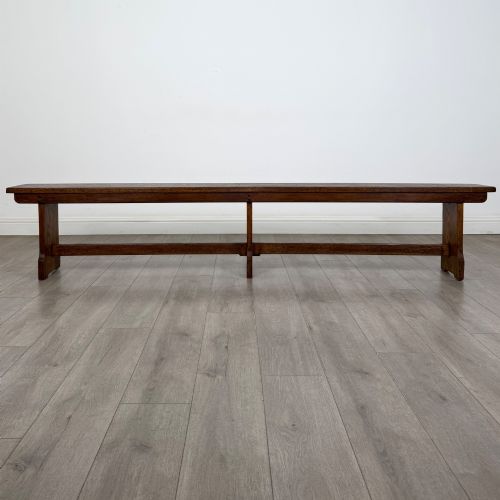
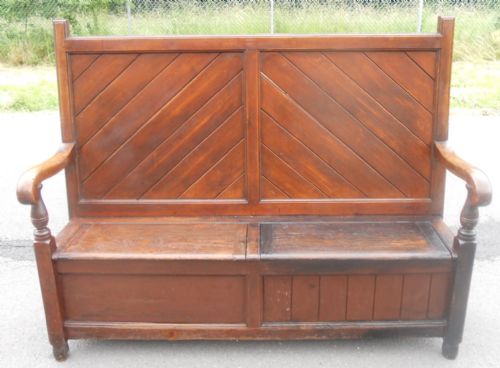
The inventory on this page includes tall-backed settles and long trestle forms, often built to block drafts near firesides or accommodate multiple diners. These pieces range from simple pine boards to heavily panelled oak and elm constructions.
Makers shaped these utilitarian seats for endurance, resulting in sturdy forms that often show deep signs of bodily wear. Regional variations emerge clearly across English, Welsh, and French provincial examples.
How they were made
Carpenters utilised native hardwoods like oak and elm alongside softwoods such as pine, selecting each timber for structural resilience. Box panel construction and trestle framing provided the rigidity required for heavy commercial seating.
Surfaces frequently display historic layers of paint or aged timber finishes that accumulated through decades of use. Joinery techniques relied on pegged mortise and tenon joints to withstand constant movement.
Wooden Tavern Bench Retail Price Guide 2026
Typical asking prices for wooden tavern bench among the pieces listed under this phrase on Sellingantiques today, from the lower quarter to the upper quarter. They describe what is for sale here now, not the wider market.
Regional styles represented on this page include Welsh vernacular, rustic farmhouse, and French provincial designs.
What varies in quality
Quality rests in the integrity of the original timber frame and the depth of the surface patina achieved through honest wear. Examples retaining their initial paint layers or uncompromised panel construction stand apart from heavily restored alternatives.
Proportion and scale dictate the visual weight of the bench within a room, with longer refectory and trestle variants demonstrating greater architectural ambition. The careful execution of box panelling and the retention of original structural supports separate robust vernacular pieces from lesser utilitarian items.
The Wooden Tavern Bench Glossary
- Settle
- A wooden bench with a high back, solid arms, and often a enclosed box base designed to shield sitters from draughts. These seats served as principal pieces of fireside furniture in public houses and farmhouses.
- Vernacular
- Architecture or furniture built by local craftsmen using traditional regional methods and available native materials. These items reflect the specific domestic needs and aesthetic habits of a particular district.
- Trestle
- A structural support consisting of a horizontal beam fixed to two splayed legs, commonly used to hold long bench seats or refectory tables. This method distributes weight evenly across heavy timber tops.
- Patina
- The surface sheen and textural softness developed on wood and paint over decades of handling, cleaning, and atmospheric exposure. It serves as a visual record of an object's age and use.
- Box panel
- A method of construction where flat wooden panels are fitted within grooved frames to add structural strength. This technique prevents warping in large wooden furniture.
Wooden Tavern Bench: Frequently Asked Questions
Where did tavern benches originate?
These benches originated in public houses, coaching inns, and rural farmhouses where durable communal seating was an absolute necessity.
Craftsmen built them to withstand heavy daily use by travellers and locals alike.
How do I style a tavern bench at home?
A wooden tavern bench fits naturally alongside a long dining table or against a hallway wall as a practical resting place.
Their substantial backs and narrow profiles allow them to sit flush against plaster walls without dominating smaller rooms.
What woods were used for tavern benches?
Joiners relied heavily on sturdy native timbers including oak, elm, and pine depending on regional availability and the intended function.
Hardwoods provided essential structural strength for legs and framing, while softer pine served for broader panels.
How can I tell the age of a bench?
Age is indicated by the construction methods, tool marks left by early carpenters, and the natural accumulation of surface wear.
Hand-pegged joinery and historic paint layers point directly to eighteenth-century and nineteenth-century production periods.
Are high back settles different from standard benches?
High back settles feature solid wooden panels rising well above the seat height, originally designed to trap heat near hearths.
Standard benches offer open sightlines and simpler frames without the enclosed back protection.