

Wooden Tabletop Chest
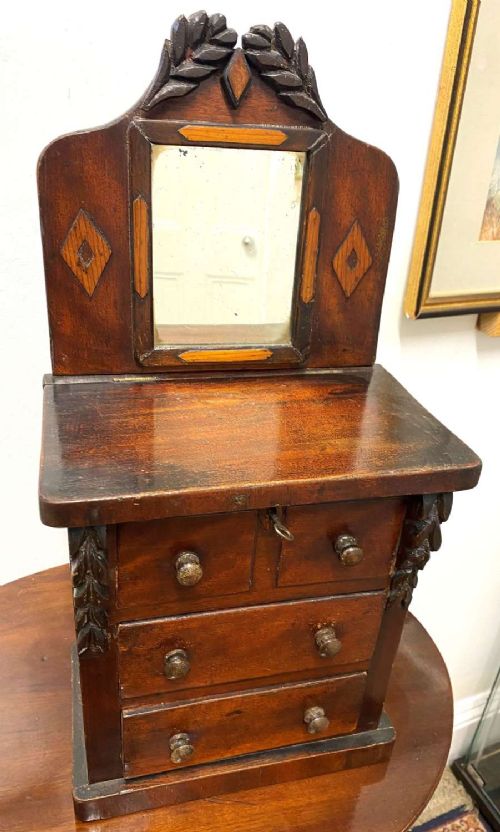
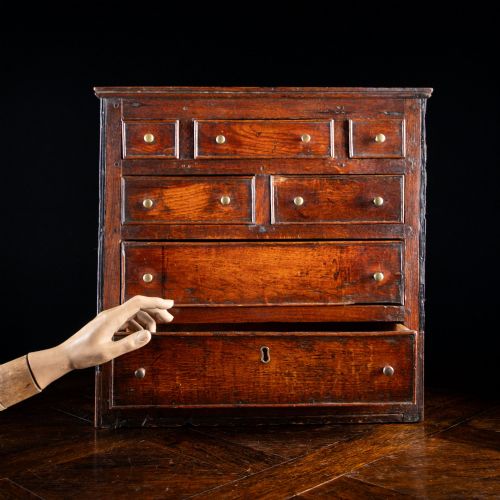
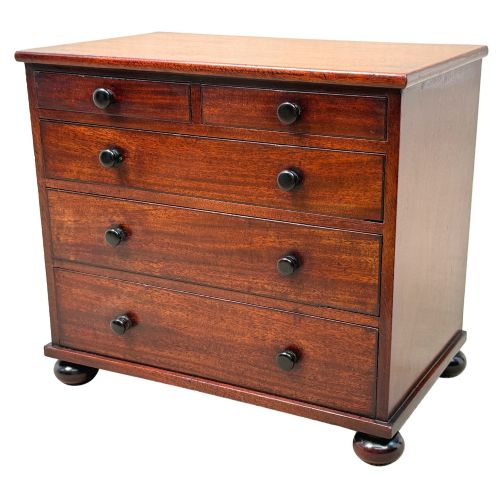
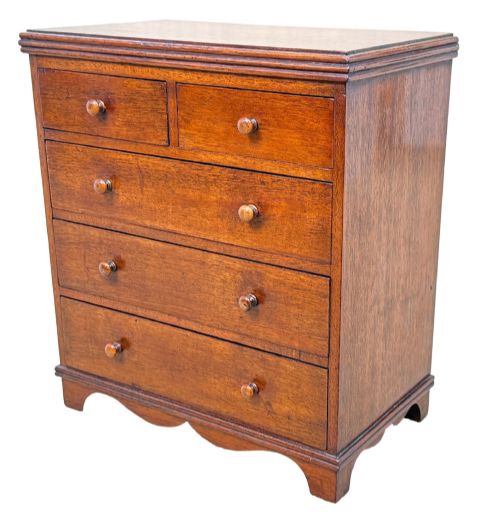
A wooden tabletop chest brings domestic order to small treasures, taking the form of miniature drawer units, spice cupboards, and collector cabinets.
Wooden Tabletop Chest
A wooden tabletop chest is a scaled-down storage piece designed to sit on a desk, counter, or larger furniture. The listings here centre on miniature chests of drawers, spice cupboards, collector cabinets, and jewellery boxes.
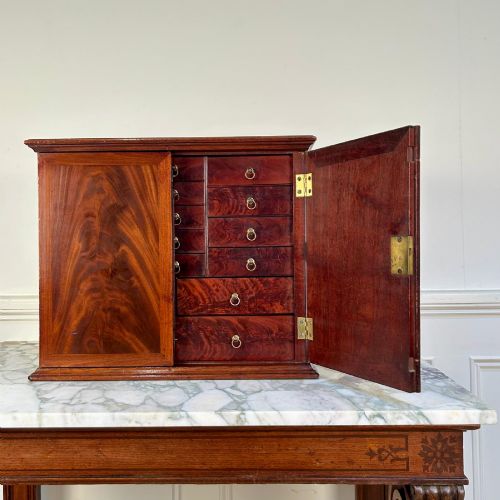
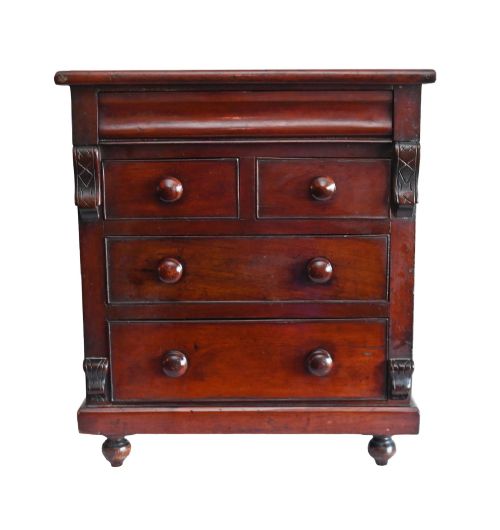
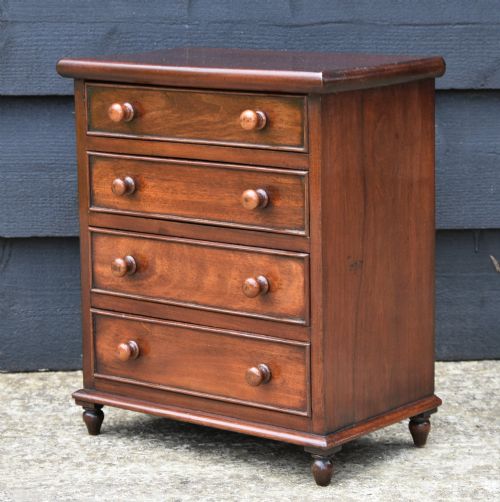
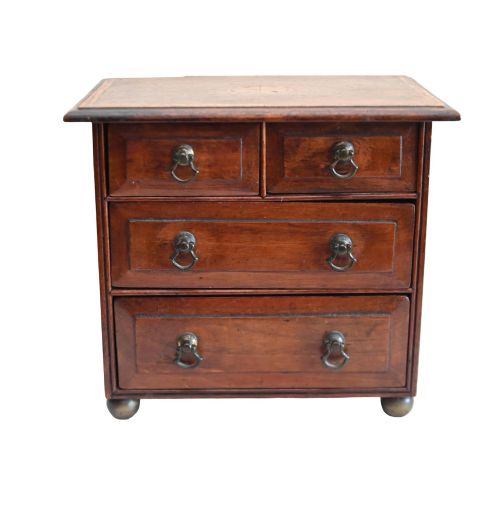
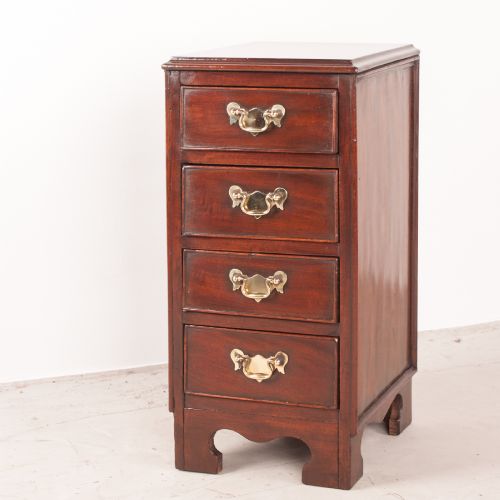
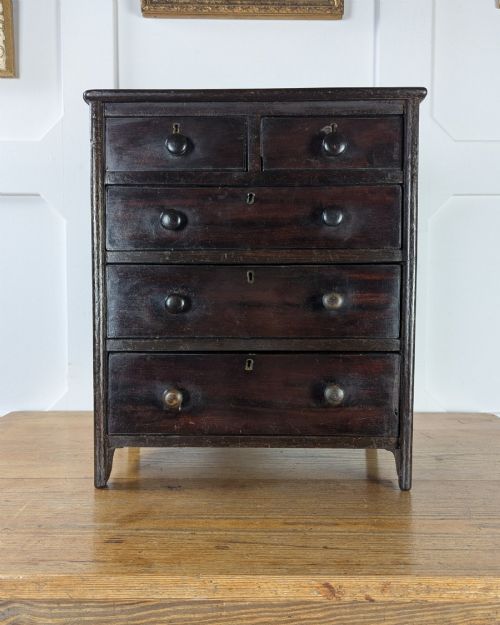
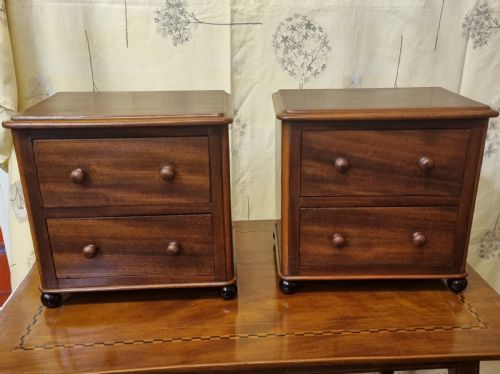
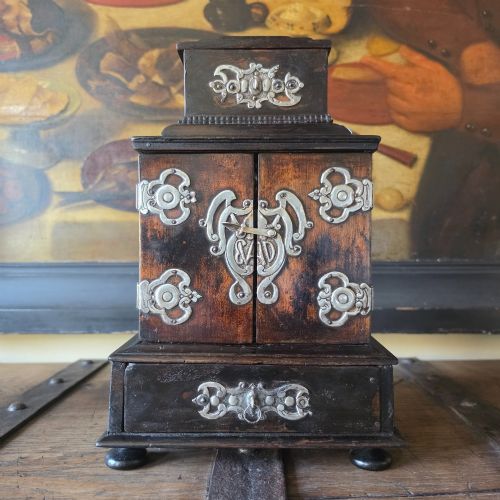
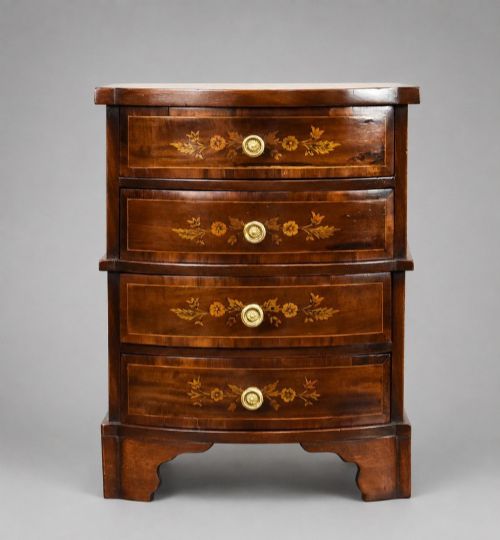
The most common version met on this page is the nineteenth-century mahogany miniature chest of drawers, often associated with apprentice pieces or cabinetmaker samples. Alongside these, buyers encounter specialist forms like spice drawers, apothecary cabinets, and specimen chests from the Georgian and Victorian eras.
How they were made
Cabinetmakers constructed these small chests using dense hardwoods such as mahogany, walnut, rosewood, and oak, alongside pine for internal carcases and drawer linings. Fine examples employ decorative veneers like burr elm and kingwood, sometimes enhanced with marquetry or mother-of-pearl inlay.
Joinery techniques mirror full-scale furniture, featuring dovetailed drawer construction and turned brass or wooden pulls. Surfaces receive traditional finishes that highlight the natural grain and colour of the timber.
Wooden Tabletop Chest Retail Price Guide 2026
Typical asking prices for wooden tabletop chest among the pieces listed under this phrase on Sellingantiques today, from the lower quarter to the upper quarter. They describe what is for sale here now, not the wider market.
Listings feature timbers including mahogany, walnut, oak, pine, rosewood, and kingwood across periods from the seventeenth to the twentieth century.
What varies in quality
Quality in a wooden tabletop chest rests on the precision of the scaling and the fidelity of the construction details. Pieces with finely dovetailed drawers, well-matched timber grains, and original hardware sit at the upper end of the range.
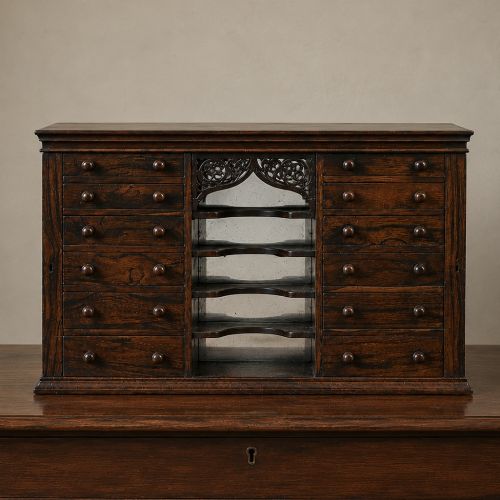
Simpler constructed items, such as stained pine spice drawers or utility storage chests, rely on straightforward function rather than elaborate cabinetmaking skills. The presence of specialised fitted interiors, such as mirrored sections or multiple small compartments, elevates the ambition of the piece.
The Wooden Tabletop Chest Glossary
- Apprentice piece
- A small-scale furniture item supposedly created by a trainee to demonstrate mastery of joinery techniques to a guild. These pieces often mimic full-sized chests of drawers with remarkable precision.
- Collector cabinet
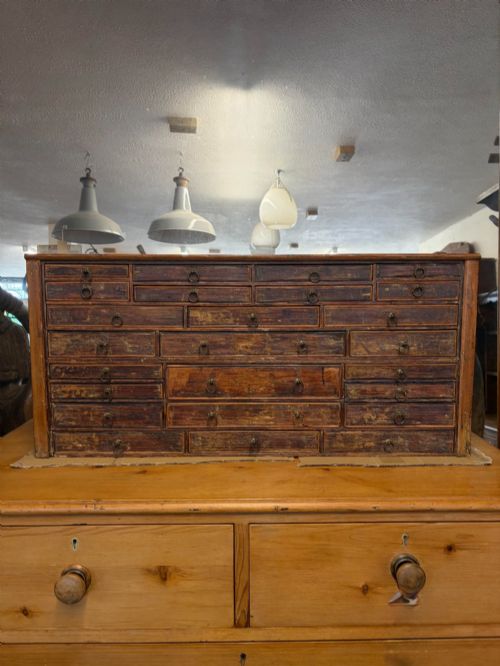
- A specialised tabletop chest fitted with numerous shallow drawers or compartments designed for housing natural history specimens, coins, or small antiquities. Such cabinets prioritize internal organisation.
- Spice drawers
- A small bank of fitted drawers traditionally used in domestic kitchens for culinary ingredients. These units date frequently from the eighteenth and nineteenth centuries in woods like oak and fruitwood.
- Wellington chest
- A tall, narrow chest featuring a hinged locking stile on one side that secures all the drawers simultaneously. Miniature interpretations appear in rosewood and other fine timbers.
Wooden Tabletop Chest: Frequently Asked Questions
What were wooden tabletop chests used for?
These compact chests served domestic and professional roles for housing valuable or delicate items. Owners stored jewellery, documents, apothecary supplies, and natural history specimens within their small drawers.
Cabinetmakers also produced miniature drawer units to showcase their skill to potential clients or guild examiners. Their portable scale allowed them to sit conveniently upon desks and tabletops.
How do I date a wooden tabletop chest?
Dating relies on observing the timber species, construction methods, and stylistic details present in the piece. Eighteenth-century examples often utilise oak, walnut, or elm with hand-cut dovetails, while Victorian items frequently feature mahogany and rosewood.
Secondary woods inside the drawers, such as pine or oak, offer further clues to the period of manufacture. Hardware styles like brass knobs or escutcheons also align with specific design eras.
Where should I place a tabletop chest at home?
A wooden tabletop chest suits surfaces that can support its weight while displaying its craftsmanship at eye level. Desks, sideboards, and large tables provide stable platforms for miniature drawer units and collector cabinets.
Placing them away from direct sunlight and heat sources protects delicate wood veneers and traditional finishes from drying out. They function well both as decorative accents and as practical storage for small modern belongings.
What is the difference between a specimen cabinet and a jewellery chest?
A specimen cabinet contains multiple shallow drawers designed originally for organising natural history objects like insects, fossils, or coins. These drawers often feature simple interiors tailored for sorting small items.
A jewellery chest incorporates decorative elements such as mother-of-pearl inlay, mirrored panels, or velvet-lined compartments meant for personal adornment. Both types share a compact tabletop scale but serve distinct historical functions.