

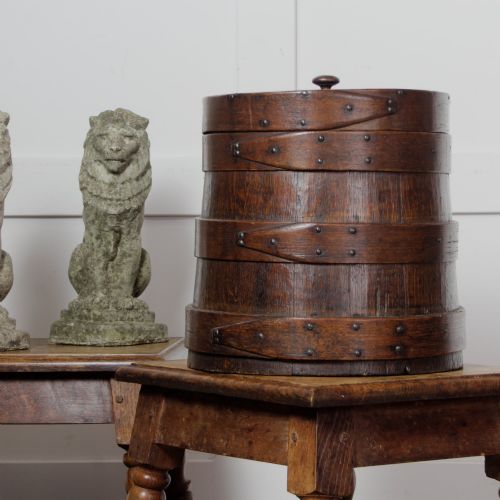
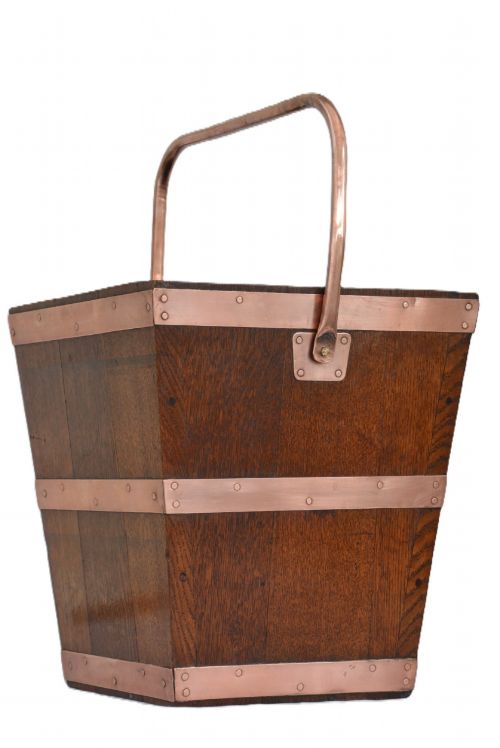
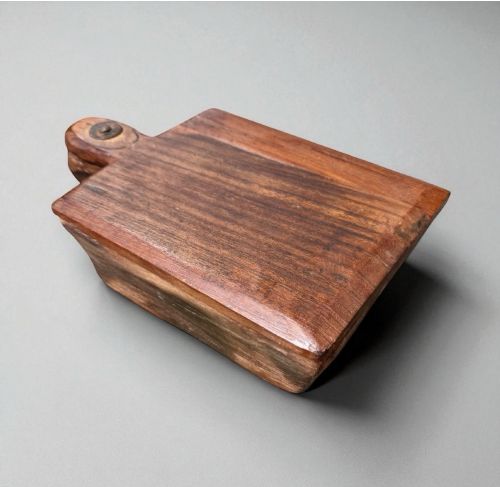


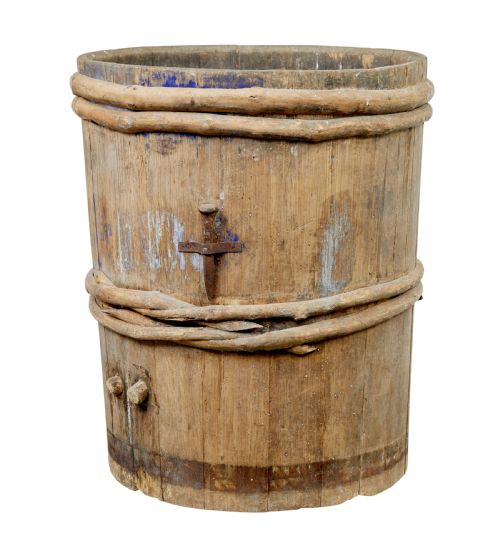


Wooden Storage Vessel
A wooden storage vessel brings tactile warmth and utilitarian history to a room, offering robust containment built from oak, pine, or mahogany.
Wooden Storage Vessel
A wooden storage vessel encompasses utilitarian containers designed for dry goods, fuel, and daily household supplies across domestic spaces. When buyers search for a wooden storage vessel, they encounter diverse historical forms ranging from coopered barrels and flour bins to carved treen and umbrella stands. The pieces available span the Georgian, Victorian, and Edwardian eras, alongside rustic Scandinavian and Indian vernacular examples.
The most common iterations on this page are coopered barrels and bins fashioned from robust timber such as oak and pine. These practical items served rural and urban households alike for storing flour, grain, coal, peat, and spices. Regional variations showcase both British workshop traditions and Scandinavian country craftsmanship from the nineteenth century.
Specialised forms also appear, including carved primitive vessels, mahogany umbrella stands with brass mounts, and turned treen vases with covers. Each object reflects the domestic requirements of its period, prioritising sturdy construction and enduring utility over delicate ornamentation. Buyers select these items to anchor a room with authentic period texture and honest material presence.
How they were made
Makers utilised traditional woodworking techniques such as coopering, where tapered wooden staves are bound together with metal hoops of iron or brass. This method ensured structural integrity for heavy contents like grain, flour, coal, and peat. Dense hardwoods like oak and mahogany provided durable bodies for larger bins and umbrella stands, while pine served for regional Scandinavian storage barrels.
Surface treatment relied on natural finishing, hand carving, and simple lathe turning to shape treen vases and smaller containers. Metal reinforcement often included brass mounts and iron bands, combining functional strength with visual contrast against the timber grain. The resulting objects display tool marks and construction details characteristic of nineteenth-century workshop production.
Wooden Storage Vessel Retail Price Guide 2026
Typical asking prices for wooden storage vessel among the pieces listed under this phrase on Sellingantiques today, from the lower quarter to the upper quarter. They describe what is for sale here now, not the wider market.
The listings span the Georgian, Victorian, and Edwardian periods, featuring timbers such as oak, pine, mahogany, and teak combined with iron and brass.
What varies in quality
Quality rests in the integrity of the timber selection, the tightness of the coopered joints, and the survival of original metal mounts such as brass handles and iron bands. Superior examples maintain structural stability without excessive replacement timber or compromised staves. The sophistication of the form, from simple rustic pine containers to finely detailed mahogany umbrella stands, distinguishes everyday utility from more ambitious workshop output.
The degree of original surface wear and untouched patination also marks the distinction between ordinary utility items and pieces with strong decorative presence. Authentic age patination on pine, oak, and mahogany develops through decades of handling and environmental exposure. Pieces retaining their original hardware and honest surface condition offer greater historical coherence.
The Wooden Storage Vessel Glossary
- Coopered
- Constructed from curved wooden staves bound tightly together with metal or wooden hoops. This method was essential for creating watertight or grain-tight vessels like barrels and buckets.
- Treen
- Small handmade wooden household objects and utensils created by turning on a lathe or through hand carving. The term derives from old terminology meaning made of tree.
- Vernacular
- Architecture and decorative objects created by local craftsmen using traditional regional methods and readily available native materials, rather than following high-style academic designs.
- Stave
- One of the narrow shaped strips of wood that are joined edge-to-edge to form the sides of a coopered vessel such as a barrel or tub.
- Patina
- The surface sheen and colour depth acquired by timber through age, handling, and exposure to light over many decades.
Wooden Storage Vessel: Frequently Asked Questions
What were these wooden vessels originally used for?
These containers served practical domestic and agricultural functions, storing household fuel like coal and peat, dry foodstuffs such as flour and grain, or holding umbrellas in hallways.
Their robust construction allowed them to withstand heavy daily use in kitchens, sculleries, and boot rooms across Britain, Scandinavia, and beyond.
How do I care for a antique wooden container?
Keep wooden vessels away from direct heat sources and drastic humidity changes to prevent the timber from splitting or the coopered staves from shrinking.
Apply occasional traditional wax polish to nourish the wood and maintain the surface sheen without sealing the pores.
How do I distinguish 19th-century pine barrels from newer reproductions?
Examine the construction marks, hand-forged or early machine-made metal hoops, and the natural oxidation of the pine surface over time.
Genuine nineteenth-century pieces display authentic wear patterns and construction methods distinct from modern decorative reproductions.
Can I use these historic vessels for modern storage?
Many buyers utilise these sturdy containers today for holding logs by the fireplace, storing blankets, or organising umbrellas in an entrance hall.
Their enduring strength and practical proportions make them as functional in a modern interior as they were in a nineteenth-century home.