


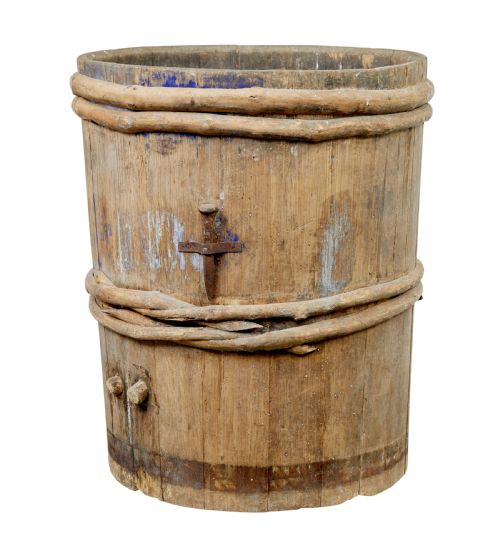


Antique Pine Barrel
These antique pine barrel pieces bring warm country character and practical storage to a home, shaped by generations of rural craftsmanship.
Antique Pine Barrel
When you search for antique pine barrel, you encounter a distinct category of rural utility items and furniture spanning the eighteenth and nineteenth centuries. These pieces encompass coopered storage vessels, butter churns, and striking barrel-backed settles designed for warmth and comfort.
The versions most frequently met on this page include nineteenth-century Scandinavian examples and Georgian pieces featuring curved wooden backs. Regional makers applied traditional timber construction to create both standalone vessels and integrated seating designed to block cold drafts.
Beyond standard containers, the category extends to dug-out chairs and fitted storage cabinets that share the curved lines and sturdy proportions of coopered work. This diverse group reflects the resourceful use of pine and iron in domestic and agricultural settings.
Materials and construction methods
Makers built these vessels from solid pine, shaping staves to curve tightly together before securing them with iron or wood hoops. This cooperative technique distributed pressure evenly, allowing containers and churns to hold contents securely without modern adhesives.
Surface finishes range from waxed natural timber to layered historical paint, preserving the grain while protecting the softwood from daily wear. Structural hardware often includes iron bands and brass details, combining durability with functional simplicity.
Antique Pine Barrel Retail Price Guide 2026
Typical asking prices for pine barrel among the pieces listed under this phrase on Sellingantiques today, from the lower quarter to the upper quarter. They describe what is for sale here now, not the wider market.
Recorded forms include settles, corner cabinets, butter churns, dug-out chairs, and large storage vessels finished with paint, wax, or glazing.
Indicators of superior quality
Quality rests in the precision of the stave joints and the integrity of the original hoops, where tight alignment shows superior handwork. Finer examples maintain their structural geometry without excessive warping or mismatched replacement timber.
The distinction between standard utility items and exceptional pieces often lies in surface preservation, such as untouched historical paint or a deep waxed patina. Integration of complex forms, like glazed upper sections in cabinet variations, denotes a higher grade of workshop production.
The Antique Pine Barrel Glossary
- Coopered
- Constructed from curved wooden staves fitted together to form a hollow cylinder, bound tightly with hoops of iron or wood. This method provides the structural strength essential for holding dry goods, liquids, or dairy.
- Settle
- A wooden bench featuring a high back and solid arms, often designed with a curved barrel back to deflect household draughts. These seats typically incorporate enclosed storage beneath the bench.
- Astral glazed
- Featuring delicate wooden framework dividing glass panes within a cabinet door, allowing visibility into upper display sections. This technique appears on sophisticated regional storage pieces.
- Dug-out
- Formed by hollowing out a single solid log rather than assembling individual boards. This ancient method creates heavy, organic seating forms found in Scandinavian country traditions.
Antique Pine Barrel: Frequently Asked Questions
What is an antique pine barrel settle?
A barrel settle is an enclosed wooden bench featuring a curved, high back designed to wrap around the seated person and block cold air. These pieces combine domestic seating with architectural presence.
They originate primarily from Georgian and Victorian country workshops, serving functional roles beside hearths before becoming decorative focal points in modern interiors.
How do I care for antique pine furniture?
Maintain pine surfaces by dusting with a dry cloth and occasionally applying a traditional beeswax to nourish the dry softwood. Avoid placing pieces near direct heat sources or rapid temperature shifts.
Protect waxed and painted finishes from moisture by using coasters and mats, ensuring the historical patina remains stable over decades of daily use.
How do I identify nineteenth century pine?
Nineteenth-century pine typically displays hand-planed surfaces, irregular board widths, and construction marks left by traditional pit saws or early machinery. Fasteners often include handmade iron nails or early screws.
Examining the underside and interior reveals tool signatures and wear patterns distinct from later factory-produced softwood items.
Where were these wooden vessels used?
These items originated in rural farmhouses, dairies, and domestic kitchens across Britain and Scandinavia. They served everyday storage needs for grain, dry goods, and butter production.
Their robust construction allowed them to withstand demanding agricultural environments before transitioning into residential living spaces as decorative storage.