





Wooden Storage Tray
Wooden storage tray items are practical household organisers crafted from timber, offering straightforward utility and period charm for everyday use.
Wooden Storage Tray
When searching for a wooden storage tray, buyers typically encounter utility items, cutlery boxes, and desk accessories spanning the nineteenth and early twentieth centuries. These pieces originate from domestic settings, ranging from country kitchens to formal English halls.
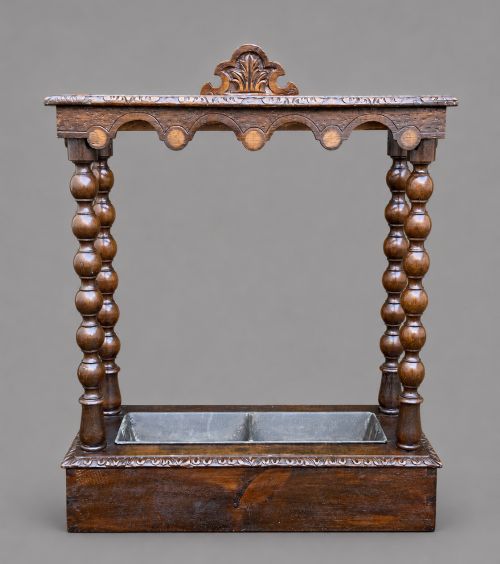
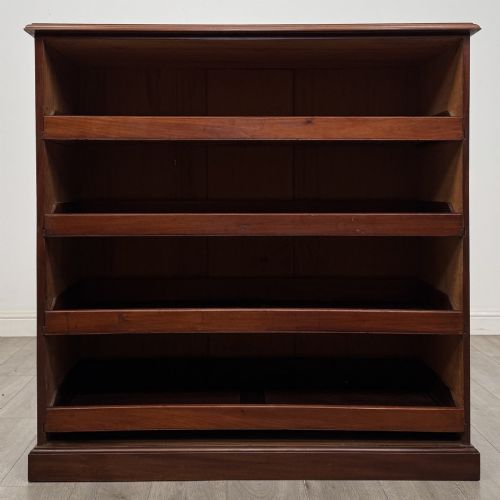
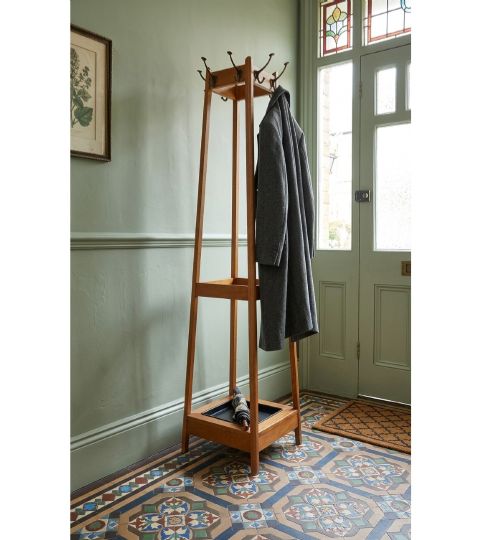
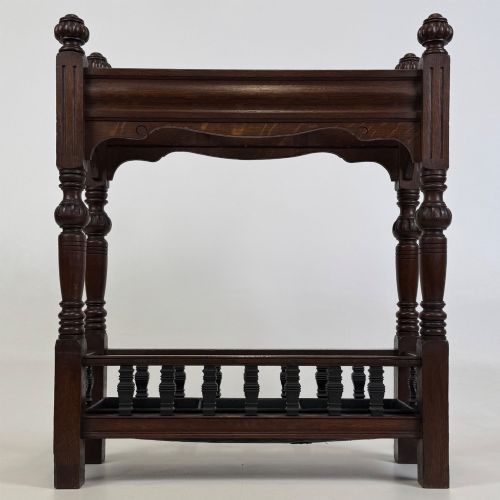
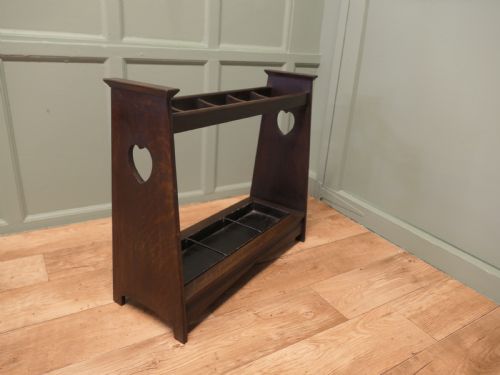
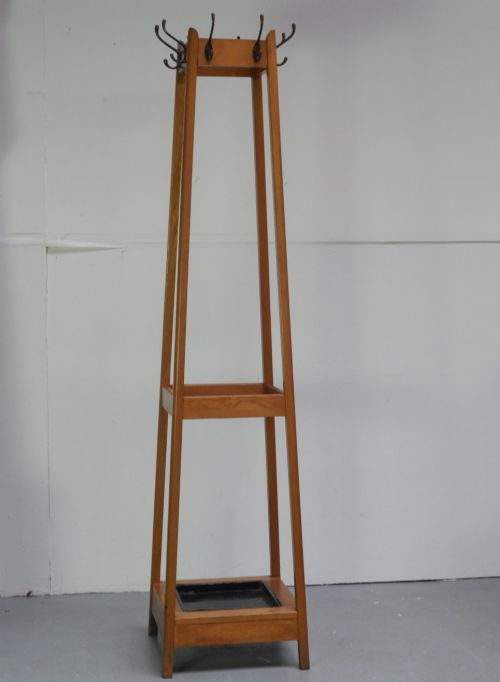
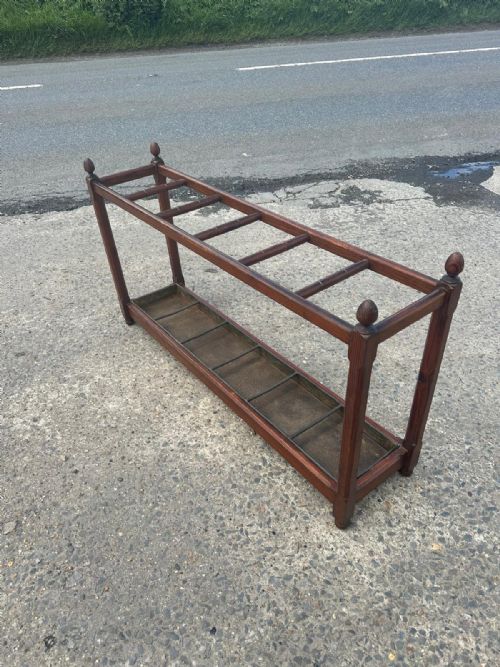
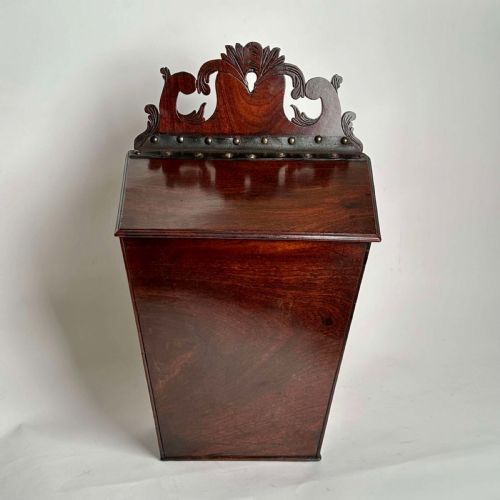
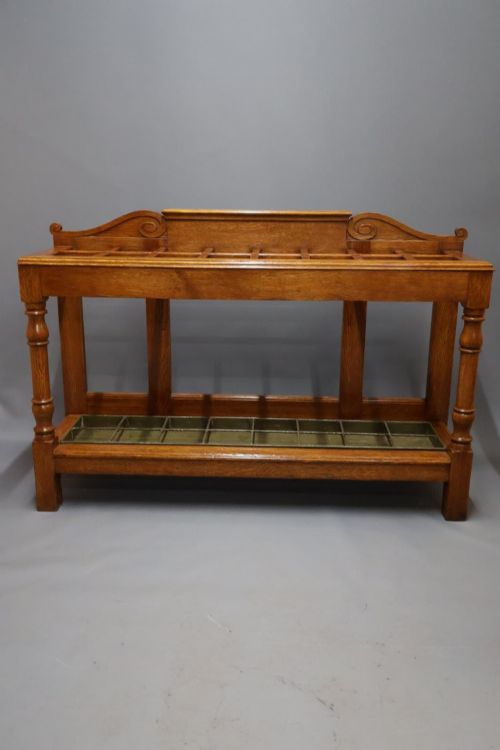
The selection on this page leans heavily toward larger hallway accessories such as umbrella and stick stands alongside smaller tabletop organisers, trugs, and caddies. Oak and mahogany dominate the forms, reflecting the durable timbers chosen for everyday household service.
Period pieces from the Victorian and Edwardian eras sit alongside Arts and Crafts designs, demonstrating how simple functional storage was treated with careful craftsmanship. Buyers find both rustic country house pieces and refined urban accessories.
How they were made
Makers utilised solid timbers such as oak, mahogany, pitch pine, and walnut, selecting each for its grain pattern and structural resilience. Joinery techniques varied from traditional dovetailing in smaller boxes to sturdy pegged framing for larger hallway stands.
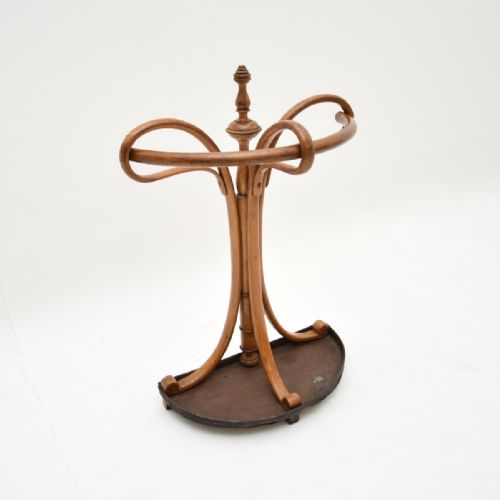
Metal components like brass drip trays, iron brackets, and cast fittings were incorporated to withstand daily wear, particularly on umbrella stands and multi-section holders. Surfaces were finished with polish, ebonising, or simple paint layers depending on the domestic function.
Wooden Storage Tray Retail Price Guide 2026
Typical asking prices for wooden storage tray among the pieces listed under this phrase on Sellingantiques today, from the lower quarter to the upper quarter. They describe what is for sale here now, not the wider market.
Several umbrella stands include original metal drip trays designed to catch rainwater from Victorian walking sticks.
What varies in quality
Quality rests in the selection of timber and the integrity of the joinery, distinguishing utilitarian workshop pieces from refined cabinet work. Thicker planks, well-fitted internal divisions, and original hardware elevate a piece above standard domestic output.
Design ambition also marks the range, from plain country pine boxes to pieces bearing distinct Arts and Crafts movement influence or maker attribution. The presence of original fitted components, such as metal drip pans in umbrella stands, preserves the intended utility.
Thonet·GW Evans·Shoolbred
The Wooden Storage Tray Glossary
- Trug
- A shallow horticultural basket or wooden tray traditionally used for gathering garden produce. These items display simple rustic construction methods.
- Cutlery box
- A compartmentalised wooden container designed to hold flatware on a table or sideboard. Examples often feature a central carrying handle.
- Pitch pine
- A resinous North American pine species used extensively in nineteenth-century joinery for its durability and prominent grain. It appears frequently in country house furniture.
- Bentwood
- Wood shaped by steaming and bending into curved forms rather than cutting from solid blocks. This technique defines notable twentieth-century umbrella stands.
- Ebonisation
- A finishing process that stains timber to resemble ebony. Victorian makers applied this treatment to create formal dark surfaces on hallway stands.
Wooden Storage Tray: Frequently Asked Questions
What are wooden storage trays used for?
These items serve to organise domestic spaces, holding everyday items such as letters, desk accessories, and cutlery.
Larger variations function in hallways to contain umbrellas, walking sticks, and coats.
How do I date a wooden tray?
Dating relies on timber selection, construction methods, and the style of hardware or applied decoration.
Victorian and Edwardian pieces exhibit distinct joinery traits that separate them from later twentieth-century production.
Where were these trays placed originally?
Smaller boxes and organisers rested on desks, sideboards, or kitchen tables for immediate daily access.
Floor-standing pieces stood in entrance halls and boot rooms to receive wet outdoor gear.
Are these pieces made from solid wood?
Most listings feature solid timbers like oak, mahogany, walnut, and pine rather than modern veneers.
This solid construction accounts for their survival through more than a century of domestic use.