


Wooden Stick Back Armchair
A wooden stick back armchair brings honest country craft into a room, offering sturdy seating shaped by generations of vernacular makers.
Wooden Stick Back Armchair
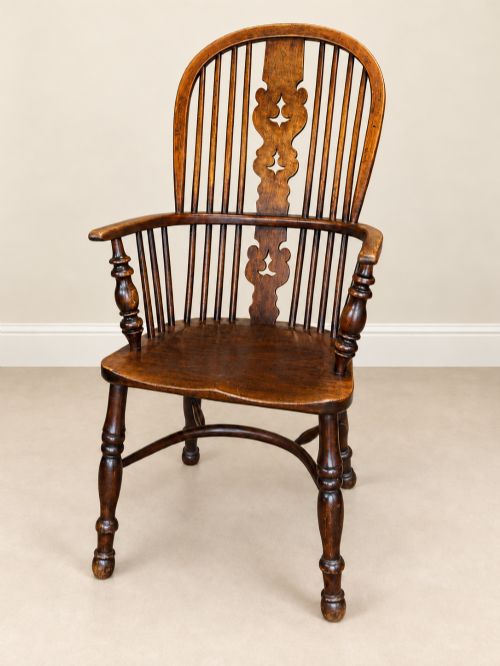
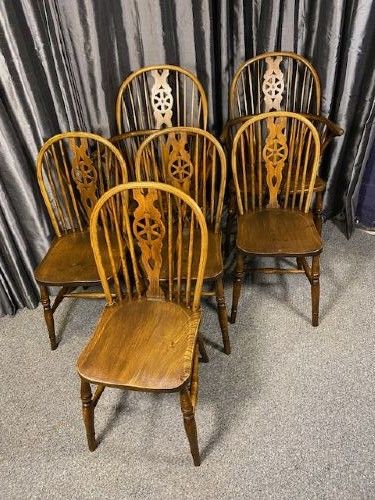
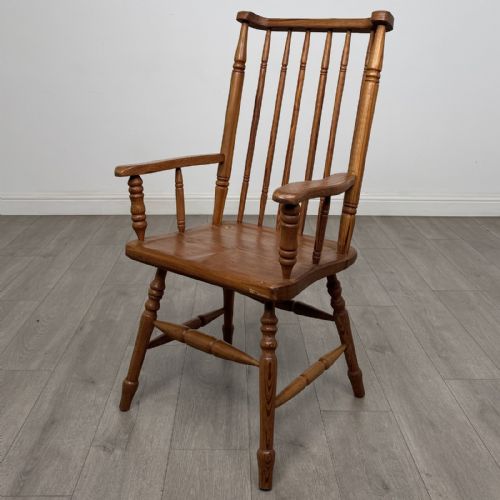
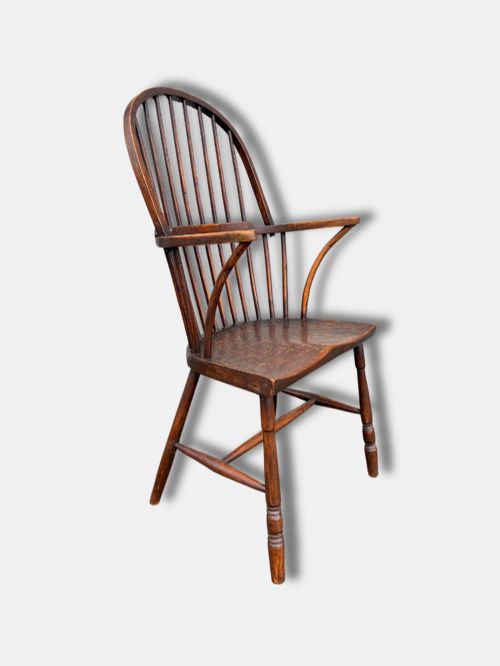
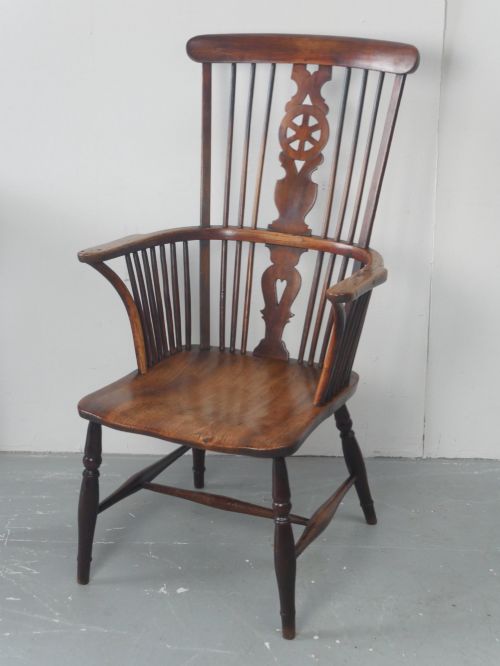
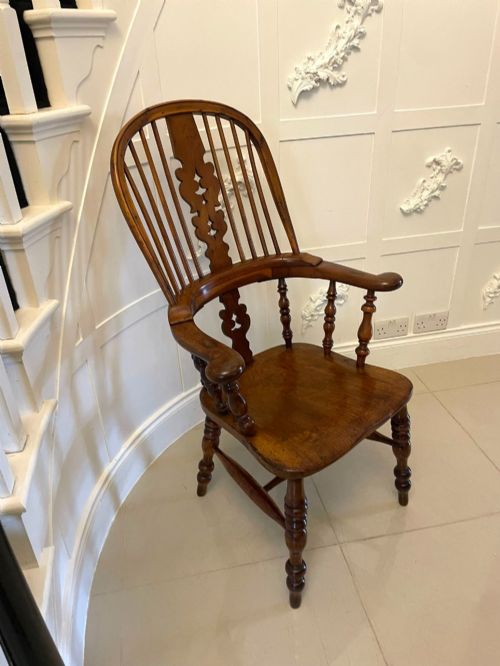
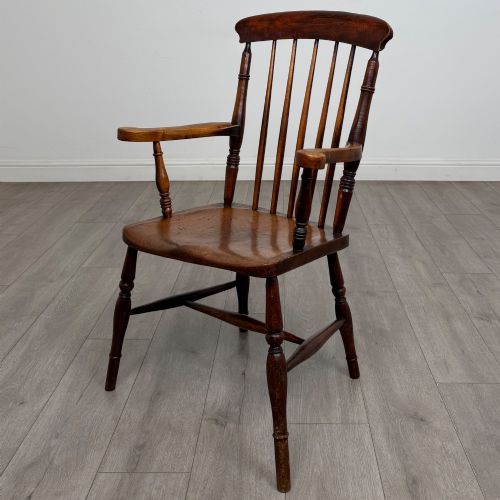
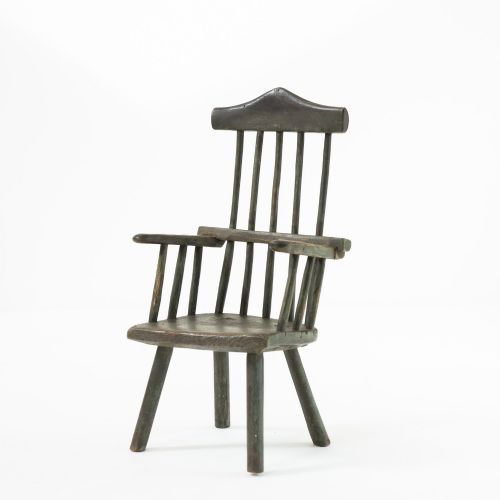
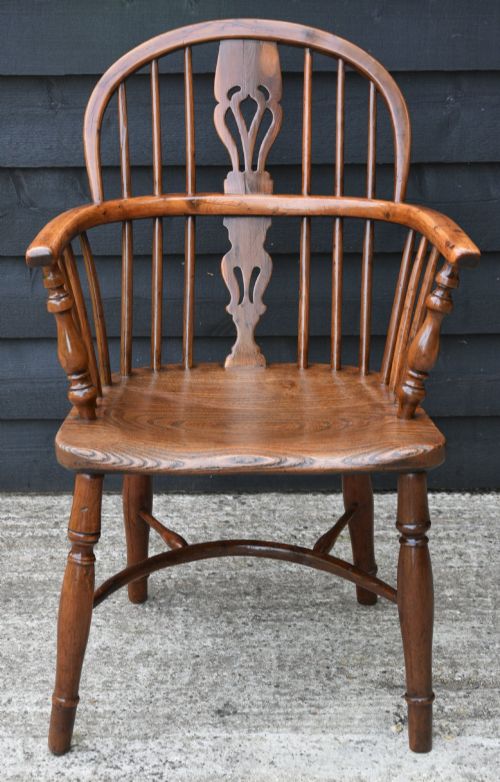
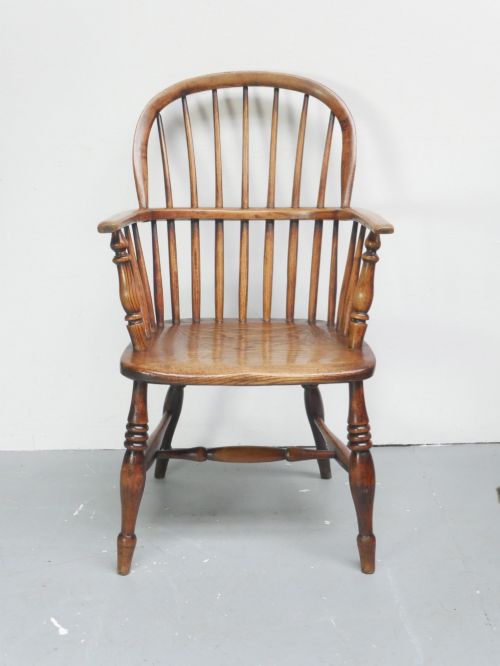
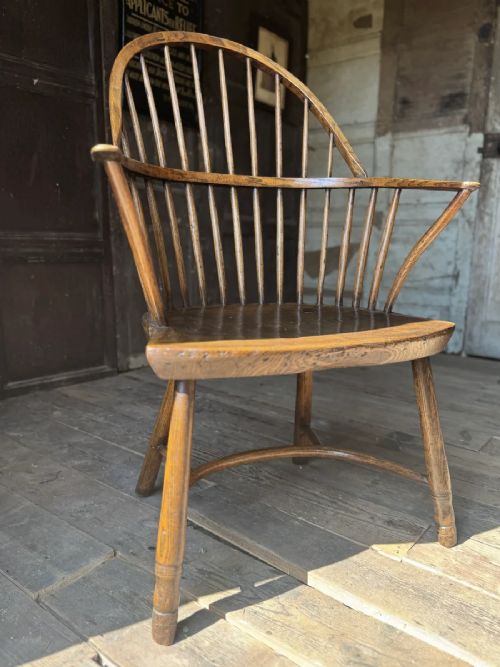
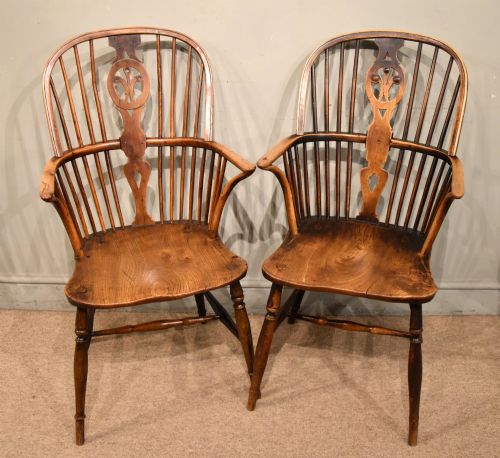
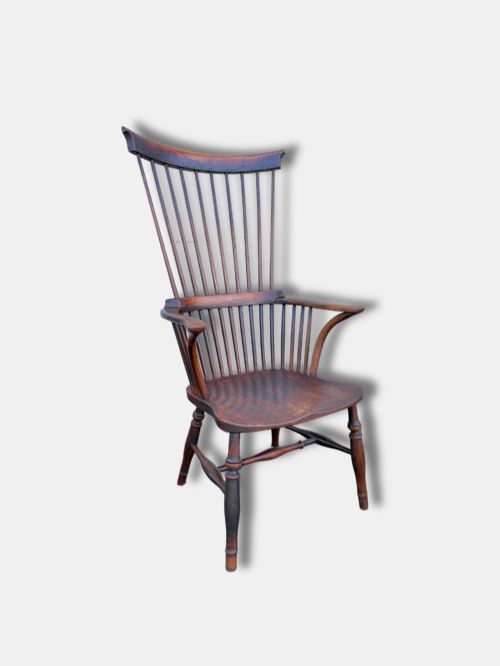
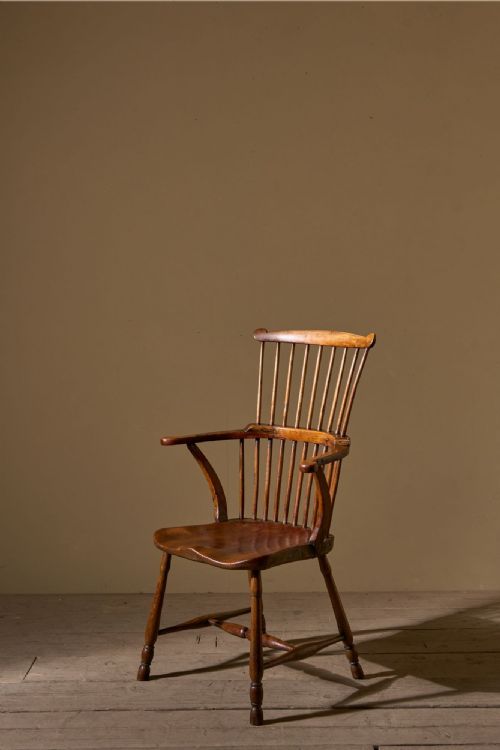
A wooden stick back armchair is a traditional country seat built with spindles or sticks tenoned directly into a solid wooden seat. When you search for a wooden stick back armchair, you encounter regional variations spanning the eighteenth, nineteenth, and twentieth centuries, including Georgian vernacular pieces and Victorian farmhouse seating. English country styles dominate the selection, often taking the form of Windsor chairs with hoop, comb, or high backs.
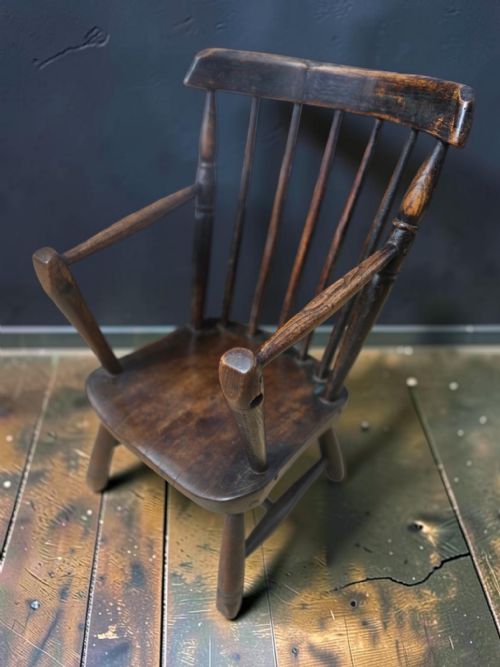
The assortment includes adult armchairs alongside smaller children's chairs and fireside seats. Construction frequently involves local woods shaped by regional chair bodgers working in woodland settings or village workshops. Forms range from low-back library chairs to towering Welsh and Thames Valley designs with generous armrests and crinoline stretchers.
How They Were Made
These chairs rely on a combination of timbers chosen for specific structural properties. Elm is heavily utilised for solid, cleft seats because its interlocking grain resists splitting under pressure from wedged legs and spindles. Ash and yew provide flexible strength for bentwood hoops and steam-bent arms, while fruitwood, oak, and beech appear in legs and stretchers.
Joinery is entirely dependent on traditional carpentry methods rather than metal fasteners. Spindles and legs are turned on pole lathes, tapered, and driven into bored holes in the saddle seat, often secured with wooden wedges. Surface finishes range from natural waxed patinas to original painted coatings.
Wooden Stick Back Armchair Retail Price Guide 2026
Typical asking prices for wooden stick back armchair among the pieces listed under this phrase on Sellingantiques today, from the lower quarter to the upper quarter. They describe what is for sale here now, not the wider market.
Regional variations span West Country, Welsh, Scottish, and Thames Valley vernacular traditions.
What Varies in Quality
Quality in a wooden stick back armchair rests upon the harmony of proportions and the integrity of the timber selection. Finer examples display balanced wheel or stick arrangements, smooth saddle shaping on the seat, and rich figuring in yew wood or elm boards. Provincial pieces show varying degrees of refinement, from robust utilitarian vernacular builds to delicate Thames Valley craftsmanship.
Wear and replacement parts influence the character of surviving examples. Chairs retaining their original wedged construction, unclipped legs, and untouched dry surfaces command greater appreciation among collectors than those with heavy structural alterations or mismatched replacement spindles.
John Brand of Sleaford
The Wooden Stick Back Armchair Glossary
- Bodger
- A travelling pole-lathe turner who roughed out chair legs and spindles in the woods near the timber source. They supplied local chairmakers with essential components.
- Comb back
- A chair design where the vertical stick back extends upward into a horizontal crest rail resembling the teeth of a comb. This style was popular throughout the eighteenth century.
- Crinoline stretcher
- A curved stretcher looping between the front and back legs of a Windsor chair to provide structural rigidity. It often adds a decorative hoop shape near the floor.
- Hoop back
- A continuous bentwood bow forming the back and arms of a Windsor chair. It distributes weight evenly to the solid wooden seat.
- Saddle seat
- A wooden chair base sculpted into a concave depression for comfort. Makers used adzes and scorps to hollow out the elm blocks.
- Vernacular
- Everyday utilitarian objects made by local craftspeople using regional materials and traditional methods without formal academic design oversight.
Wooden Stick Back Armchair: Frequently Asked Questions
What is a Windsor armchair?
A Windsor armchair is a form of seating where all the components - legs, back spindles, and arms - are fitted directly into a thick, solid wooden seat rather than an independent frame.
These chairs developed deep roots in the English countryside, utilising sturdy native timbers to create resilient seating for farmhouses, cottages, and provincial homes.
How do I care for antique wood?
Maintain antique wooden chairs by keeping them away from direct heat sources and sudden temperature fluctuations that cause timber to dry and split. Apply occasional applications of beeswax to nourish the grain and preserve the historic surface patina.
Avoid modern liquid polishes containing silicones, which can penetrate open-grain woods like elm and ash and damage the finish over time.
Are these chairs comfortable for daily use?
These chairs are surprisingly supportive due to their ergonomically sculpted saddle seats and raked back spindles. The organic shaping accommodates body weight naturally.
Adding a loose antique textile cushion provides extra padding for extended sitting without altering the historic structure of the seat.
How can I tell the age of a stick back chair?
Dating relies on observing tool marks, timber combinations, and construction wear. Eighteenth-century examples often feature thicker plank seats, ash comb backs, and hand-rived spindles showing subtle irregularities.
Nineteenth-century pieces frequently incorporate more uniform turned elements, factory-assisted lathe work, and distinct regional bracing patterns such as crinoline stretchers.