

Wooden Smokers Bow Chair
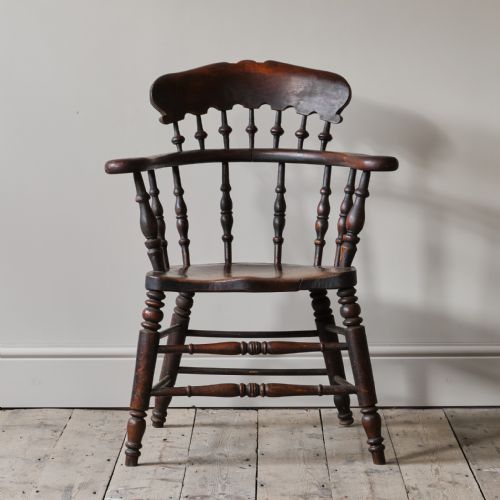
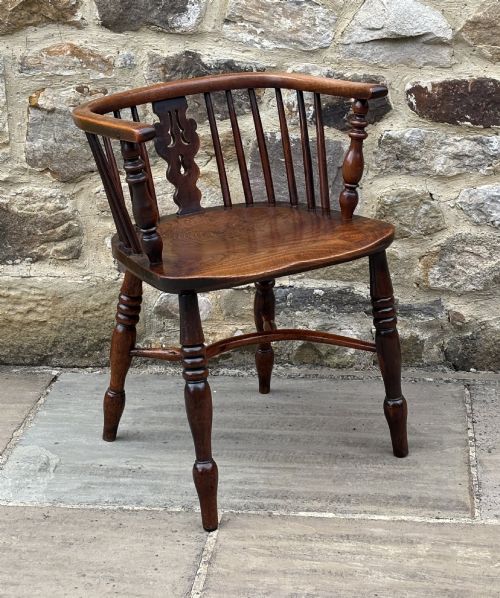
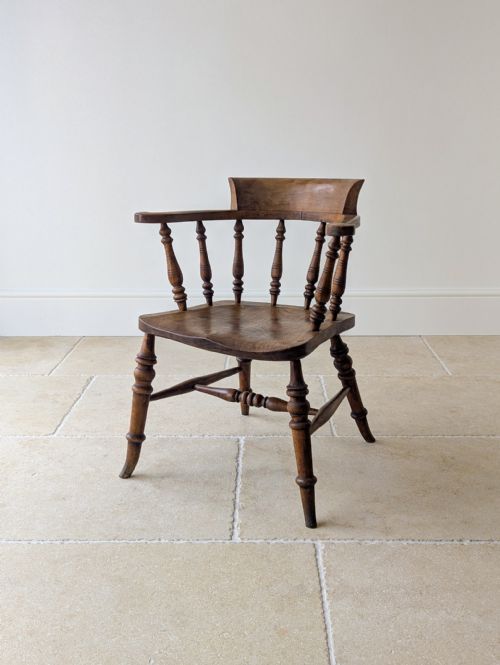
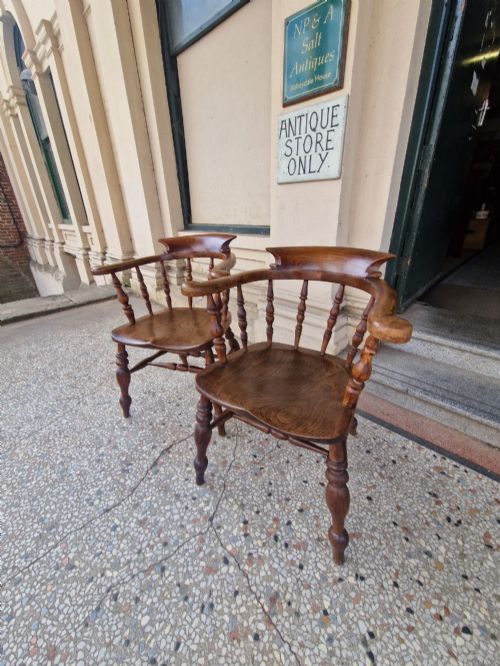
A wooden smokers bow chair is a sturdy country armchair built for comfort, and you will find them mostly in elm, beech and ash from the Victorian and Edwardian periods.
Wooden Smokers Bow Chair
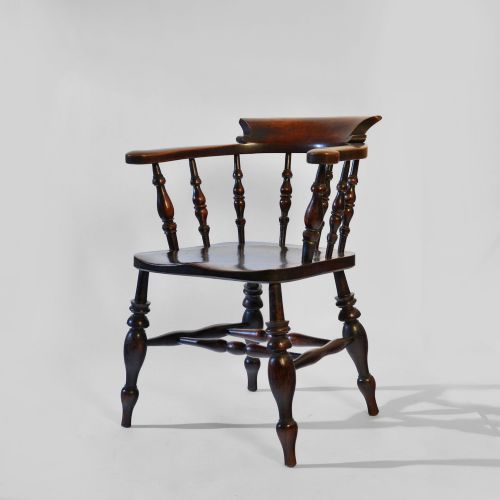
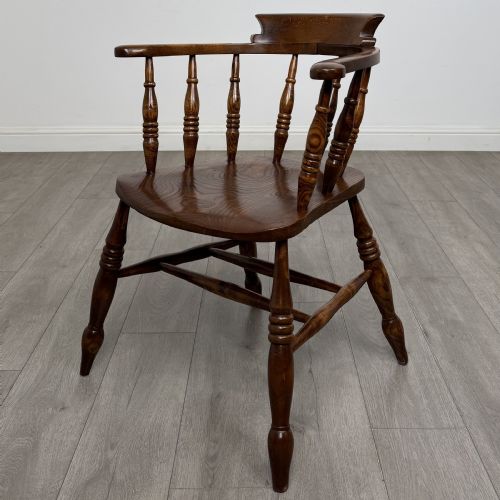
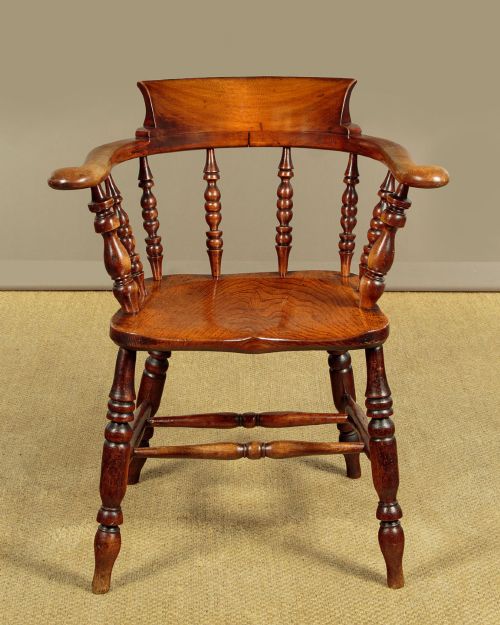
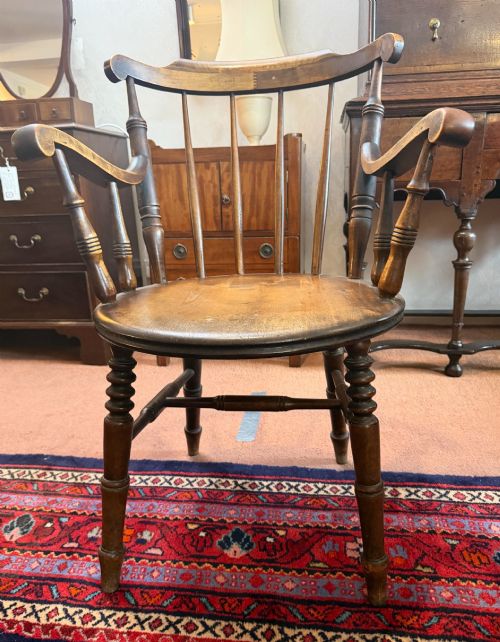
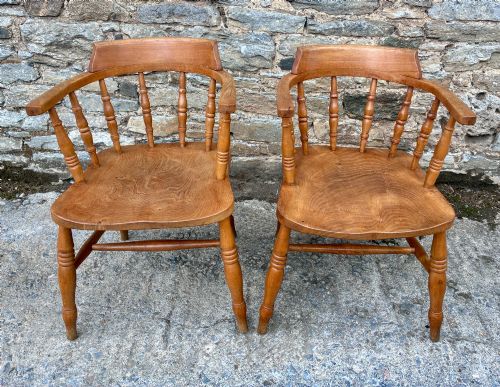
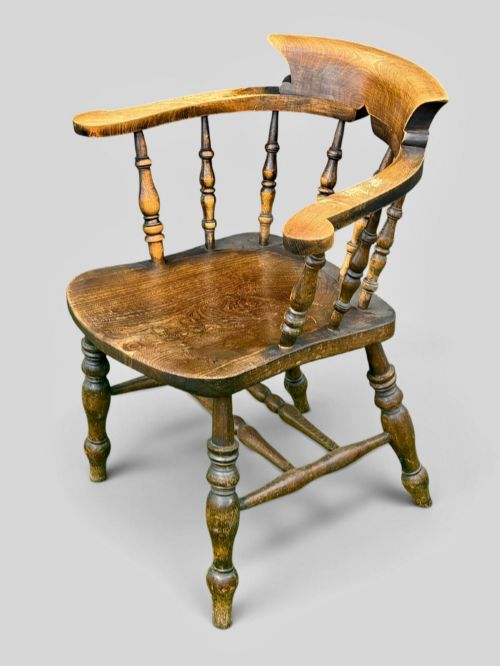
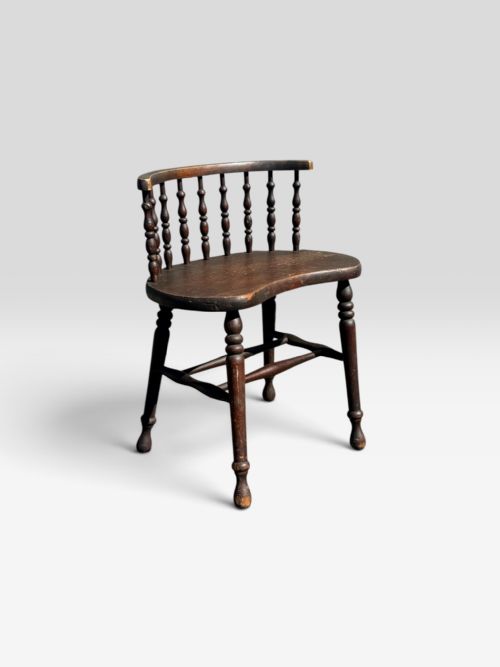
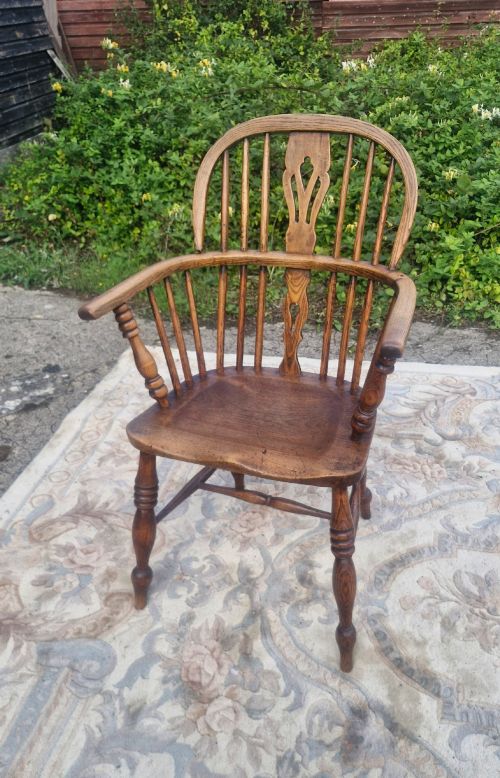
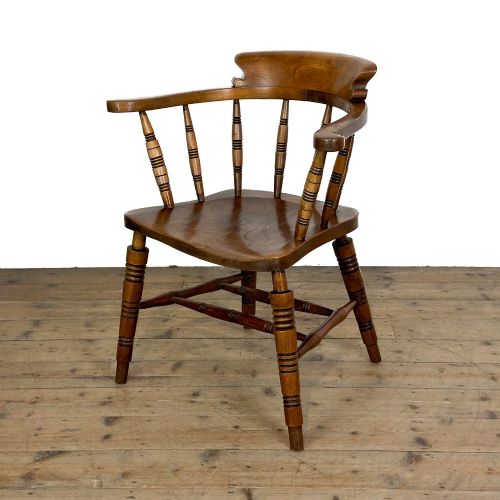
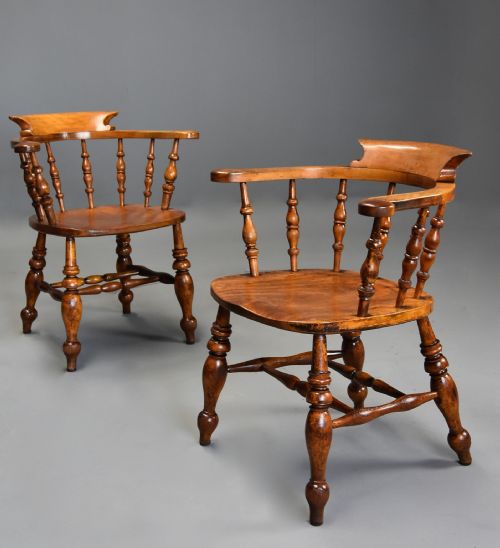
When you search for a wooden smokers bow chair, you are looking at a traditional low-back Windsor armchair designed for domestic or tavern use. The form typically combines a curved continuous arm rail with a spindle back and a solid shaped seat.
On this page, you will most frequently meet pieces originating from the nineteenth and early twentieth centuries. These range from simple farmhouse kitchen armchairs to more refined desk and office chairs made in provincial English workshops.
How they were made
These chairs rely on a robust combination of native timbers, predominantly elm for the solid saddle seats due to its resistance to splitting, paired with bent beech or ash for the bows and spindles. Makers also utilised oak, birch, mahogany, yew and alder depending on local availability and the intended function of the seat.
Construction techniques involve steam-bending thick timber to form the characteristic low bow back, combined with traditional turned spindles and legs wedged directly into the thick wooden seat base. Brass fittings or leather pads occasionally appear on desk and office variants intended for writing or administrative use.
Wooden Smokers Bow Chair Retail Price Guide 2026
Typical asking prices for wooden smokers bow chair among the pieces listed under this phrase on Sellingantiques today, from the lower quarter to the upper quarter. They describe what is for sale here now, not the wider market.
Listings span the Victorian and Edwardian eras, incorporating nineteenth-century provincial pieces alongside early twentieth-century desk and office variants.
What varies in quality
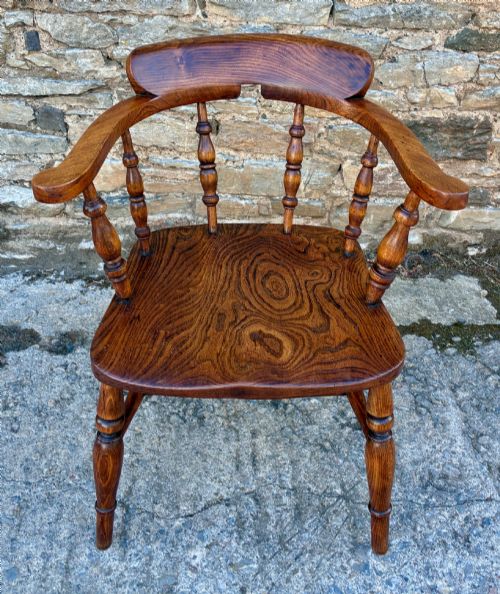
The distinction between standard utility seating and finer examples lies in the selection of timber grain and the elegance of the turnings. Chairs featuring richly figured elm seats and carefully balanced proportions command greater attention than utilitarian workshop seating.
Surface finish and the depth of patination accumulated through decades of domestic use alter the visual weight of the piece. Well-preserved timbers with a warm, natural lustre reflect superior historical maintenance and careful guardianship.
The Wooden Smokers Bow Chair Glossary
- Smokers bow
- A low-backed Windsor armchair with a rounded wooden arm rail, commonly found in English country houses and public houses.
- Windsor chair
- A chair built with a solid wooden seat into which the legs and back spindles are separately dowelled and secured.
- Saddle seat
- A thick wooden seat base scooped and carved into a concave shape to provide ergonomic comfort for the sitter.
- Comb back
- A Windsor chair variation where the top rail resembles the teeth of a comb, often supporting additional upright spindles.
- Patina
- The surface sheen and softening of colour developed on wood over long periods of handling and use.
Wooden Smokers Bow Chair: Frequently Asked Questions
What is a wooden smokers bow chair?
A wooden smokers bow chair is a low-backed Windsor armchair characterised by a continuous curved arm rail and a solid saddle seat. They were widely used in nineteenth and early twentieth century English farmhouses, offices and drawing rooms.
These chairs combine the traditional construction methods of country furniture makers with a compact frame designed for comfortable daily sitting. Most examples seen today date from the Victorian and Edwardian eras.
How do I date a smokers bow chair?
Dating these chairs involves examining the wood species, turning styles on the legs and spindles, and the overall construction of the seat joint. Nineteenth-century examples often display deep elm grain and hand-turned components specific to provincial English workshops.
Later Edwardian versions may incorporate heavier oak frames or details suited for desk and office use. Comparing the wear patterns and timber combinations helps place the piece within its correct historical period.
Were these chairs used at desks?
Many smokers bow and captain's chairs were adapted for administrative tasks, resulting in desk and office armchairs from the nineteenth century onwards. These versions often feature lower backs to fit beneath writing surfaces and sometimes incorporate swivel bases or leather upholstery.
Their sturdy frame made them practical for prolonged daily use in studies, libraries and commercial offices. You will frequently find them listed as desk or office chairs alongside standard dining and kitchen variants.
What woods were used to build them?
English makers selected timbers based on strength, flexibility and availability, resulting in multi-wood construction within a single chair. Elm was preferred for seats because its interlocking grain prevented splitting under the weight of the sitter.
Bows and spindles were typically fashioned from steam-bent beech, ash or birch. Occasionally, more decorative timbers such as yew or mahogany appear in specific regional or high-status commissions.