





Wooden Slant Top Box
A wooden slant top box offers a practical writing surface and secure storage, combining period craftsmanship with enduring utility.
Wooden Slant Top Box
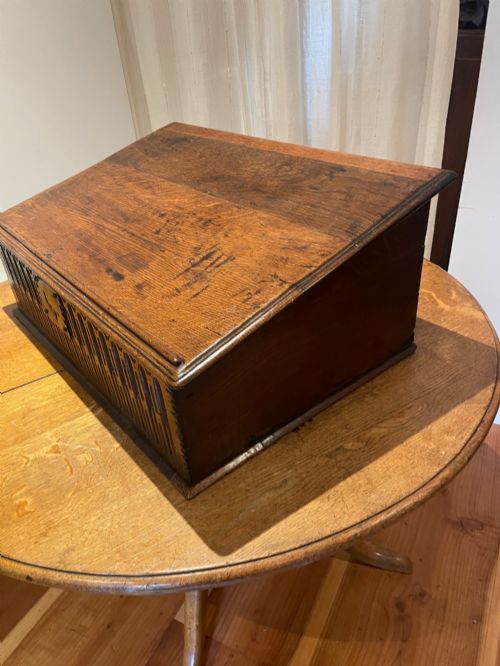
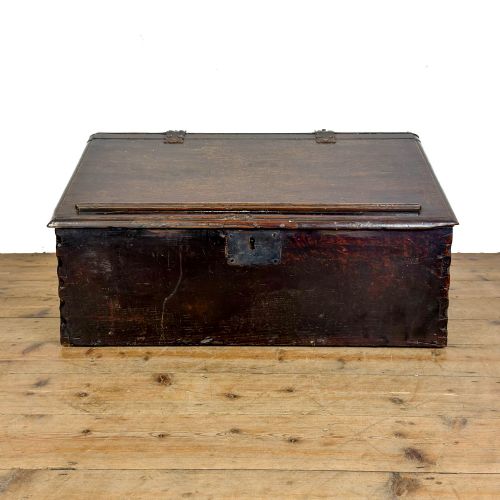
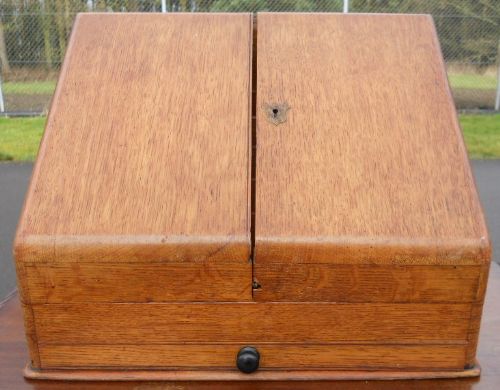
A wooden slant top box serves as a portable writing surface, stationery cabinet, or bible box designed for domestic or ecclesiastical use. These objects span from the 17th century through the Victorian era, reflecting shifting interior needs across generations.
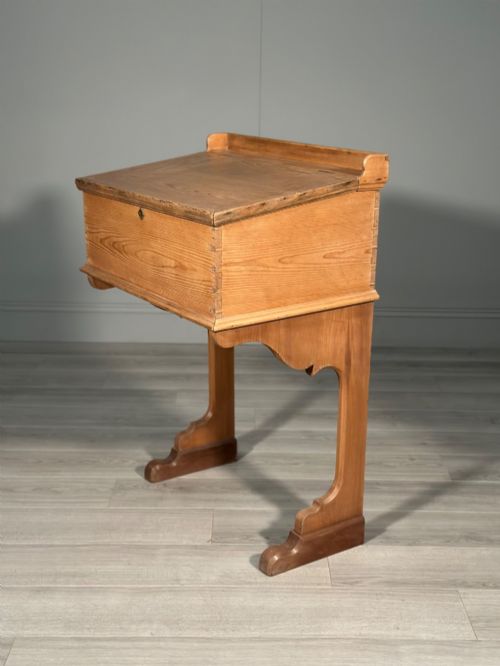
The most common forms on this page include oak bible boxes, mahogany knife boxes repurposed for stationery, and Victorian pine school desks. Early examples often date to the Jacobean or William III periods, whilst later versions extend into the 1890s.
Makers shaped these pieces from timber to sit upon tables or function as independent desks, incorporating hinged slopes that reveal compartments inside. The materials and forms vary from utilitarian pine to formal mahogany and heavy oak.
How they were made
Carpenters constructed these items primarily from solid oak, mahogany, and pine, selecting timber based on the intended function and social standing of the piece. Oak dominates the earlier centuries, while mahogany and pine appear more frequently in Georgian and Victorian workshops.
Metal components such as brass and iron provide structural reinforcement and hinges for the sloping lids, securing compartments and stationery cabinets. Paper and bone occasionally appear in interior linings or decorative elements.
Wooden Slant Top Box Retail Price Guide 2026
Typical asking prices for wooden slant top box among the pieces listed under this phrase on Sellingantiques today, from the lower quarter to the upper quarter. They describe what is for sale here now, not the wider market.
What varies in quality
The refinement of the timber preparation and joinery distinguishes finer examples from utilitarian ones, with early oak boxes showing pegged joints and hand-carved details. Later Victorian pieces rely on machine-sawn boards and simpler fastening methods.
Hardware selection marks another distinction, as original brass escutcheons and hinges elevate a box above those fitted with later replacements. The choice between plain pine and figured mahogany or quarter-sawn oak reflects the original commissioner's budget.
The Wooden Slant Top Box Glossary
- Bible box
- A lidded wooden box traditionally used to store family scriptures, often featuring a slanted top that doubled as a reading desk. These portable chests date largely to the 17th and 18th centuries.
- Slant front
- An inclined writing surface hinged to open and reveal interior pigeonholes and compartments for papers and pens. This configuration prevents strain during extended periods of writing.
- Escutcheon
- A protective metal plate surrounding a keyhole, usually fashioned from brass or iron. It prevents the surrounding wood from wearing away through repeated use of the key.
- Quarter-sawn
- A method of cutting logs that produces timber with greater dimensional stability and prominent grain patterns. This cut frequently appears in high-quality oak furniture from earlier centuries.
Wooden Slant Top Box: Frequently Asked Questions
What is a wooden slant top box used for?
These boxes function primarily as portable writing desks or secure storage for documents, stationery, and books. The angled lid provides a comfortable slope for handwriting.
Historically, early versions served as bible boxes or ecclesiastical table-top desks before evolving into Victorian stationery cabinets and school desks.
How do I date a wooden slant top box?
Dating relies upon timber selection, construction methods, and hardware styles. Seventeenth-century examples typically feature solid oak with pegged joinery and hand-planed surfaces.
Later Georgian and Victorian pieces introduce mahogany, pine, mass-produced brass hinges, and mechanical interior compartments such as adjustable dates.
Are all slant top boxes made of oak?
Whilst oak is the predominant timber for 17th and 18th-century examples, other woods appear across different periods. Mahogany is common in Georgian knife boxes and stationery cabinets.
Victorian pieces frequently utilise pine, light oak, or mixed metals for utilitarian items like school desks and coal scuttles.
Where were these boxes placed?
Owners placed them upon sturdy tables, buffets, or dedicated stands rather than using them as floor-standing furniture. Their portable nature allowed them to move between rooms as needed.
Ecclesiastical examples sat upon verger's tables in churches, while school versions stood in classrooms for daily instruction.