




Wooden Serving Tray on Stand
A wooden serving tray on stand offers practical hospitality, bringing portable surface space from the kitchen to the parlour.
Wooden Serving Tray on Stand
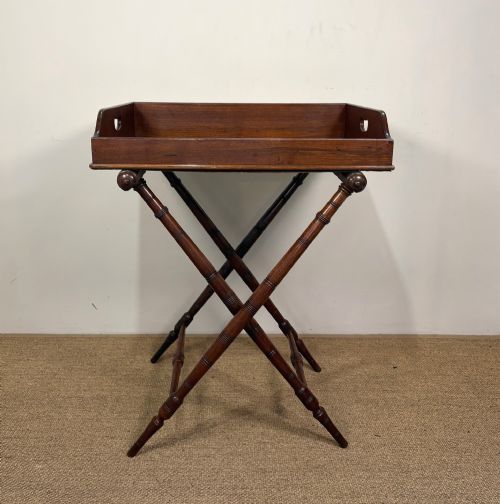
A wooden serving tray on stand combines a removable surface with a collapsible or fixed support base, functioning as an adaptable table for drinks and meals. These pieces span the eighteenth, nineteenth, and early twentieth centuries, encompassing Georgian, Victorian, and Edwardian periods.
Origins range from domestic English workshops to continental pieces carrying specific provenance, such as examples originating from country houses. The dual nature of the object allows the tray to lift clear of its stand for independent service.
Materials and construction methods
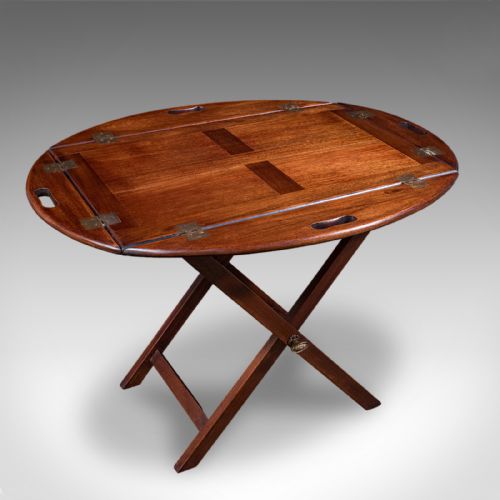
Construction relies heavily on dense timbers such as mahogany, oak, and walnut, chosen for their structural strength and capacity to take a polished finish. Cabinetmakers often employed satinwood for marquetry detailing on decorative tray tops.
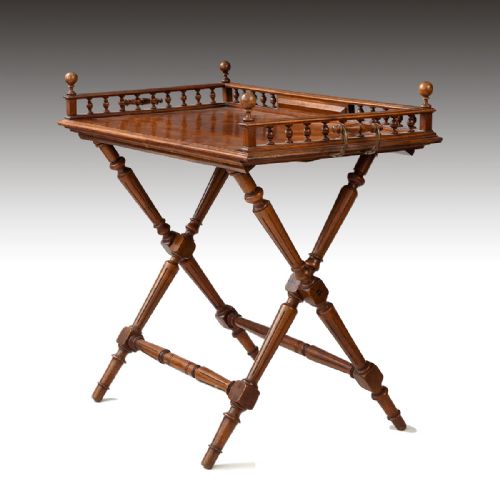
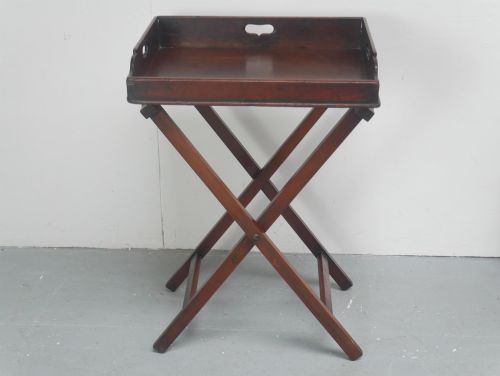
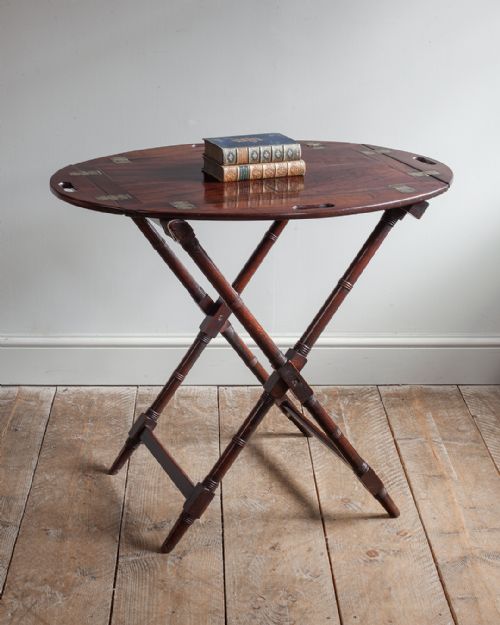
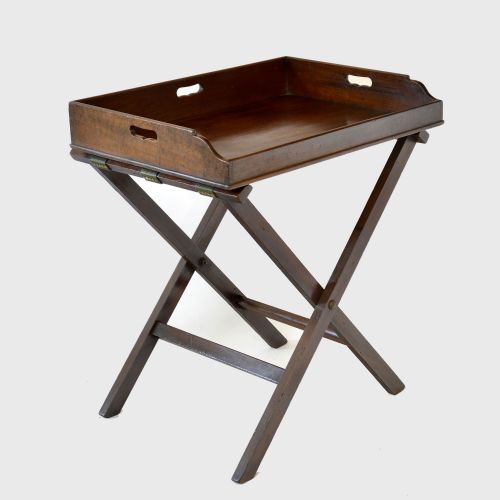
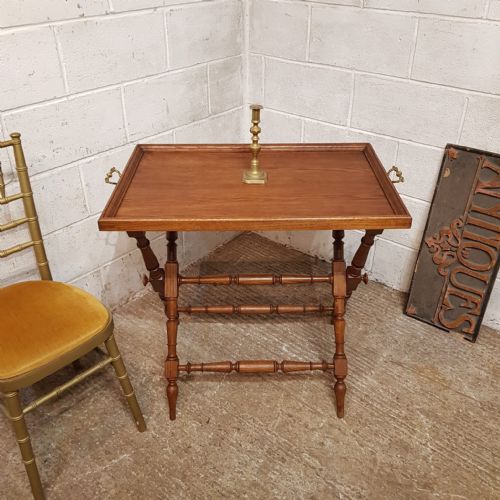
Stands incorporate folding X-frame supports or four-legged frames joined by cross stretchers, frequently fitted with brass hinges and fittings. Webbing in cotton or fabric appears on specific folding mechanisms to support the tray securely.
Wooden Serving Tray on Stand Retail Price Guide 2026
Typical asking prices for wooden serving tray on stand among the pieces listed under this phrase on Sellingantiques today, from the lower quarter to the upper quarter. They describe what is for sale here now, not the wider market.
Listings feature woods including mahogany, oak, walnut, teak, and satinwood, paired with brass hardware and cotton webbing.
Distinguishing quality factors
Quality reveals itself in the selection of timber figure, such as well-matched mahogany grain or finely carved oak enrichment along the tray rim. Superior examples maintain crisp joinery in the folding mechanism and retain their original matching stands rather than later replacements.
Proportion and stability separate standard utility pieces from finer cabinet work, with better trays sitting squarely on their frames without rocking. The subtlety of hand-cut handles and the retention of patinated wax finishes further mark the upper tier of these items.
Maple & Co
The Wooden Serving Tray on Stand Glossary
- Butler's tray
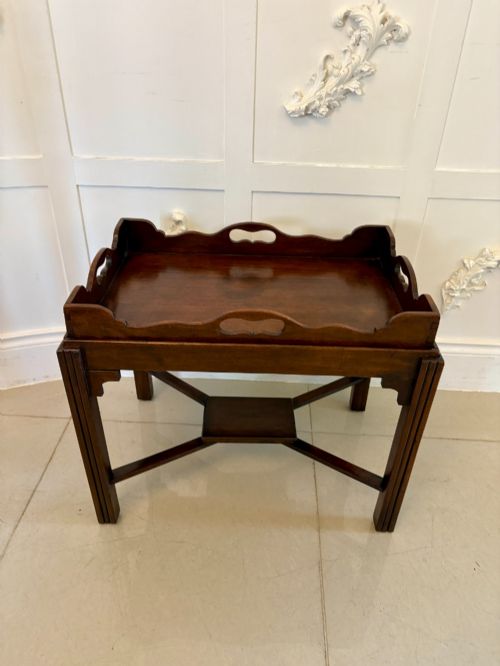
- A rectangular wooden tray with a raised gallery edge and cut-out handles, designed to lift off a folding stand.
- Dumb waiter
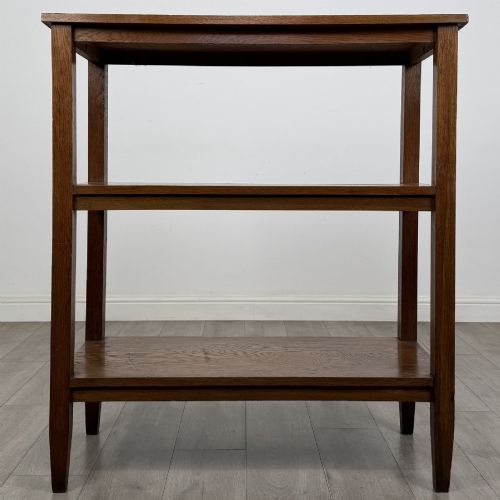
- A tiered freestanding serving stand with revolving or fixed circular trays used for dining assistance.
- Lazy susan
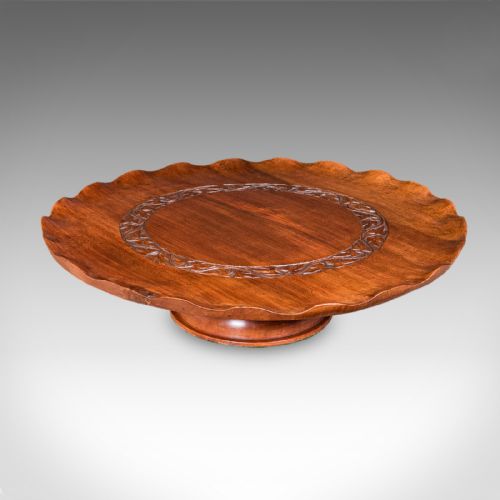
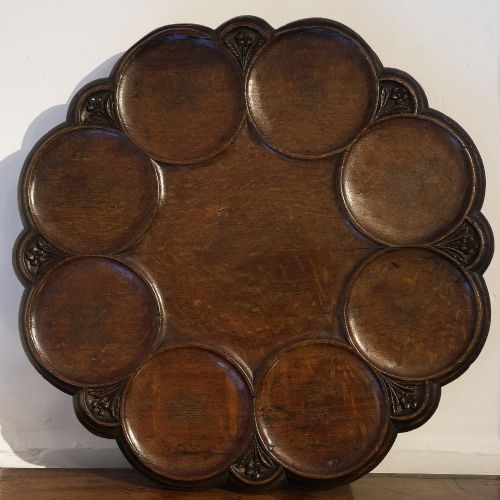
- A revolving circular tray placed on a table or stand to allow easy sharing of dishes.
- Gallery
- A raised wooden border running around the perimeter of a tray to prevent items from sliding off.
- Marquetry
- Inlays of different coloured woods arranged in decorative patterns across the surface of the tray.
Wooden Serving Tray on Stand: Frequently Asked Questions
What is a wooden serving tray on stand?
A wooden serving tray on stand is a portable furniture form comprising a detachable tray paired with a collapsible or rigid base. It was historically used by domestic staff to transport food and beverages between rooms.
Today, these items function as versatile side tables or drinks stands in modern living spaces. The removable top provides practical utility while the stand elevates the surface to standard table height.
How do I date a butler's tray table?
Dating relies on observing timber choices, hardware types, and construction methods characteristic of different eras. Georgian and early nineteenth-century examples often feature solid mahogany with hand-cut dovetails and subtle brass hinges.
Later Victorian and Edwardian pieces frequently display machine-sawn elements, applied carvings, or lighter oak timbers. Examining the underside of the tray and the patina of the wood helps confirm the period.
How do I care for antique wood trays?
Maintenance requires protecting the polished timber surface from excessive moisture, direct heat, and strong sunlight. Using coasters and wiping spills promptly preserves the finish.
Occasional application of quality beeswax feeds the wood and maintains its natural sheen without building up heavy chemical residues. Avoid abrasive cleaners that strip historic patina.