


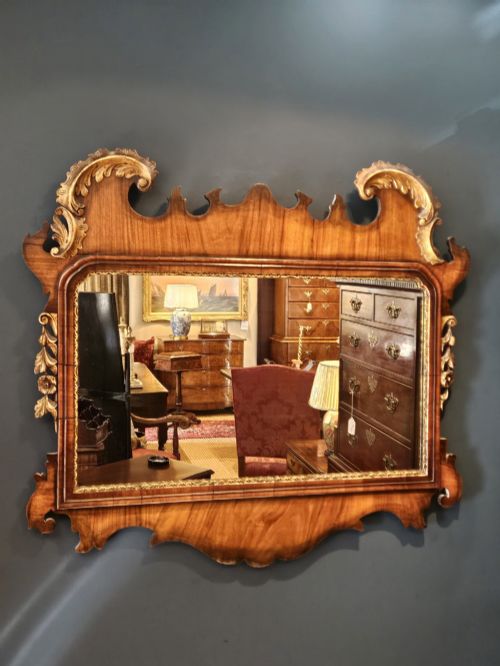
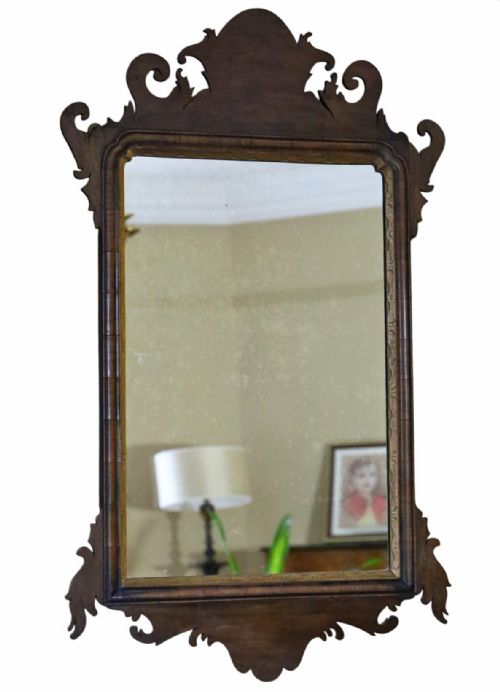


Wooden Scroll Mirror
These wooden scroll mirrors combine carved frames and historic forms to bring warmth and depth to a room.
Wooden Scroll Mirror
A wooden scroll mirror delivers architectural presence to a room through carved frames and historic forms. When searching for a wooden scroll mirror, buyers encounter everything from Georgian originals to revival pieces spanning the Victorian era and the early twentieth century.
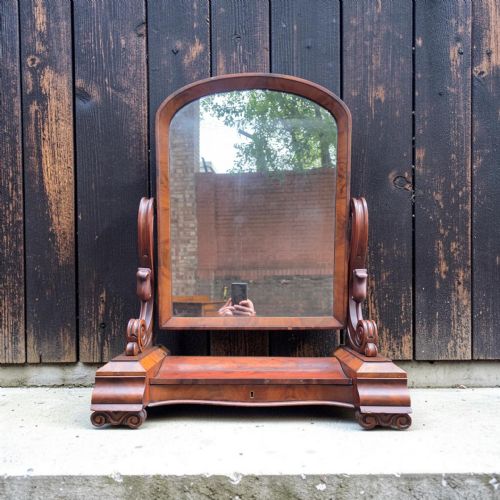
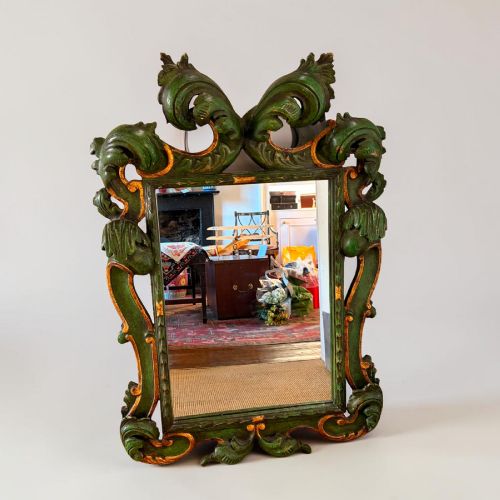
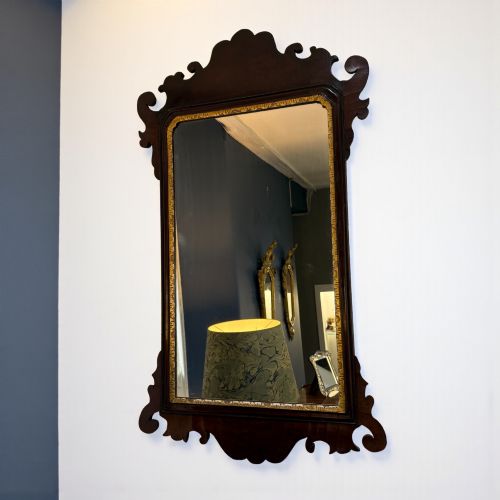
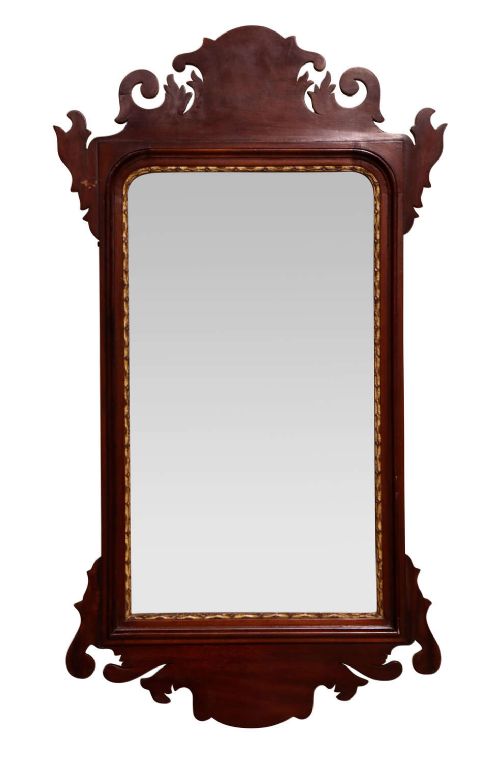
The selection on this page leans heavily toward wall mirrors and dressing table mirrors framed in mahogany and walnut. Pieces range from grand George III landscape designs to Italian Florentine and Rococo wall mirrors finished in gilt wood.
Revival pieces sit alongside eighteenth-century items, offering classic fretwork and scroll outlines in pine, oak, and sycamore. These mirrors served both functional dressing duties and decorative wall placement across centuries of British and continental design.
How they were made
Cabinetmakers shaped these frames from dense hardwoods like mahogany, walnut, and oak, often applying fine veneers or parcel-gilt details. Carving, fret cutting, and scrollwork required steady handwork to achieve pierced frets and fluid curves.
Surfaces received finishes of paint, gold leaf, or polished wax to highlight the grain of the wood. Mirrors frequently incorporate engraved plates, gilt slips, and brass hardware to complete the construction.
Wooden Scroll Mirror Retail Price Guide 2026
Typical asking prices for wooden scroll mirror among the pieces listed under this phrase on Sellingantiques today, from the lower quarter to the upper quarter. They describe what is for sale here now, not the wider market.
Listings feature mahogany, walnut, oak, and pine alongside finishes of gold leaf, paint, and gilt wood across multiple centuries.
What varies in quality
The distinction between ordinary and exceptional work lies in the depth of the carving and the crispness of the fretwork. Superior examples display refined proportions, clean scroll execution, and carefully chosen burr walnut or figured mahogany veneers.
Age and authenticity of components also shape the standing of a piece. Original carved gesso, well-preserved gilt wood, and period glass plates elevate a mirror far above later interpretations.
The Wooden Scroll Mirror Glossary
- Fretwork
- Openwork ornamentation cut from a thin board of wood using a fret saw. It creates intricate geometric or scroll patterns on the frames of these mirrors.
- Parcel-gilt
- A method where only specific raised portions of a wooden frame are gilded with gold leaf, leaving the underlying wood grain visible elsewhere.
- Giltwood
- Timber that has been coated with a thin layer of gold leaf or gesso and gold paint. This technique accentuates carved Italian Rococo and Florentine frames.
- Gilt slip
- A narrow inner moulding finished in gold leaf that sits between the outer frame and the mirror glass. It adds a layer of reflected light to the composition.
- Dressing mirror
- A small mirror mounted on a pivoted stand designed to sit upon a dressing table or chest of drawers. These often feature small drawers within the base structure.
Wooden Scroll Mirror: Frequently Asked Questions
Where should I hang a wooden scroll mirror?
These mirrors suit principal reception rooms, hallways, and above bedroom mantelpieces where their carved frames catch the light. They anchor a space when positioned above low furniture like console tables.
Ensure the wall fixings match the weight of the timber frame, particularly for larger mahogany or gilt-wood examples.
How do I date a wooden scroll mirror?
Dating relies on examining the timber species, construction methods, and the bevel or clarity of the mirror plate. Eighteenth-century pieces typically show hand-cut joinery and older plate glass characteristics.
Revival pieces from the Victorian era and early twentieth century often employ machine assistance while faithfully copying earlier Georgian styles.
What is the difference between a wall mirror and a dressing mirror?
Wall mirrors are designed to hang flat against vertical surfaces using integrated brackets or rings. They focus purely on architectural framing and decorative impact.
Dressing mirrors incorporate a pivoting frame mounted on upright supports above a base or small chest, built for personal grooming.
How do I clean a historic wooden frame?
Dust the carved scrolls gently with a soft, dry brush to prevent dirt accumulation in the crevices. Avoid commercial liquid cleaners on antique wood and gilt surfaces.
Conserve the original finish by applying microcrystalline wax sparingly only when the timber appears dry.