



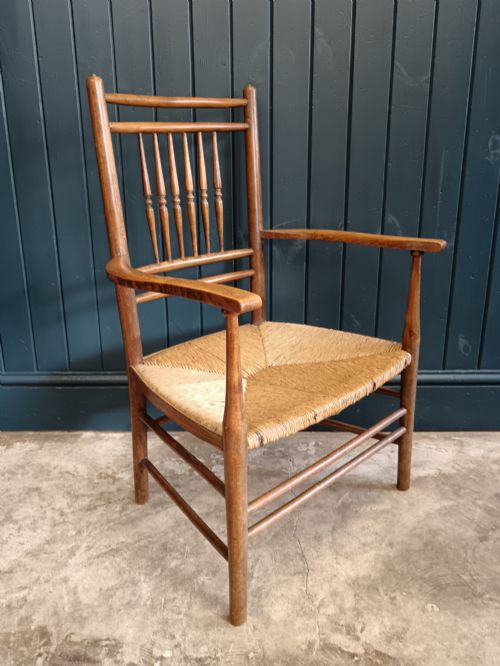

Wooden Rush Chair
A wooden rush chair brings enduring vernacular simplicity to an interior through honest materials and traditional hand-woven seating.
Wooden Rush Chair
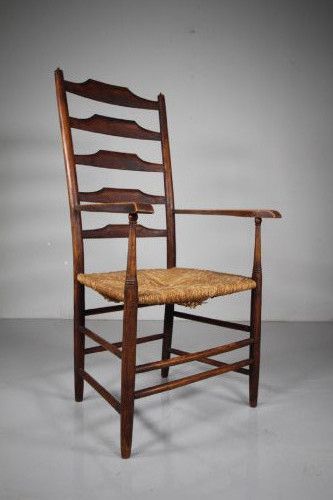
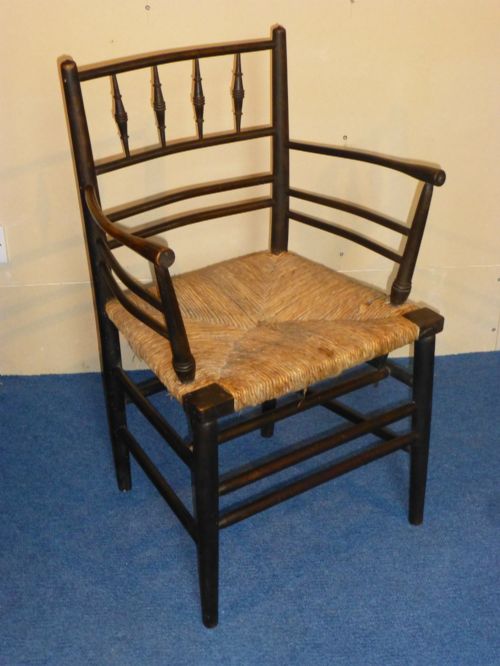
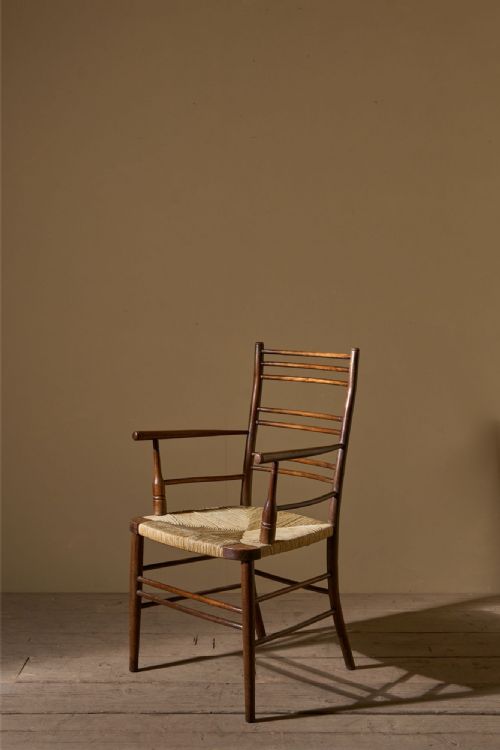
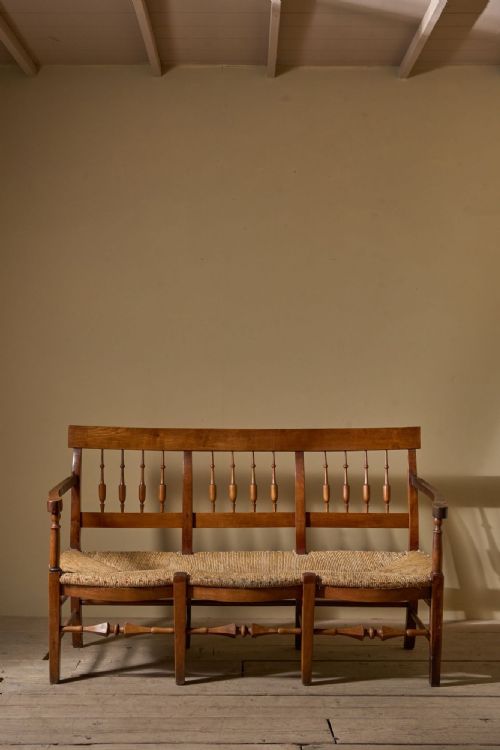
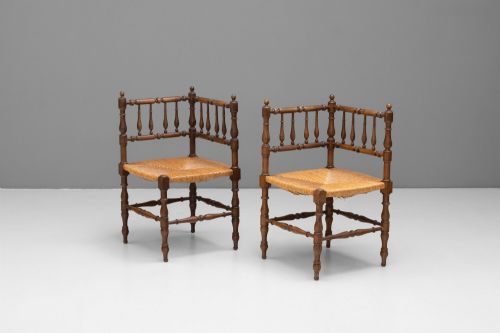
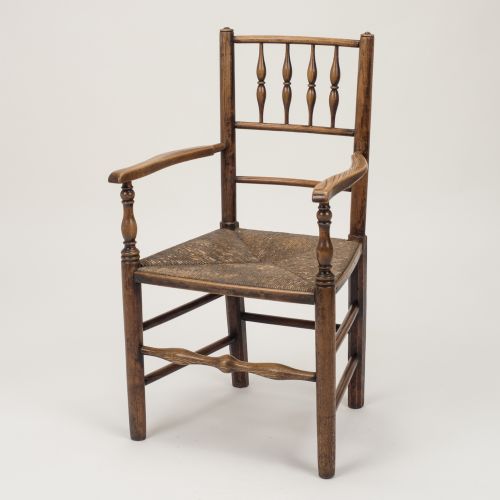
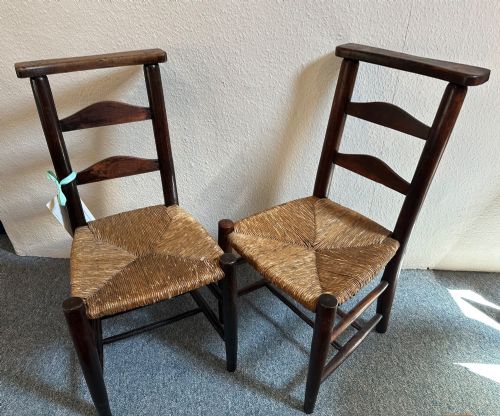
A wooden rush chair is defined by a woven seating platform fitted within a timber frame, encompassing forms ranging from simple country dining seats to high-back library armchairs. Buyers exploring this category encounter pieces spanning the Georgian, Victorian, and Arts and Crafts eras, reflecting both English vernacular traditions and continental provincial designs.
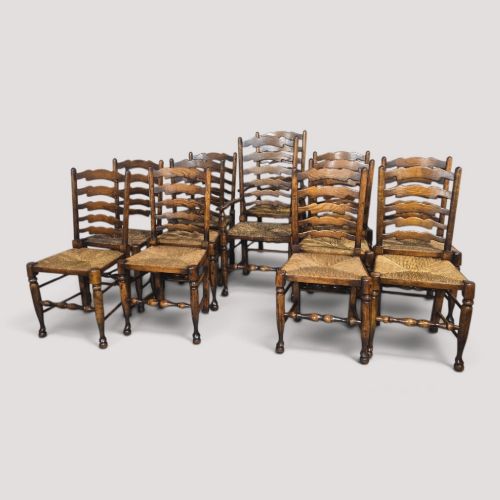
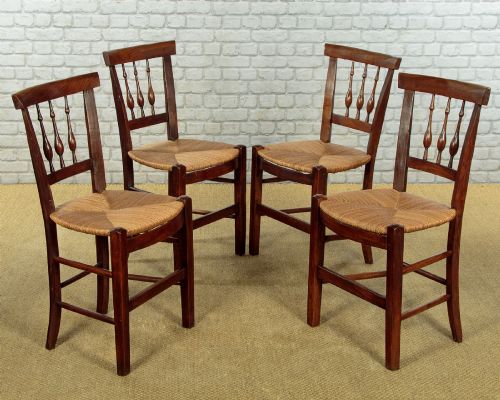
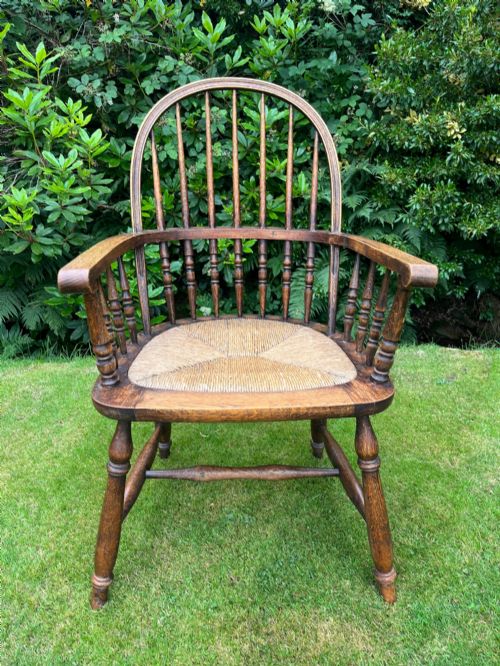
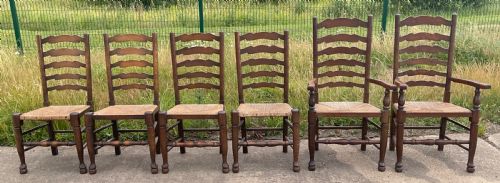
The selections on this page lean heavily towards ladder-back, spindle-back, and Windsor configurations rooted in domestic country use. From single farmhouse chairs to large matched dining sets, these pieces demonstrate the practical utility demanded by rural households across centuries of production.
Materials and construction methods
Makers utilised native hardwoods such as oak, ash, elm, beech, fruitwood, and walnut for the structural frames, often turning spindles on a lathe or steaming timbers to shape curved components. Frames were assembled using traditional joinery techniques including mortise and tenon joints.
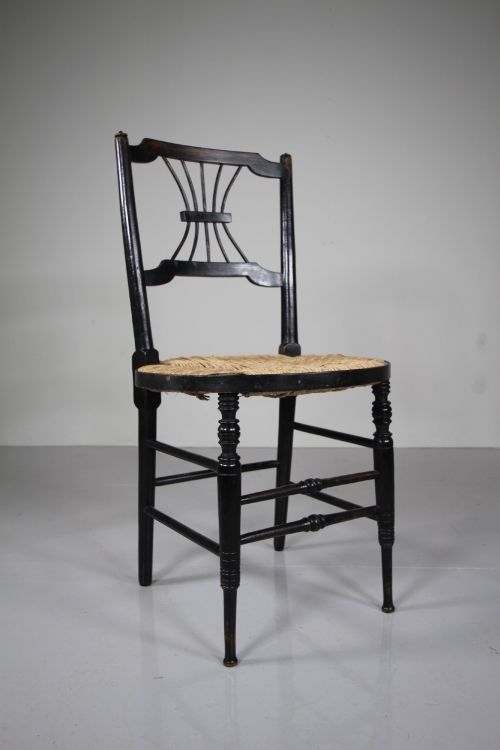
The seats themselves were hand-woven using marsh rush, twisted tightly around the seat rails to create a durable, supportive surface. Occasional pieces incorporated ebonised wood or painted finishes to align with aesthetic movement and designer-led commissions.
Wooden Rush Chair Retail Price Guide 2026
Typical asking prices for wooden rush chair among the pieces listed under this phrase on Sellingantiques today, from the lower quarter to the upper quarter. They describe what is for sale here now, not the wider market.
Several listed chairs once furnished St Paul's Cathedral, trading quiet rural floors for grand ecclesiastical acoustics.
Assessing craftsmanship and integrity
Quality rests in the harmony of the timber selection and the tightness of the rush weaving, where uniform tension ensures a stable seat. Superior examples maintain their original frame rigidity without excessive replacement of structural pins or stretchers.
Design sophistication also elevates certain pieces, distinguishing standard provincial utility seating from named workshop commissions with refined turnings and balanced proportions.
William Morris·Philip Webb·Philip Clissett·E W Godwin·Rossetti
The Wooden Rush Chair Glossary
- Rush
- A marsh plant traditionally harvested and twisted to weave durable, textured chair seats. It provides a resilient and natural surface that yields comfortably with use.
- Ladder-back
- A chair back featuring multiple horizontal arched slats resembling the rungs of a ladder. This vernacular form is frequently paired with rush seating in regional English traditions.
- Spindle-back
- A style incorporating a series of thin, turned vertical wooden rods supporting the backrest. It reduces weight while maintaining structural strength.
- Vernacular
- Architecture and furniture built by local craftsmen using regional materials to satisfy immediate domestic needs. These pieces bypass formal academic design rules in favour of practical utility.
- Ebonised wood
- Timber treated with chemical stains or black finishes to imitate costly ebony. The technique gained significant popularity during the Victorian era and the Aesthetic movement.
Wooden Rush Chair: Frequently Asked Questions
How do I care for a rush seat?
Keep rush seats in stable humidity away from direct heat sources to prevent the natural fibres from becoming brittle.
Clean gently with a dry brush and avoid excessive moisture, as water can weaken the twisted plant material.
Are these chairs suitable for daily dining?
Many sturdy ladder-back and spindle-back examples remain entirely practical for regular seating around a table.
Checking the tightness of the rush and the stability of the frame ensures everyday comfort.
How do I distinguish regional chair styles?
Regional pieces often display distinct turning patterns in the stretchers and specific slat arrangements across the backrest.
Lancashire, Cheshire, and Dales pieces each developed slight variations in proportion and framing technique.
What is an Arts and Crafts rush chair?
An Arts and Crafts rush chair prioritises honest construction, visible grain, and medieval-inspired simplicity over heavy ornamentation.
Designers like William Morris revived these traditional forms to celebrate hand-craftsmanship in the late nineteenth century.