

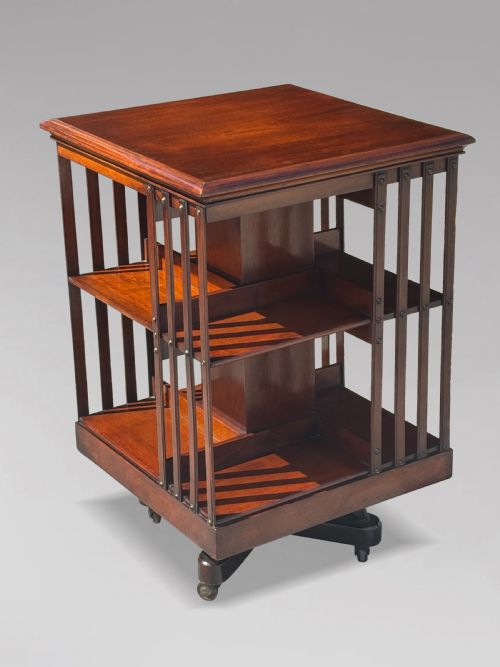


Wooden Revolving Table
A wooden revolving table brings movement to the room, turning easily to serve dinner or hold a heavy library.
Wooden Revolving Table
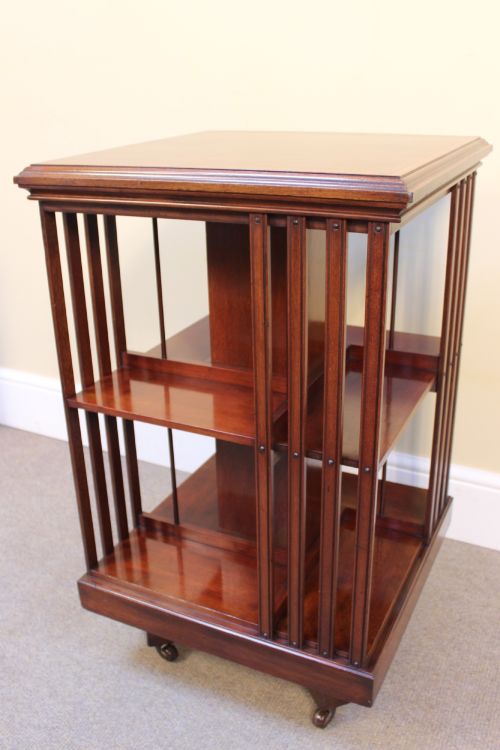
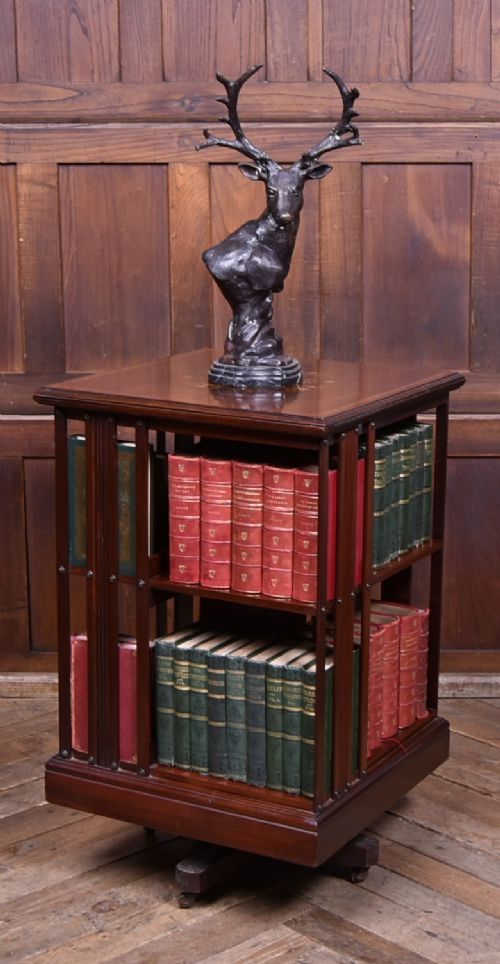
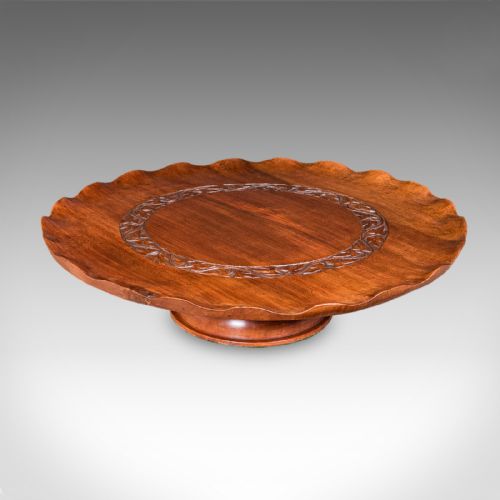
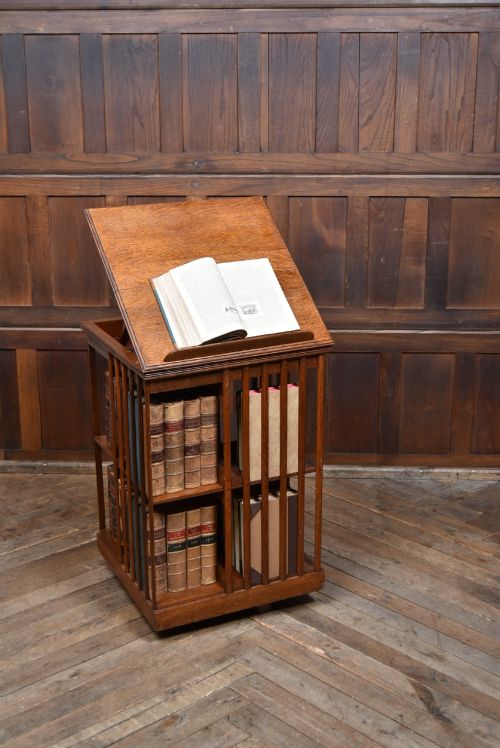
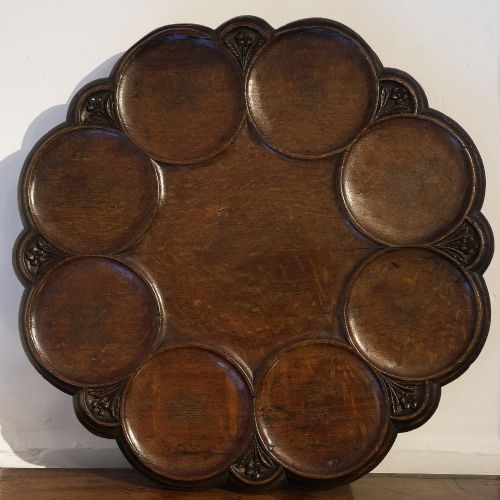
A wooden revolving table spans several distinct forms designed to turn on a central axis, with the lazy Susan and the revolving bookcase appearing most frequently across this selection. These pieces date from the eighteenth century through the Edwardian period, appearing in formats ranging from small tabletop rounds to multi-tiered floor-standing bookcases.
The materials and styles reflect centuries of cabinet making, utilising mahogany, oak, and walnut within Georgian, Victorian, and Edwardian aesthetic frameworks. Buyers encounter items intended for functional utility in dining rooms and studies, such as dumb waiters, serving trays, and rotating book stands.
Materials and Construction
Cabinet makers relied on dense hardwoods like mahogany, oak, and walnut to build stable rotating structures that could handle regular movement and weight. Turning mechanisms often incorporated brass and iron elements to ensure smooth rotation for heavy loads.
Joinery techniques matched the functional demands of each piece, from the carved edges of large tabletop trays to the tiered framing of revolving bookcases and dumb waiters.
Wooden Revolving Table Retail Price Guide 2026
Typical asking prices for wooden revolving table among the pieces listed under this phrase on Sellingantiques today, from the lower quarter to the upper quarter. They describe what is for sale here now, not the wider market.
One exceptional listing includes a revolving egg cup stand originating from the private collection of the late Mrs Henry T Ford the second.
Evaluating Quality and Craftsmanship
Quality rests upon the smoothness of the underlying turning mechanism and the stability of the central axis under weight. Superior examples demonstrate precise timber selection, matching grain patterns across the rotating surface, and clean joinery.
Finer items feature subtle decorative flourishes such as satinwood inlay, carved mouldings, or well-proportioned tiered shelving that maintains balance without adding clumsy bulk.
The Wooden Revolving Table Glossary
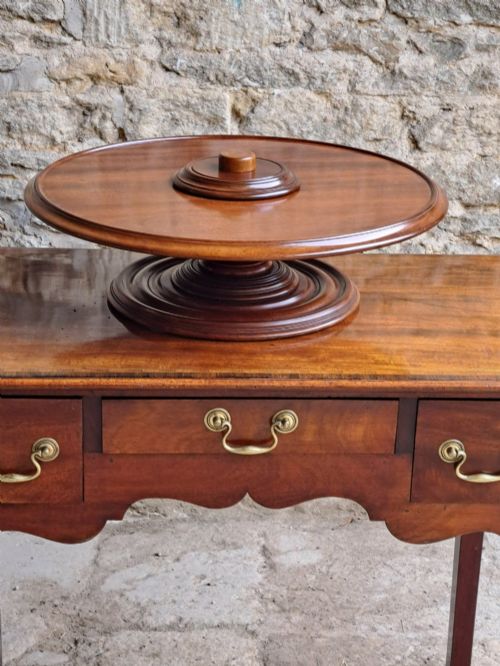
- Lazy Susan
- A revolving tray placed on a table or surface to assist with passing food and condiments. This form appears in both Georgian and Edwardian iterations.
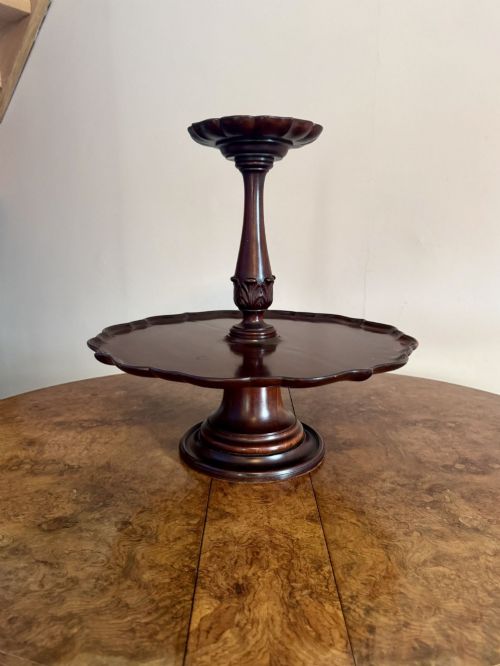
- Dumb Waiter
- A tiered stand used in dining rooms to hold dishes and serving items without requiring a servant. These pieces often feature graduated circular shelves.
- Revolving Bookcase
- A freestanding or tabletop shelving unit built on a rotating base to allow access to books from multiple angles. Edwardian examples often include four tiers.
Wooden Revolving Table: Frequently Asked Questions
What is a wooden revolving table used for?
These pieces serve practical functions around the home, from sharing dishes at the dining table to storing books and writing materials within arm's reach.
Different formats suit different rooms, with smaller trays designed for tabletop dining and larger tiered units built for studies and libraries.
How do I tell an older revolving table from a newer one?
Dating relies on timber selection, structural joinery, and the style of turning mechanisms concealed beneath the surface.
Georgian and Victorian pieces utilise dense native and imported hardwoods like mahogany and oak, showing hand-cut joinery consistent with their period of origin.
How do I maintain the turning mechanism?
Regular maintenance involves keeping the central pivot clean and ensuring the weight placed upon the rotating surface remains balanced.
Periodic checks of the brass or iron hardware help maintain smooth rotation without placing undue strain on the surrounding woodwork.
Where should I place a revolving bookcase?
Floor-standing revolving bookcases work well beside armchairs or in corners where easy access to a collection of books is desired.
Their ability to turn on a central axis means they require clearance on all sides to function correctly in a room.