



Wooden Revolving Book Stand
These wooden revolving book stands turn smoothly to keep volumes close at hand, offering a clever mix of utility and traditional display.

Wooden Revolving Book Stand
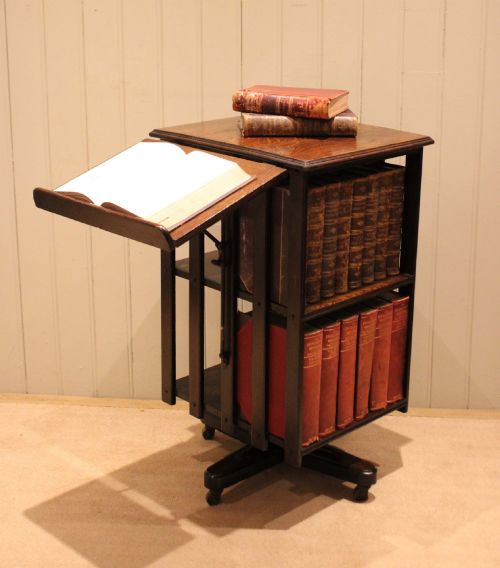
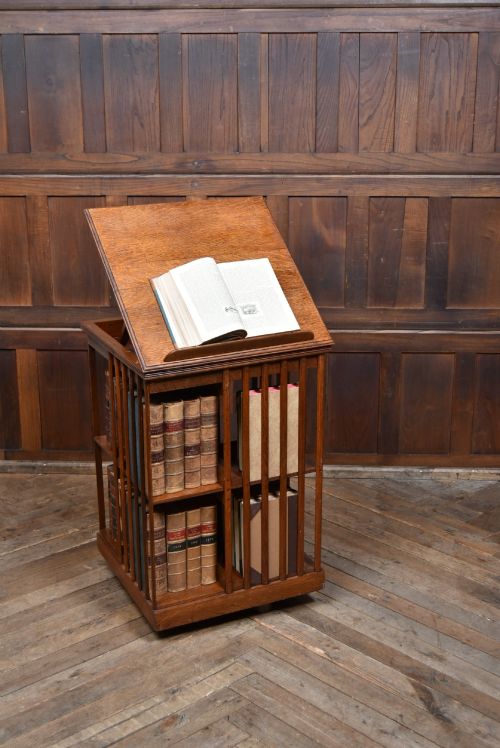
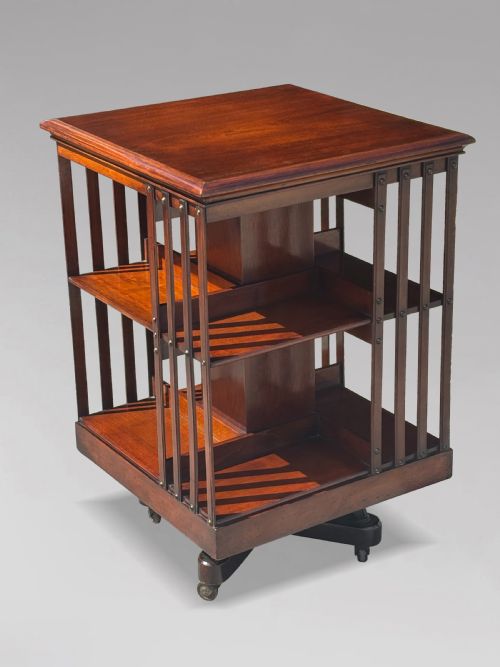
A wooden revolving book stand is a practical piece designed to sit on a floor or desk while holding a selection of volumes within easy reach. Buyers searching this phrase encounter items spanning the Victorian era through the Edwardian period and up to the 1930s.
The selections on this page appear predominantly in mahogany and walnut, alongside occasional examples in oak. Formats range from large square floor models to petite French four-shelf variations and desk-top reading stands.
Most pieces date from the Edwardian years or the nineteenth century, reflecting popular domestic habits of keeping reference books or novels beside a chair or writing table. Their rotating mechanism allows access to multiple tiers of books without moving the entire structure.
Materials and construction methods
Cabinetmakers constructed these stands using dense timbers such as mahogany, walnut, and oak to support the weight of heavy books. Many pieces incorporate subtle decorative touches, including satinwood inlay work.
Internal rotating mechanisms often rely on metal and cast iron components or brass fittings to ensure smooth, stable rotation. These hidden mechanical parts allow the wooden tiers to turn effortlessly under heavy loads.
Wooden Revolving Book Stand Retail Price Guide 2026
Typical asking prices for wooden revolving book stand among the pieces listed under this phrase on Sellingantiques today, from the lower quarter to the upper quarter. They describe what is for sale here now, not the wider market.
The listings here feature pieces spanning from the nineteenth century through the Edwardian era up to the 1930s, built in mahogany, walnut, and oak.
Distinguishing quality in construction
Superior examples demonstrate tighter timber selection, finer grain patterns, and careful attention to inlay details like satinwood banding. Better manufacturing is evident in how smoothly the internal pivot mechanism operates under the weight of several books.
Scale and proportion also define the better pieces, with refined leg assemblies and well-balanced tiers rather than purely utilitarian bulk. The crispness of the joinery and the retention of a rich, deep finish on the mahogany or walnut distinguish finer workshop output.
The Wooden Revolving Book Stand Glossary
- Mahogany
- A dense, reddish-brown tropical hardwood favoured by cabinetmakers for its stability and fine grain. It forms the primary timber for the majority of these pieces.
- Inlay
- A decorative technique where contrasting woods, such as satinwood, are inserted into recessed portions of the primary surface. This adds fine visual detail to the cabinet panels.
- Revolving mechanism
- The internal pivot assembly, often involving metal or cast iron, that permits the bookcase to turn full circle. Its smooth operation is essential to the function of the stand.
- Edwardian
- Pertaining to the period of the reign of King Edward VII, spanning the early years of the twentieth century. Pieces from this era often feature lighter woods and refined proportions.
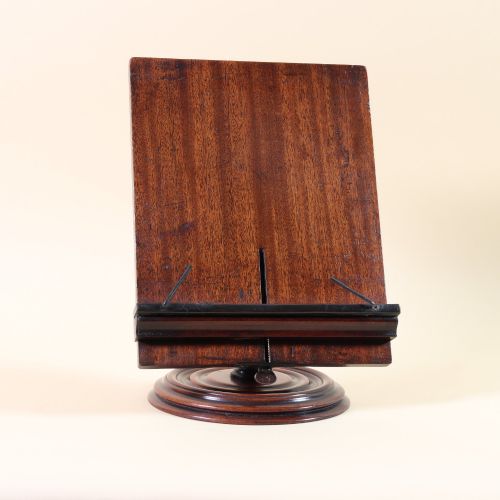
- Desk-top book rest
- A smaller reading stand designed to sit upon a table rather than stand on the floor. These items hold open volumes at a comfortable angle for study.
Wooden Revolving Book Stand: Frequently Asked Questions
How do these stands actually turn?
Most models use a concealed internal pivot mechanism fitted with metal or cast iron components beneath the tiers.
This central axis supports the weight of the books while allowing the entire wooden structure to rotate smoothly in either direction.
Were these made for desks or floors?
The selection includes both substantial floor-standing bookcases with multiple tiers and smaller desk-top reading rests.
Floor models typically sit beside armchairs or library tables, whereas desk-top versions hold active reference volumes right where you write.
What woods were used most often?
Cabinetmakers relied heavily on rich timbers such as mahogany and walnut for their durability and handsome grain.
Oak appears in later examples, and finer pieces occasionally incorporate satinwood inlay to accent the panels.
How do I spot an Edwardian piece?
Edwardian stands frequently feature lighter mahogany or walnut timbers, sometimes enhanced with delicate satinwood stringing or inlay.
They tend to display a refined elegance that separates them from heavier Victorian designs or later twentieth-century oak pieces.