





Wooden Refectory Bench
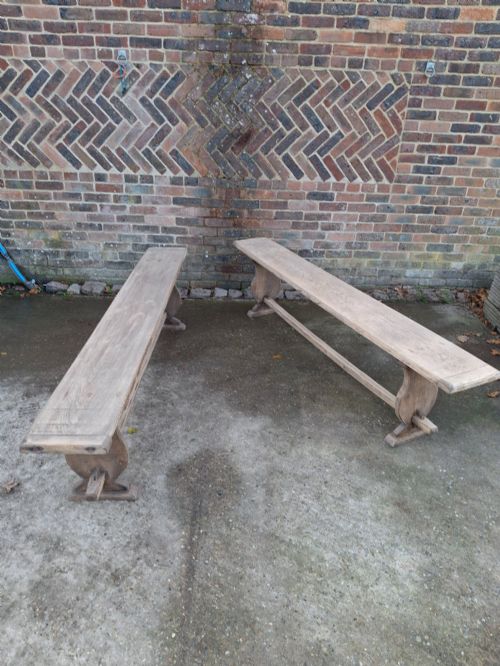
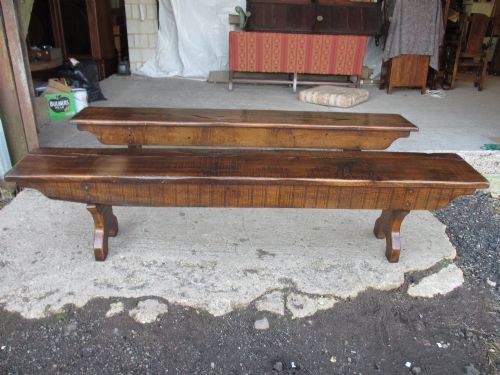
These wooden refectory bench examples offer sturdy communal seating shaped by traditional dining and tavern use.
Wooden Refectory Bench
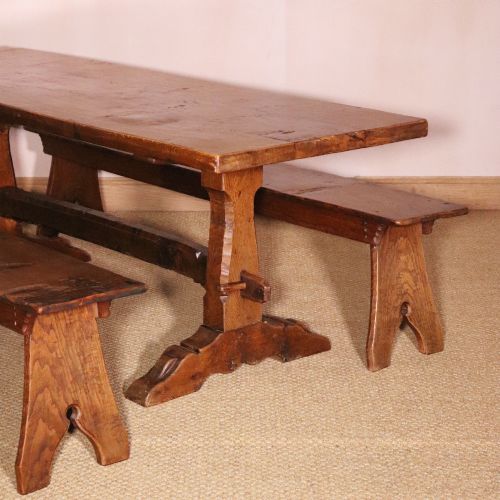
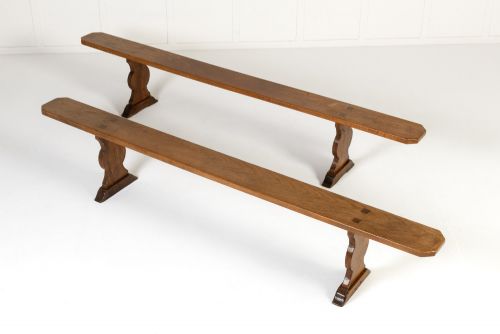
A wooden refectory bench is a long, linear seat historically designed for communal dining halls and rural homes, built to accommodate multiple diners along a single table side. These pieces range from heavy Edwardian oak variants with shaped trestle ends to French fruitwood and cherry seating intended for extended daily use.
Buyers browsing this selection will most frequently encounter sturdy oak or beech examples dating from the nineteenth and early twentieth centuries. These forms reflect both English country and French provincial traditions, often retaining straightforward stretcher bases and substantial timber tops.
How they were made
These benches rely primarily on domestic hardwoods such as solid oak, beech, elm, cherry, and fruitwood selected for structural resilience. Joinery methods typically employ traditional pegged or tenoned joints designed to withstand heavy weight and constant movement.
Trestle supports and shaped ends provide the foundational stability for longer spans of timber. Surface finishing remains straightforward, relying on natural wax or oil treatments that allow the grain and patina of the wood to develop over decades.
Wooden Refectory Bench Retail Price Guide 2026
Typical asking prices for wooden refectory bench among the pieces listed under this phrase on Sellingantiques today, from the lower quarter to the upper quarter. They describe what is for sale here now, not the wider market.
Listings feature solid oak, beech, fruitwood, elm, and cherry across nineteenth and early twentieth-century periods.
What varies in quality
Quality rests significantly on the selection of timber and the integrity of the original construction. Dense, quartersawn oak and well-chosen fruitwoods offer greater longevity and stability compared to lighter utility timbers.
The character of the surface timber also dictates distinction, where depth of colour and natural wear acquired through use separate standard utilitarian items from finer regional examples.
Jack Grimble
The Wooden Refectory Bench Glossary
- Trestle
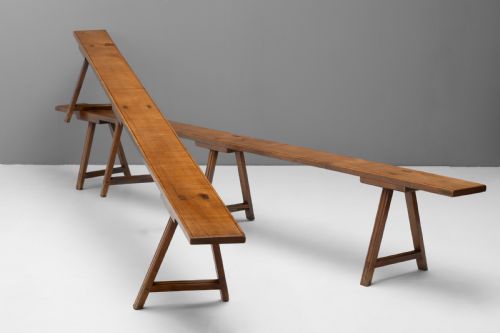
- A structural support consisting of a horizontal beam fixed to two splayed vertical feet. This design allows maximum legroom along the length of the bench.
- Patina
- The surface sheen and tonal depth developed on wood through decades of handling, polishing, and environmental exposure. It serves as a visual indicator of age.
- Stretcher
- A horizontal wooden brace connecting the legs of a bench to improve lateral stability. It prevents the legs from bowing outward under heavy loads.
- Quartersawn
- Timber cut radially from the growth rings rather than tangentially. This method produces a stable board with a decorative grain figure less prone to warping.
Wooden Refectory Bench: Frequently Asked Questions
How do I choose the right length?
Consider the overall span of your dining table and allow sufficient clearance for the bench to slide underneath when not in use. Longer examples require adequate walking space around the perimeter of the room.
Matching proportions ensure the seating complements the scale of the table without overwhelming the surrounding floor plan.
Were these originally used for dining?
Many of these forms originate from communal dining halls, farmhouses, and taverns where long seating arrangements maximised dining capacity. They were built specifically for shared meals and gathering spaces.
Over time, these practical origins adapted into domestic settings for kitchens, hallways, and living areas.
How do I care for wooden surfaces?
Maintain the wood by applying natural beeswax periodically to nourish the dry timber and protect against moisture. Avoid placing furniture in direct sunlight or near heat sources to prevent splitting.
Regular dusting with a soft cloth preserves the existing finish and encourages the natural patina to deepen gracefully.
Can these be used outdoors?
Most antique wooden benches are constructed for interior environments and lack weather-resistant treatments. Exposure to dampness and temperature fluctuations can cause the timber to warp and joints to fail.
Keep them within sheltered indoor spaces to preserve their structural integrity and surface condition.