




Wooden Reading Podium
These wooden reading podium pieces offer sturdy and practical book supports, combining period character with reliable functionality.
Wooden Reading Podium
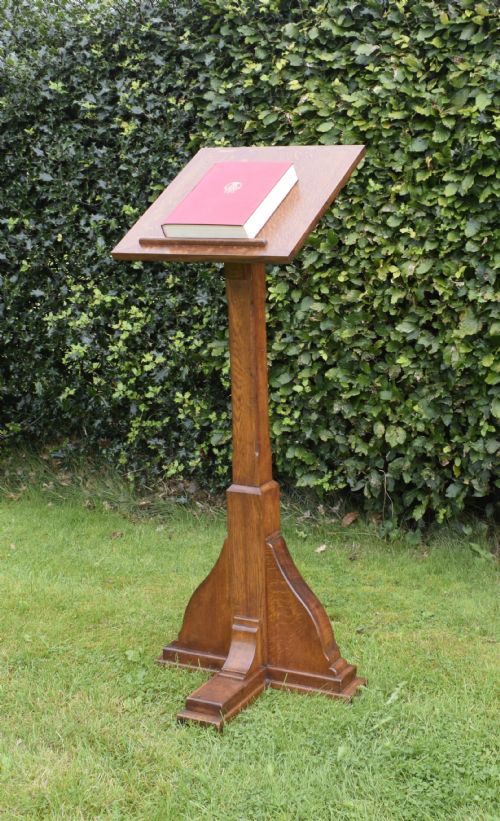
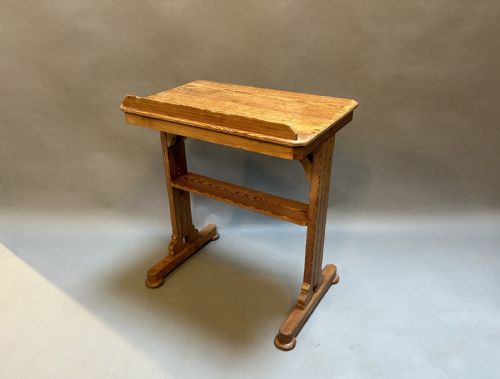
A wooden reading podium serves as a dedicated stand for books, menus, or papers, appearing in forms such as lecterns, reading desks, and music stands. Buyers seeking this category encounter sturdy stands designed to hold texts at a convenient angle for reading or presentation.
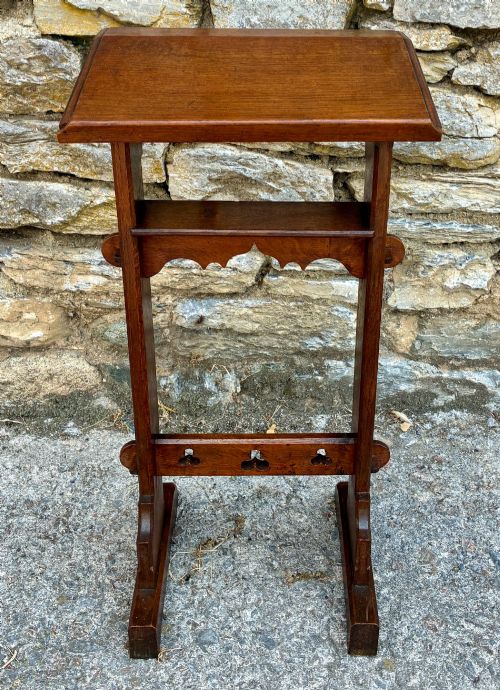
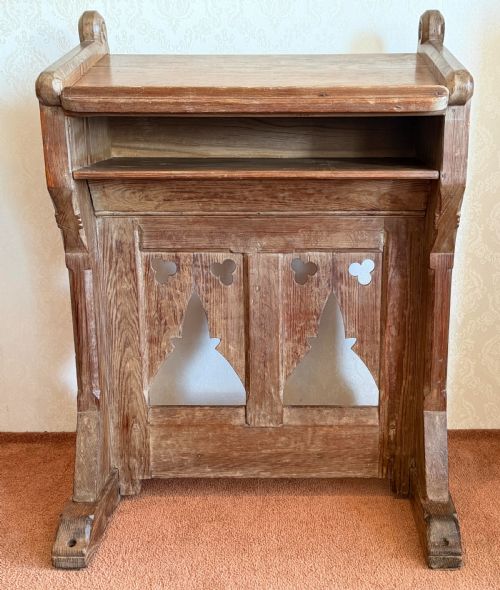
The selections available here span from the nineteenth century into the twentieth century, encompassing Victorian, Edwardian, and Arts and Crafts examples. Pieces frequently draw on church furnishings or domestic library equipment, showing influences from the Gothic Revival style.
How they were made
Construction relies primarily on timbers such as oak, pine, and walnut, chosen for their durability and grain. Carving often appears on oak surfaces, particularly within pieces following the Gothic Revival tradition.
Metal components in brass and iron are integrated into the designs, frequently providing adjustable mechanisms for height or angle. These functional metal additions work alongside solid wood construction to allow the stands to adapt to different users.
Wooden Reading Podium Retail Price Guide 2026
Typical asking prices for wooden reading podium among the pieces listed under this phrase on Sellingantiques today, from the lower quarter to the upper quarter. They describe what is for sale here now, not the wider market.
Materials across these listings concentrate on oak, pine, and walnut, often paired with brass and iron hardware.
What varies in quality
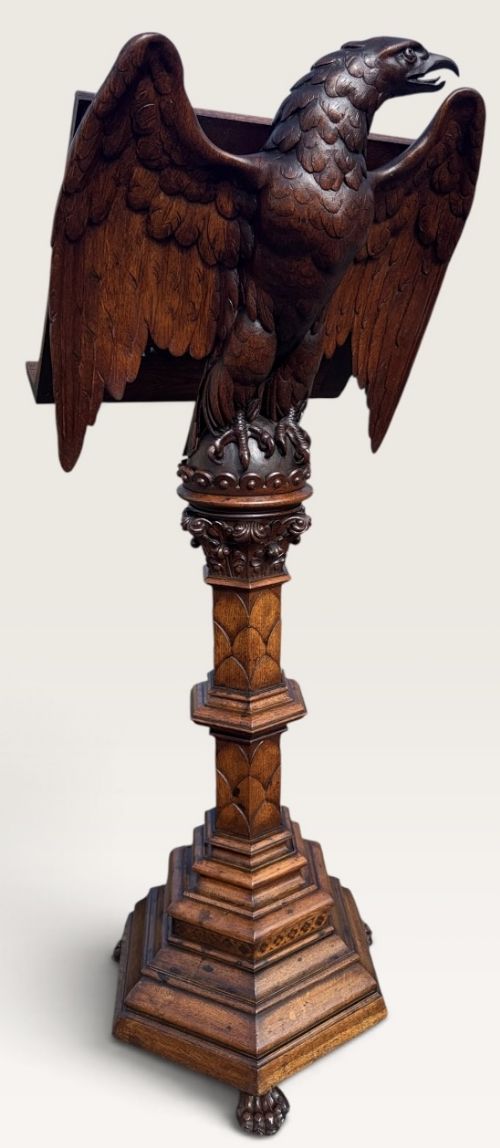
Quality differences emerge in the depth and precision of hand carving, particularly on church-derived lecterns featuring detailed ornamentation like carved figures. Simpler utility pieces rely on clean lines rather than decorative work.
The sophistication of the mechanical parts distinguishes standard stands from fully adjustable walnut music stands and pine reading tables. Robust adjustment mechanisms and intact brass work elevate a piece above simpler fixed designs.
The Wooden Reading Podium Glossary
- Lectern
- A tall stand with a slanted top designed to hold a book or notes for a speaker. These often feature adjustable ledges to keep texts secure.
- Gothic Revival
- An architectural and decorative style popular in the nineteenth century characterised by pointed arches, trefoils, and heavy carved tracery. Pieces in this style borrow heavily from medieval church architecture.
- Arts and Crafts
- A design movement valuing traditional craftsmanship and simple forms over mass production. Items from this period emphasise the natural grain of materials like oak and pine.
- Edwardian Utility
- A practical style of furniture production from the early twentieth century focusing on function and simplicity. These items often dispense with elaborate ornamentation.
Wooden Reading Podium: Frequently Asked Questions
What is a wooden reading podium used for?
These stands provide a stable angled surface for holding books, menus, or papers during reading or presentation. They function equally well in domestic libraries and institutional settings.
Historically, many derived from church or chapel interiors where they held service books. Today, people utilise them for holding recipe books in kitchens or display items in studies.
How do I adjust the reading angle?
Many examples feature mechanical hinges or brass ratchets attached to the top board. These allow the reading surface to tilt to various positions.
Some nineteenth-century walnut and pine models include fully adjustable stems that alter both height and tilt. Users should inspect the brass or iron fittings to understand how the locking mechanism operates.
Are these stands suitable for modern homes?
Their compact footprint makes them practical for placement in studies, hallways, or living rooms. They provide a dedicated surface for heavy volumes without taking up floor space like a traditional desk.
Their varied woods, including oak, walnut, and pine, allow them to blend with diverse interior schemes. The distinct period styles add character to contemporary spaces.
How do I identify a Gothic Revival piece?
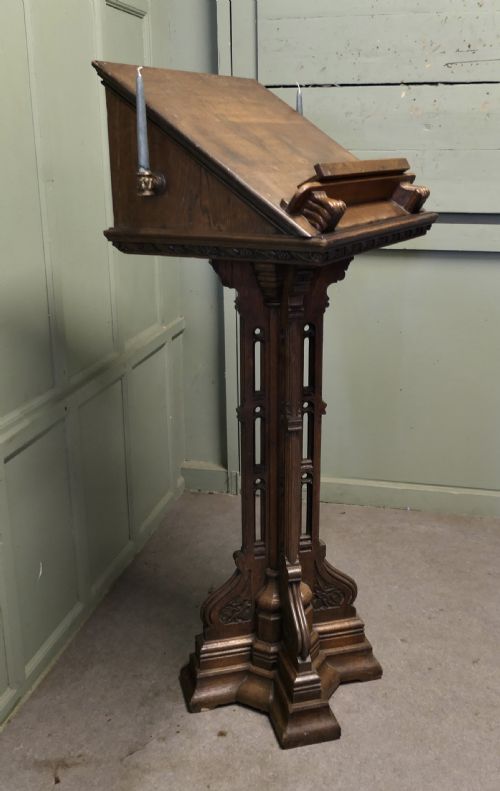
Gothic Revival items typically feature architectural motifs such as pointed arches, tracery, and linenfold panelling. Carved wooden details often mimic stonework from medieval buildings.
These pieces are frequently constructed from heavy oak and carry a solemn, ecclesiastical appearance. They contrast with the simpler lines of Edwardian utility designs.