

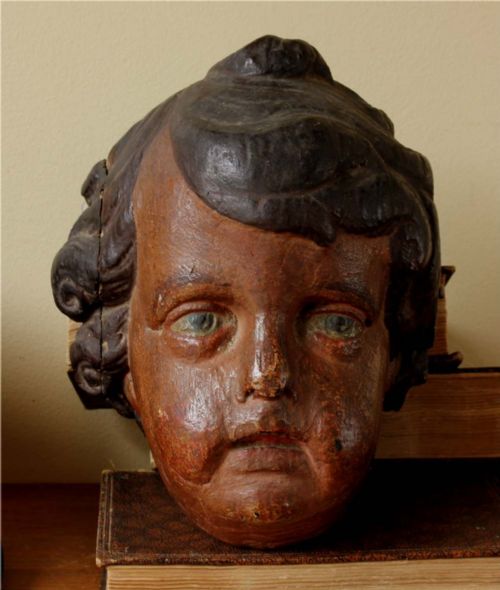


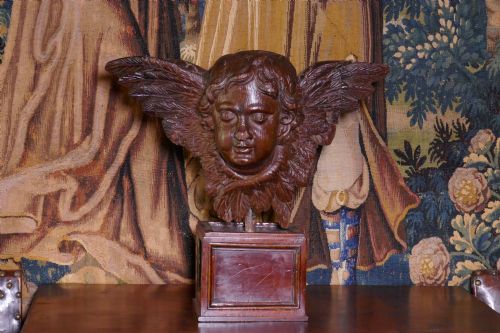


Wooden Putto Sculpture
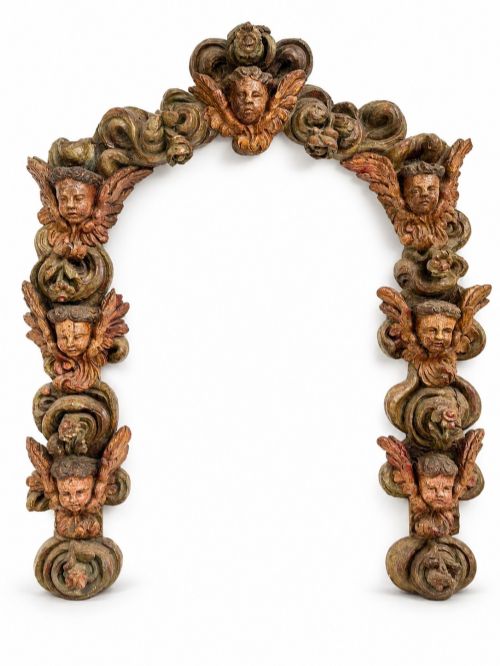
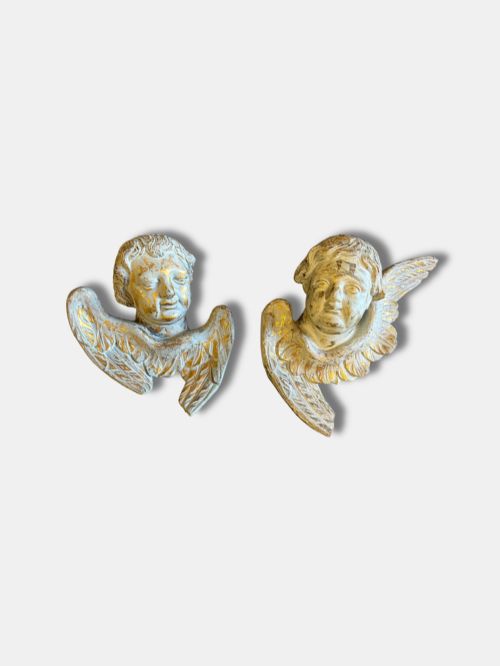
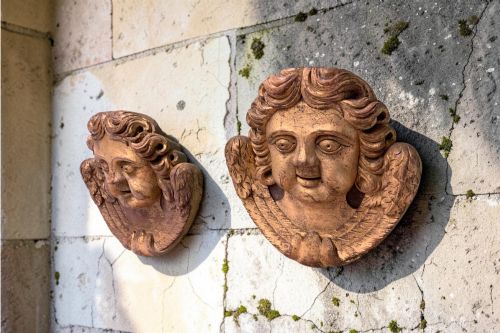
These wooden putto sculpture pieces are carved figures of winged celestial children that bring classical warmth and dramatic character to a room.
Wooden Putto Sculpture
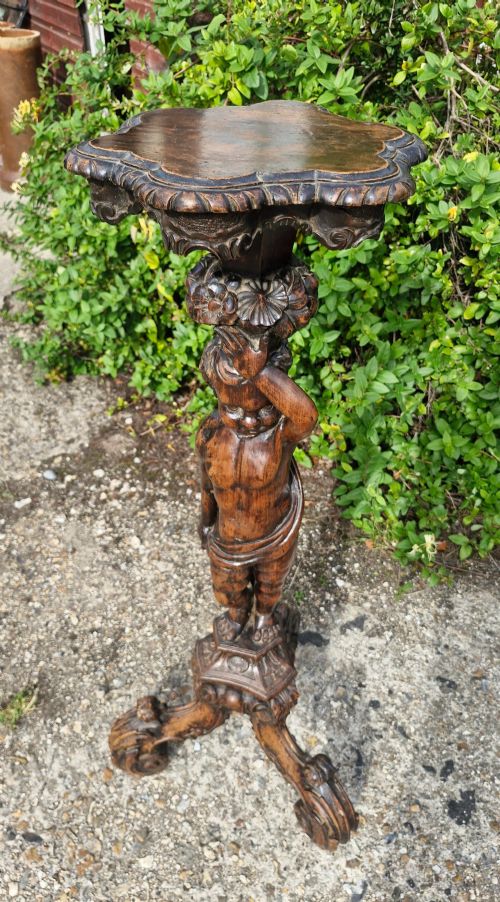
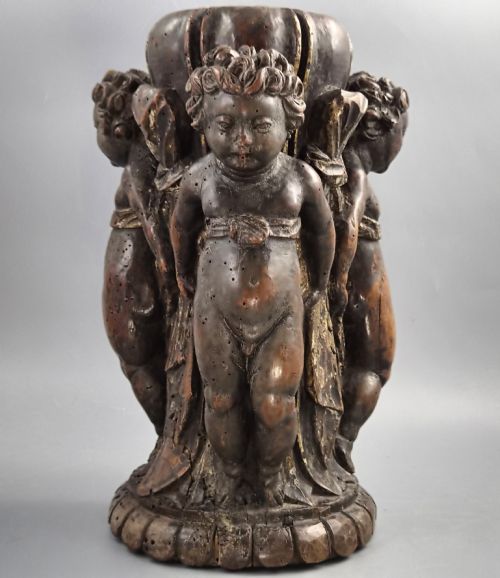
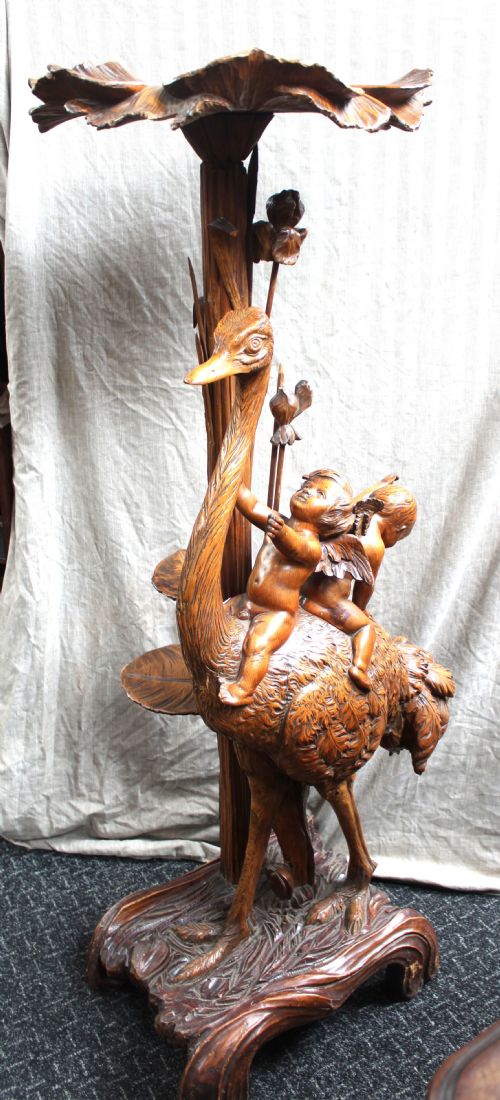
A wooden putto sculpture represents winged cherubs and angelic forms derived from Baroque and Renaissance traditions, frequently appearing as standalone figures, wall carvings, or torchiere bases. The examples gathered here span from the seventeenth century through the nineteenth century, originating primarily from Italian and French workshops.
Buyers will encounter single figures, pairs, and detached angel heads intended for architectural integration or devotional display. Walnut, oak, lime wood, and pine serve as the primary foundations for these expressive carvings.
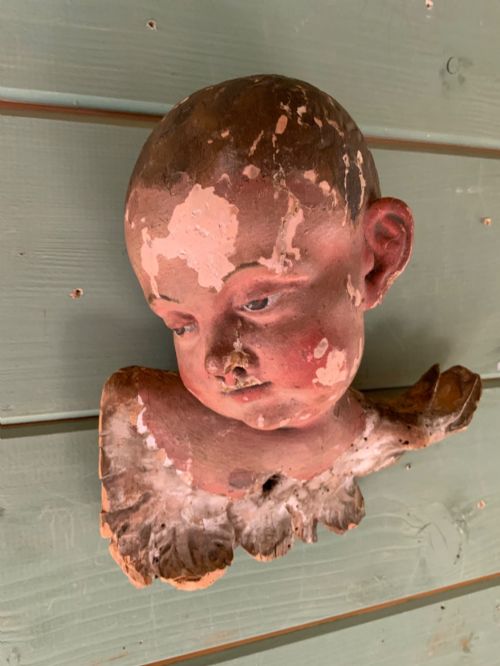
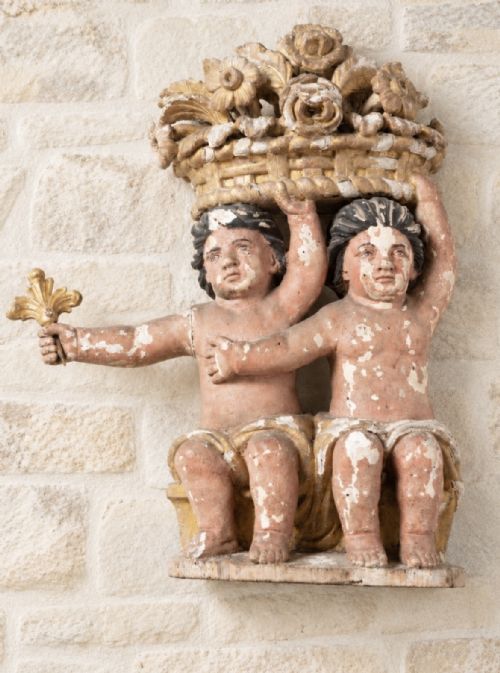
Many of these works retain remnants of their original polychrome paint, gesso, or gold leaf finishes, connecting them directly to ecclesiastical and domestic decorative schemes of the past.
Materials and construction
Carvers shaped these figures from dense hardwoods like walnut and oak or softer timber such as lime wood, using chisel and gouge techniques to achieve dynamic musculature and flowing drapery. The wood was often prepared with a layer of gesso to create a smooth ground for subsequent gilding or painting.
Polychrome finishes applied with natural pigments brought lifelike depth to the faces and hair of the putti, while gold leaf added ecclesiastical splendour under candle or natural light. Surviving tool marks across the reverse and base reveal the hand labour involved in reducing solid timber into sculptural forms.
Wooden Putto Sculpture Retail Price Guide 2026
Typical asking prices for wooden putto sculpture among the pieces listed under this phrase on Sellingantiques today, from the lower quarter to the upper quarter. They describe what is for sale here now, not the wider market.
One signed piece simply bears the initial A, leaving the nineteenth-century carver's full identity a charming minor mystery.
Assessing sculptural quality
The distinction between ordinary carvings and superior works lies in the anatomical confidence and emotional expression of the carving. Master carvers captured the softness of infant form and torsion of movement with precision, whereas lesser pieces remain stiff and formulaic.
The integrity of the original surface finish heavily influences the character of a piece. Examples that retain undisturbed layers of early polychrome paint or gold leaf hold greater visual coherence than those stripped down to raw timber.
The Wooden Putto Sculpture Glossary
- Putto
- A figure of a small winged child in classical art, often depicted in Italian and French Baroque sculpture. Plural putti.
- Polychrome
- Decoration in multiple colours applied to the surface of wood or gesso. This technique was widely used in church carvings and altarpieces.
- Torchiere
- A tall stand or ornamental candlestick base, frequently supported by carved putti figures in seventeenth and eighteenth century Italian furniture.
- Gesso
- A plaster mix applied to wood surfaces to prepare them for gilding or painting. It provides a smooth ground for fine detail work.
- Gilt
- Covered thinly with gold leaf or gold paint to give a lustrous metallic finish. This treatment was common on religious carvings.
- Lime wood
- A soft, pale timber favoured by carvers for its fine, even grain and lack of prominent growth rings. It allows for intricate undercutting without splintering.
Wooden Putto Sculpture: Frequently Asked Questions
How old are these wooden putto sculptures?
The pieces shown date from the seventeenth century up to the late nineteenth century, reflecting enduring styles from the Renaissance and Baroque periods.
Earlier examples generally display hand-hewn construction marks and older surface treatments, while nineteenth-century works often emulate these historical precedents with considerable skill.
Were these figures meant for churches?
Many of these carvings originated in ecclesiastical settings, functioning as church architectural salvage, altarpiece elements, or choir stall decorations.
Others were created for grand domestic interiors, incorporated into torchiere bases, wall brackets, or furniture stands.
How do I care for a wood and gesso sculpture?
Keep the sculpture away from direct sunlight, heating vents, and rapid humidity changes to protect the underlying timber and delicate gesso layers.
Dust gently with a dry, soft brush and avoid applying liquid cleaners or polishes that might damage historic painted or gilded surfaces.
How can I tell Italian work from French work?
Italian carvings often exhibit the dramatic torsion and theatrical gestures characteristic of the Baroque style, frequently utilising walnut.
French ecclesiastical pieces tend to focus on expressive cherub heads or balanced pairs, sometimes employing lime wood and softer polychrome schemes.