





Wooden Pharmacy Box
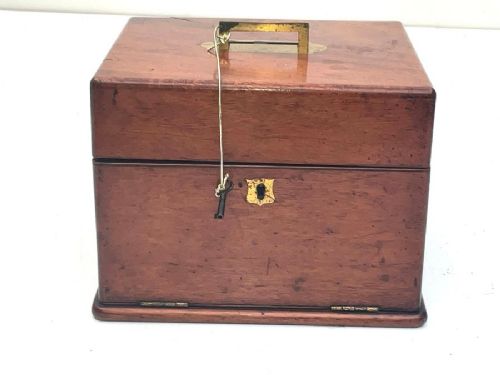
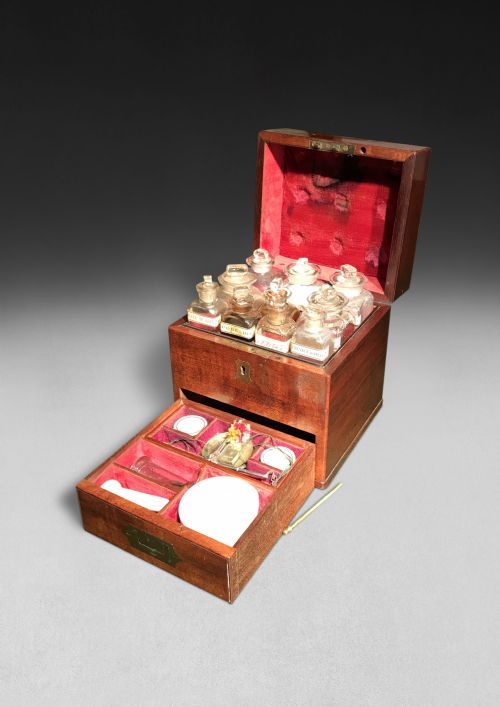
These wooden pharmacy box examples are fitted antique mahogany chests and cabinets from the Georgian, Regency, and nineteenth-century periods, prized for their original glass bottles and compact design.
Wooden Pharmacy Box
A wooden pharmacy box serves as a portable or tabletop medicine chest designed to hold medical supplies securely. These objects appear in forms such as apothecary cabinets, medicine chests, and storage boxes.
The pieces on this page originate predominantly from the Georgian, Regency, and nineteenth-century periods, spanning dates like 1800 and 1890. Buyers encounter campaign cases, fitted mahogany boxes, and smaller items like chemist jars and pill rounders.
Makers utilised woods including mahogany and boxwood, often pairing the primary structure with brass handles and velvet linings. Many surviving examples retain their original glass bottles and contents.
Folk art and hand-painted bentwood storage boxes also appear alongside formal campaign cases and veterinary cabinets. This variety reflects the wide domestic and professional use of these chests in the past.
How they were made
Cabinet makers constructed these boxes using solid timbers such as mahogany and boxwood, frequently incorporating fine inlay work for decorative effect. Brass fittings, including flush handles and hinges, provided durability for travel.
Interiors required precise carpentry to create fitted compartments that secured fragile glass bottles and instruments. Velvet linings and painted surfaces added both protection and finish to the interior spaces.
Wooden Pharmacy Box Retail Price Guide 2026
Typical asking prices for wooden pharmacy box among the pieces listed under this phrase on Sellingantiques today, from the lower quarter to the upper quarter. They describe what is for sale here now, not the wider market.
The inventory includes specialised items such as boxwood pill rounders and veterinary cabinets alongside standard medicine chests.
What varies in quality
Quality rests heavily on the completeness of the interior fittings and whether original glass bottles survive within the box. Fitted mahogany chests with intact contents represent a higher tier of craftsmanship than altered or empty boxes.
The finesse of the exterior woodwork, brass hardware, and inlay work distinguishes standard utility pieces from finer campaign-style or decorative cabinets.
The Wooden Pharmacy Box Glossary
- Apothecary box
- A fitted wooden chest used to store medicines, bottles, and scales. These boxes date from the Georgian and nineteenth-century eras.
- Campaign case
- A portable chest built for travel, featuring recessed brass handles and robust construction. Such boxes were designed for use on journeys or military campaigns.
- Pill rounder
- A wooden tool used by chemists to shape medicinal pills by hand. These implements are typically turned from boxwood.
- Chemist jar
- A small container made of ceramic or wood used to hold dry ingredients or compounds in a pharmacy. They often match the period of the associated medicine chest.
- Inlay
- A technique where contrasting woods are inserted into the primary surface of a box to create decorative patterns. This method appears on finer Georgian mahogany pieces.
Wooden Pharmacy Box: Frequently Asked Questions
What is a wooden pharmacy box?
A wooden pharmacy box is an antique chest or cabinet designed to hold medical bottles, scales, and remedies safely. They date primarily from the Georgian and nineteenth-century periods.
These boxes range from portable campaign cases used on travels to fitted tabletop cabinets found in homes and surgeries.
How were medicine chests used?
Doctors, travellers, and households utilised these chests to store and dispense medicines, tinctures, and pills. The fitted interior kept fragile glass bottles secure during transport.
Some examples served specialised purposes, such as veterinary cabinets for treating animals or compact campaign cases for journeys.
How do I date an apothecary box?
Dating relies on timber choices, brass hardware styles, and overall construction methods typical of periods like the Georgian era or the nineteenth century. Mahogany and specific brass inlay patterns often point to the late eighteenth or early nineteenth century.
Interior layouts and the style of the original glass bottles also provide clear chronological clues.
How do I care for antique wood?
Keep wooden pharmacy boxes away from direct sunlight and sudden temperature changes to protect the mahogany and boxwood surfaces. Gentle dusting with a dry cloth maintains the finish without harming the antique wood.
Avoid using modern liquid polishes that can damage old varnish or painted bentwood details.