

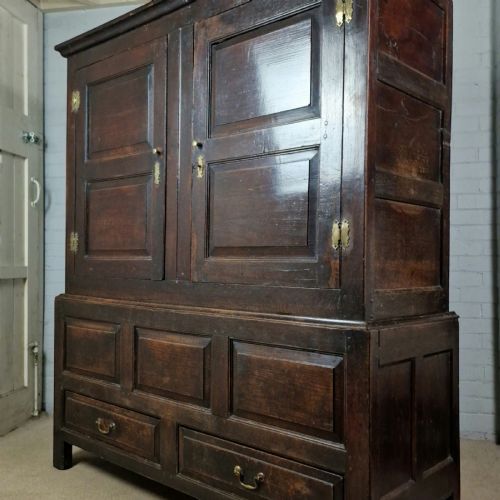
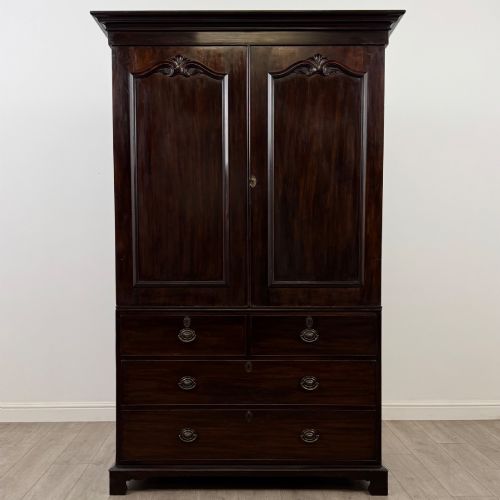
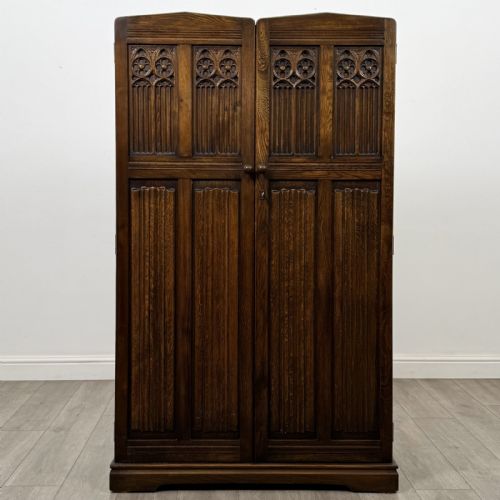
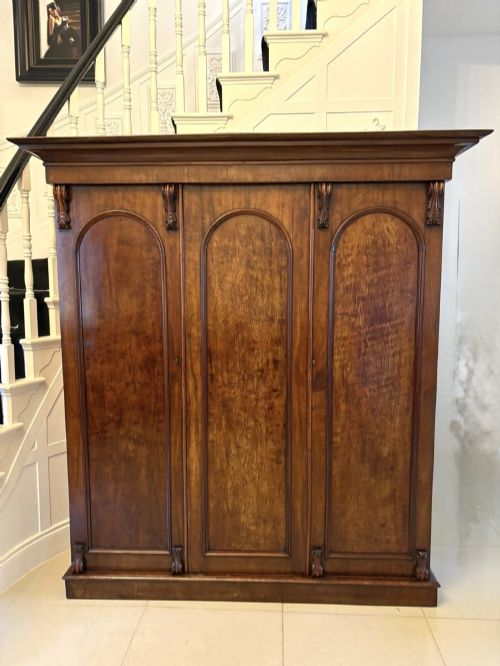
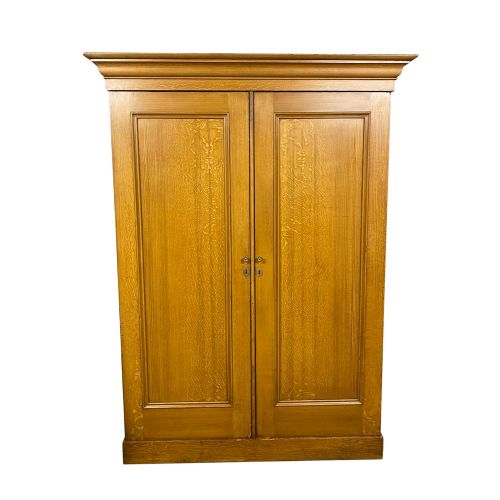
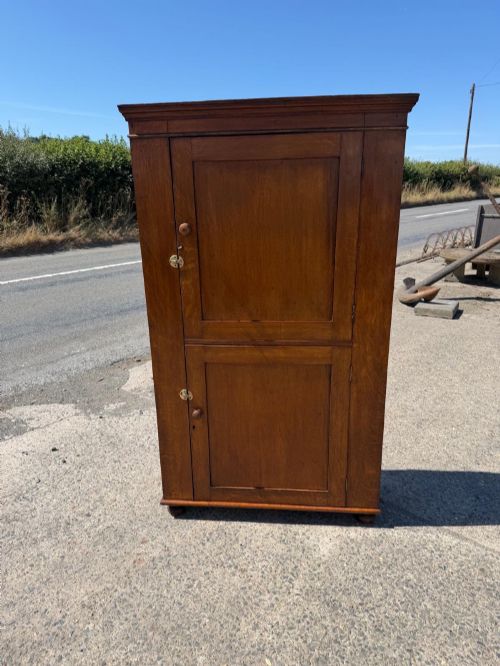
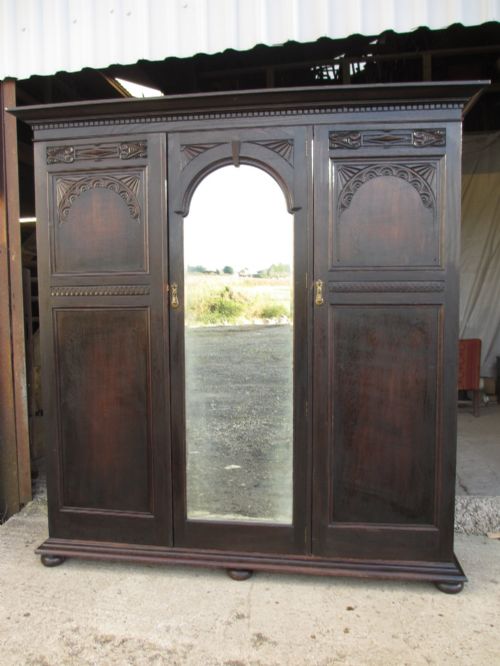
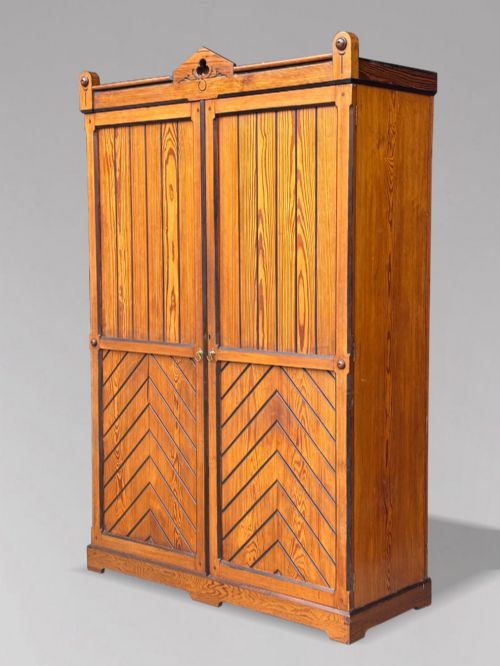
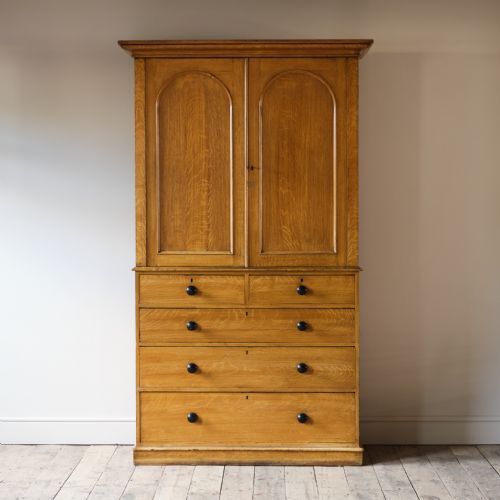
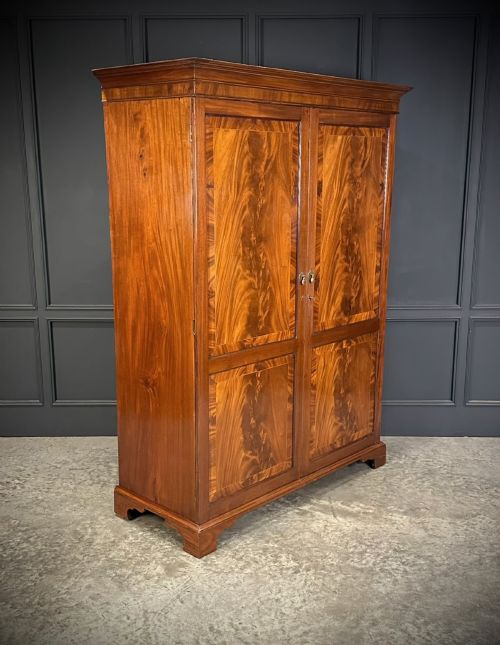
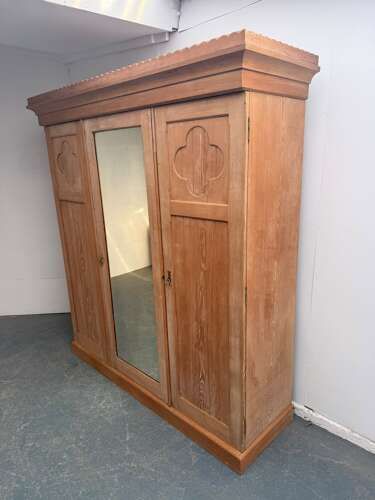
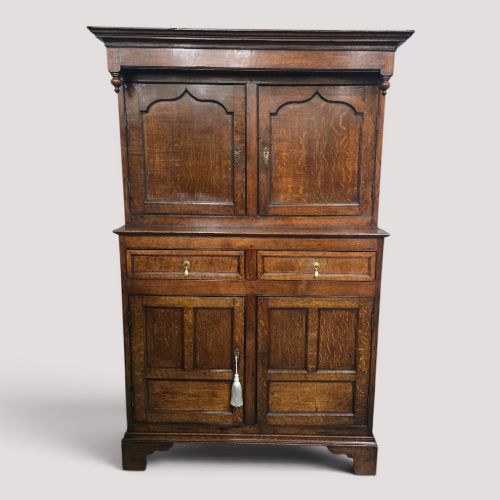
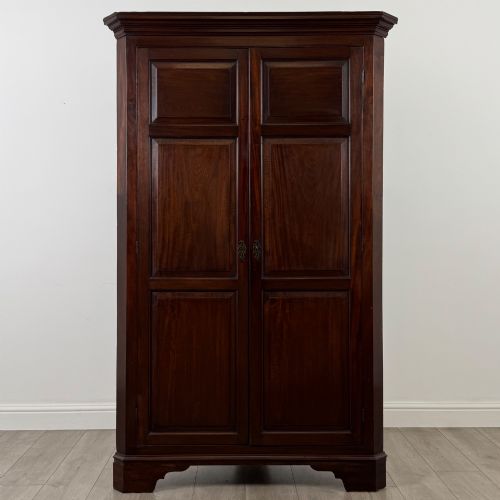
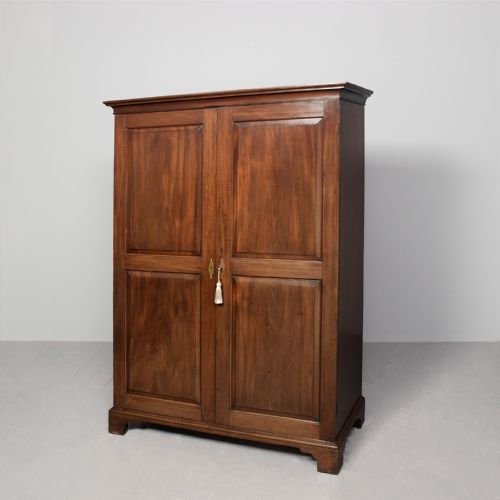
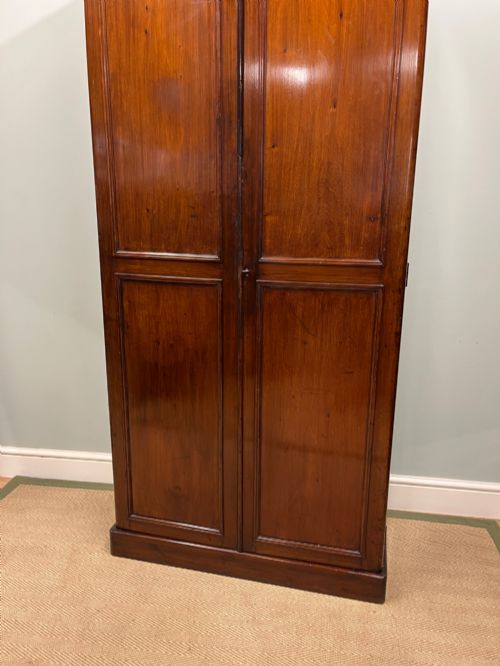
Wooden Panelled Armoire
These wooden panelled armoire pieces provide grand storage through solid timbers and traditional joinery.
Wooden Panelled Armoire
A wooden panelled armoire brings substantial storage and architectural presence to a room through heavy timber construction. Buyers exploring this category will encounter large wardrobes, linen presses, compactum units, and tall cupboards originating across the eighteenth, nineteenth, and early twentieth centuries.
The pieces on this page span diverse regional traditions, from English Georgian oak presses and Victorian mahogany wardrobes to French provincial walnut armoires and painted Hungarian storage cupboards. Structural formats range from simple two-door timber cabinets to breakfront wardrobes with fitted interiors, hanging space, and lower drawer sections.
Materials and Construction
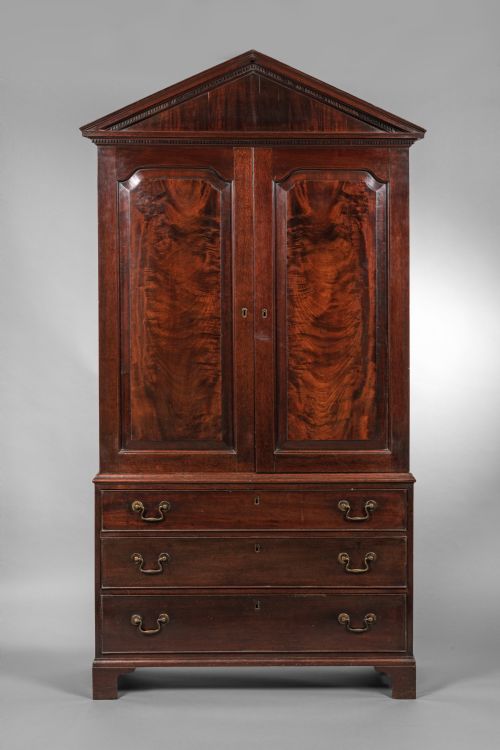
Cabinet makers relied predominantly on dense hardwoods such as oak, mahogany, walnut, and chestnut, alongside softer timbers like pine for internal framing and regional painted pieces. Flame mahogany veneer and burr walnut were utilised on high-end Victorian and Georgian facades to create striking figured grain patterns.
Panels were traditionally set into grooved frames to accommodate seasonal wood expansion without splitting the structure. Iron and brass hardware, including hinges, locks, and bun feet, secured the heavy doors and added functional detail to the completed cupboards.
Wooden Panelled Armoire Retail Price Guide 2026
Typical asking prices for wooden panelled armoire among the pieces listed under this phrase on Sellingantiques today, from the lower quarter to the upper quarter. They describe what is for sale here now, not the wider market.
Listings span the eighteenth to the twentieth centuries, featuring oak, mahogany, walnut, pine, and flame mahogany veneer.
Craftsmanship and Proportion
Quality rests in the architectural proportions, timber selection, and the integrity of the original joints. Superior examples display carefully matched wood grain on panelled doors and uncompromised structural alignment across large triple or breakfront bodies.
Surface finish significantly dictates character, separating examples retaining original scumble paintwork, wax, or polished mahogany from pieces stripped down or heavily altered over time. Finer items integrate clever internal fittings like sliding trays, hanging rails, and compactum compartments that remain fully functional.
The Wooden Panelled Armoire Glossary
- Linen Press
- A tall two-part storage piece featuring upper cabinet doors enclosing sliding shelves or trays, traditionally used for flat textiles, above a lower chest of drawers.
- Compactum
- A fitted wardrobe designed to maximise internal storage by combining hanging space, drawers, shelves, and sometimes shoe racks within a single unified carcass.
- Breakfront
- A large cabinet or wardrobe where the central section projects forward past the flanking cupboard doors, creating a stepped architectural facade.
- Scumble
- A decorative painting technique used to imitate natural timber grain, applied over a base coat to create faux oak or other wood finishes on pine furniture.
- Livery Cupboard
- A traditional term for a large storage cupboard or wardrobe, often constructed from heavy oak with panelled doors for household provisions or garments.
Wooden Panelled Armoire: Frequently Asked Questions
How do I fit a large wooden panelled armoire?
Measure your ceiling height and floor space carefully before selecting a tall wardrobe or linen press, keeping in mind that many period pieces feature heavy cornices that add extra clearance requirements.
Verify whether the piece dismantles into sections, as numerous antique wardrobes and armoires were constructed as modular units to facilitate transport through narrow doorways and stairwells.
What is the difference between a wardrobe and a linen press?
A wardrobe is primarily built for hanging garments vertically on rails or hooks behind tall doors, often including a full-length mirror or lower drawer space.
A linen press is traditionally split horizontally, housing internal sliding shelves or trays in the upper section for folded textiles, with practical chest drawers positioned underneath.
How do I care for antique timber furniture?
Keep wooden cabinets away from direct heat sources and strong sunlight to prevent the timber from drying out, cracking, or causing panel shrinkage.
Apply a traditional beeswax polish occasionally to nourish the grain and maintain the protective sheen without building up heavy silicone residues.
How can I tell if the paintwork is original?
Examine the surface under natural light for authentic wear patterns, craquelure, and layers of age that indicate decades or centuries of undisturbed history.
Check behind hardware and in hidden recesses to see if the underlying paint matches the exterior finish without modern primer layers underneath.