



Wooden Ottoman Trunk
These wooden ottoman trunk pieces provide sturdy household storage, bringing period character and practical utility to modern rooms.
Wooden Ottoman Trunk
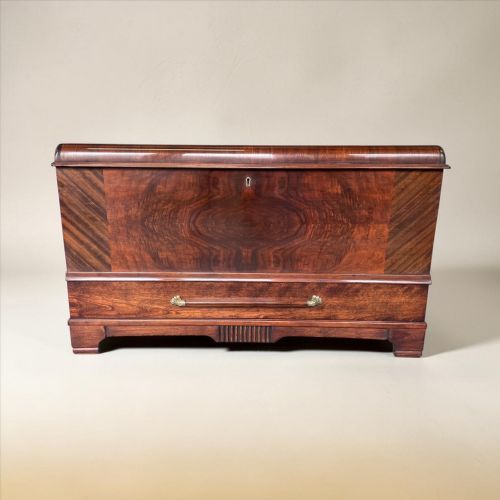
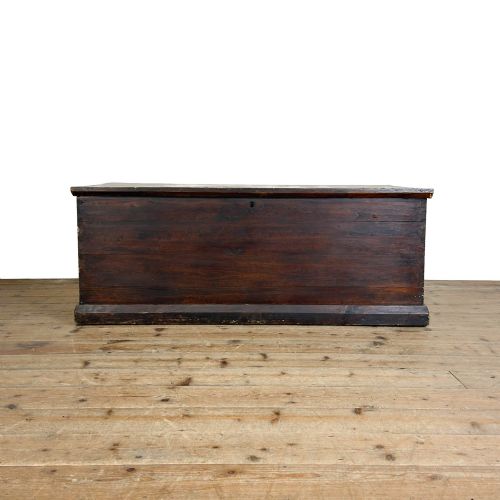
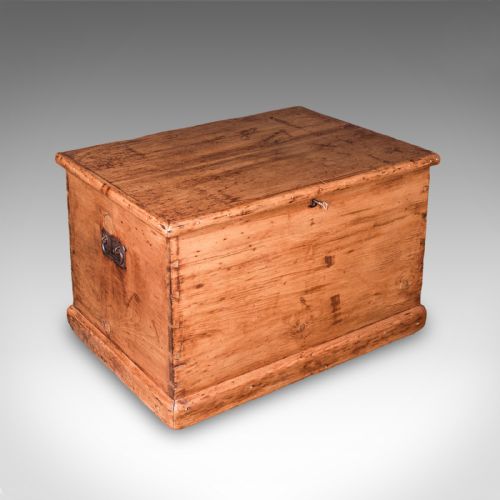
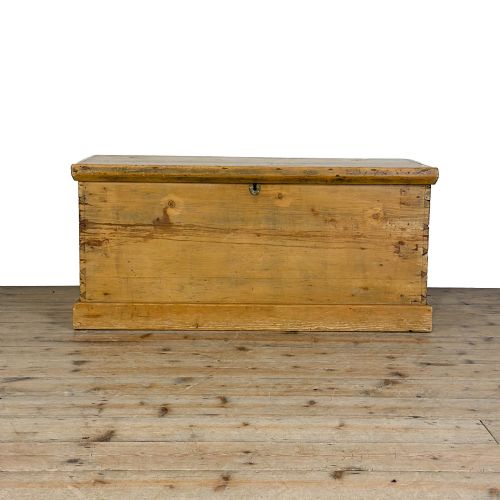
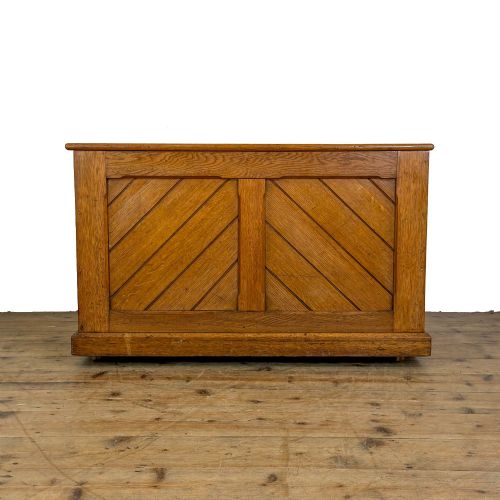
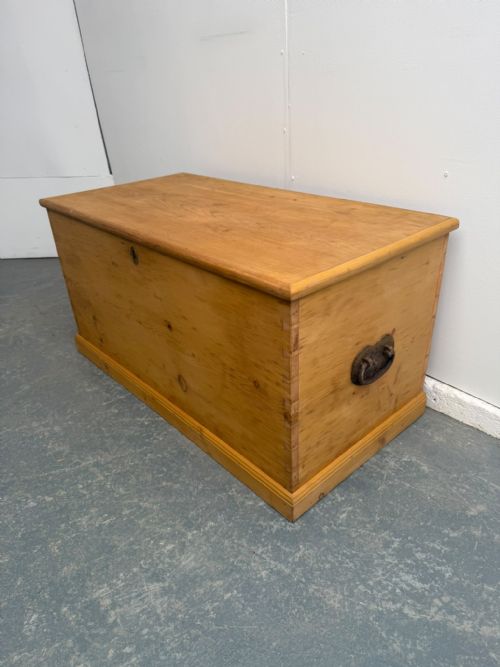
A wooden ottoman trunk serves primarily as a blanket box, chest, or storage trunk, combining deep interior capacity with a flat top suitable for domestic placement. When you examine a wooden ottoman trunk on this page, you mostly encounter Victorian and nineteenth century examples shaped from pine, alongside occasional Georgian mahogany and early twentieth century hardwood items.
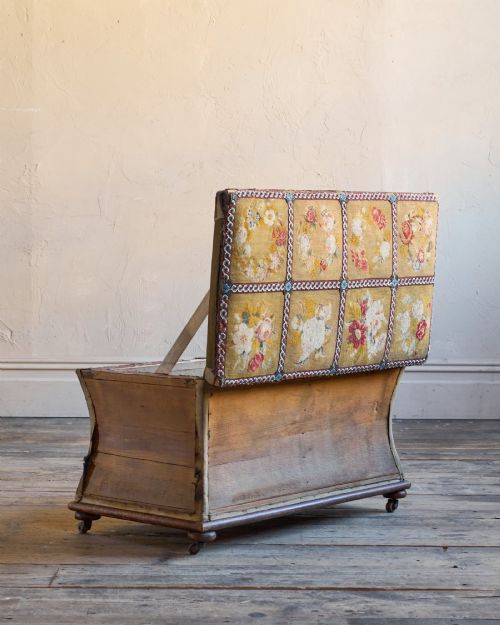
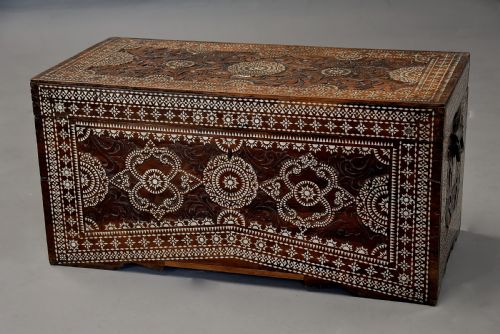
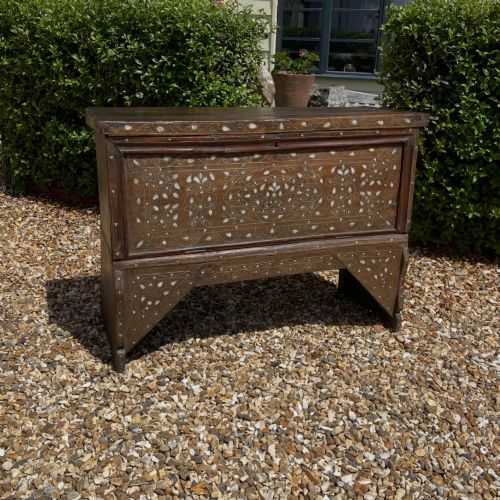
The selection ranges from utilitarian country house storage and rustic farmhouse blanket boxes to decorative Middle Eastern inlaid chests and French cherrywood pieces. Structural forms include standard lift-lid boxes, mule chests fitted with lower drawers, and specialised items such as hall benches.
Makers utilised various regional aesthetics, moving from austere stripped pine through waxed finishes to intricate mother of pearl ornamentation. Buyers select these objects to anchor a room scheme while securing household textiles, linens, and garments away from dust.
Materials and construction methods
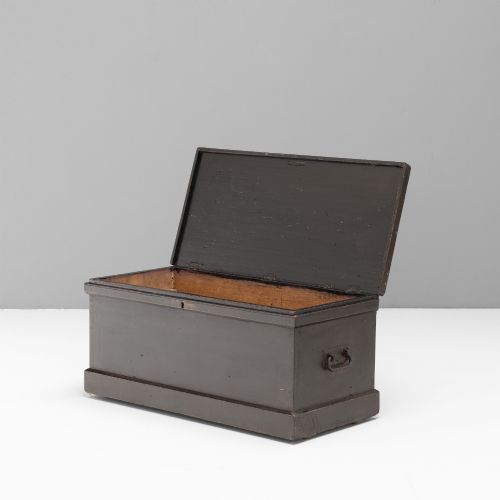
Construction relies heavily on solid timber species, predominantly pine, oak, walnut, cherrywood, and mahogany, selected for structural stability and grain character. Carpenters joined these panels using traditional methods, housing iron or brass side lifting handles to facilitate movement.
Surface treatments vary according to origin, utilising simple wax finishes, paint applications, or polished treatments on domestic pieces, while Middle Eastern workshops incorporated intricate hardwood and mother of pearl inlay. Hardware elements such as working locks and metal hinges secured the lids of these heavy storage vessels.
Wooden Ottoman Trunk Retail Price Guide 2026
Typical asking prices for wooden ottoman trunk among the pieces listed under this phrase on Sellingantiques today, from the lower quarter to the upper quarter. They describe what is for sale here now, not the wider market.
Listings span periods from the Georgian era through Victorian times to the early twentieth century, utilising pine, oak, walnut, mahogany, and fabric.
Assessing quality in storage chests
Quality separates objects through the selection of timber grades, the precision of panel joinery, and the integrity of original hardware. Superior examples display carefully chosen grain patterns, solid dovetail or pegged joints, and retained functional elements like working locks and side handles.
Decorative refinement also distinguishes better pieces, contrasting plain utilitarian pine boxes with intricately carved linenfold panels or precise geometric mother of pearl inlay. The presence of unaltered surfaces, original wax patination, and robust structural framing defines the higher tier of surviving examples.
The Wooden Ottoman Trunk Glossary
- Blanket box
- A deep chest designed specifically for storing woollens, linens, and blankets. These boxes typically feature a hinged lid and plain interior space.
- Mule chest
- A storage chest that incorporates one or more drawers beneath the main lifting compartment. This form bridges the traditional chest and the chest of drawers.
- Linenfold
- A style of wood carving that imitates folded parchment or linen fabric. It appears frequently on panels of Tudor Revival and early twentieth century oak furniture.
- Mule
- An alternative term for a hybrid storage chest featuring a drawer base beneath the primary upper well. The configuration evolved during the seventeenth and eighteenth centuries.
- Inlay
- A technique where pieces of contrasting material, such as mother of pearl or different woods, are inserted into recessed cavities to form decorative surface patterns.
Wooden Ottoman Trunk: Frequently Asked Questions
How were wooden ottoman trunks used?
These pieces functioned historically as secure containers for household textiles, garments, and valuables. Families placed them in bedrooms, hallways, or living spaces to keep blankets and linens clean.
Over time, their sturdy flat lids allowed them to double as casual seating surfaces or impromptu tables within the home.
What woods appear in these chests?
Pine represents the most common material, found across numerous domestic Victorian and nineteenth century examples. Cabinetmakers also utilised oak, walnut, cherrywood, and mahogany for higher status items.
Exotic hardwoods combined with mother of pearl surface decoration appear on pieces originating from Middle Eastern workshops.
How do I date a wooden trunk?
Dating relies upon examining construction methods, timber selection, and decorative styles. Nineteenth century and Victorian pieces often show straightforward pine construction with iron handles, while Georgian examples display refined mahogany joinery.
Stylistic cues like linenfold panels or inlaid surface patterns point toward specific revival periods or regional traditions.
Are these trunks suitable for daily seating?
Many sturdy examples, particularly mule chests and hall benches, easily support everyday use as seating. Their solid wood construction and reinforced lids provide stable platforms for sitting.
Buyers should check the internal framing and hinge stability before using older or more delicate decorative chests for regular seating.