
Wooden Music Canterbury Stand
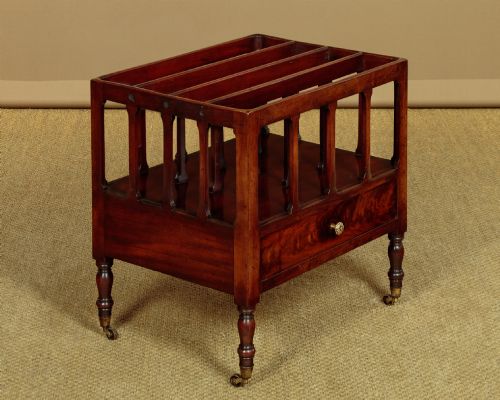
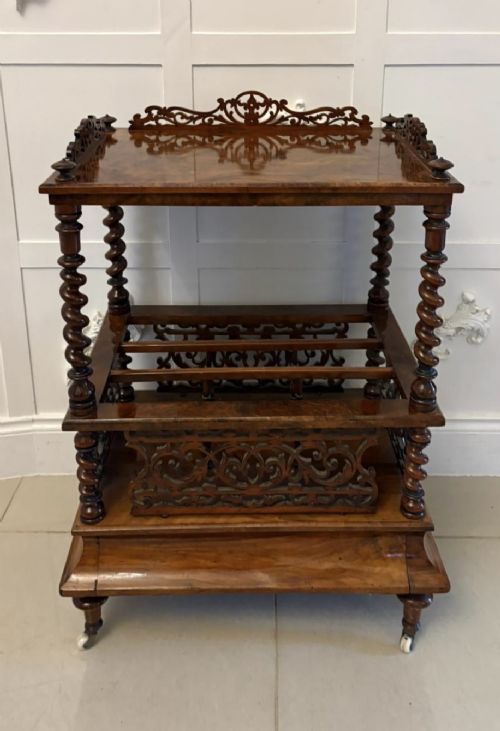
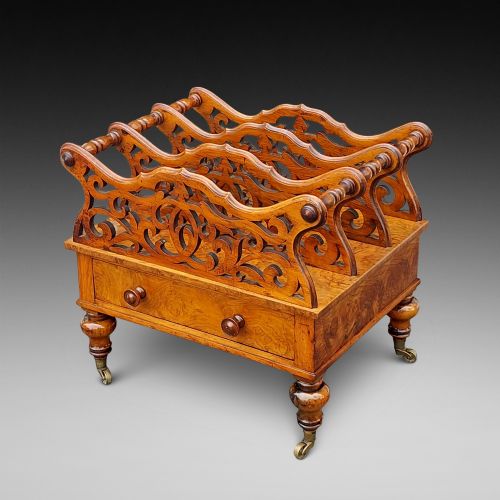
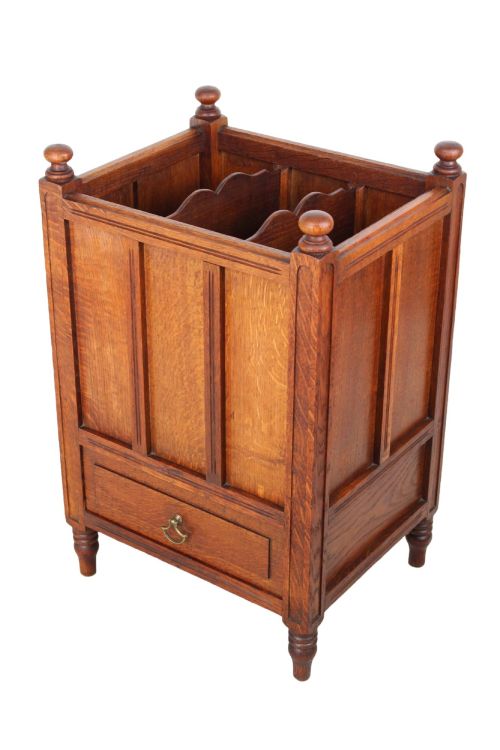
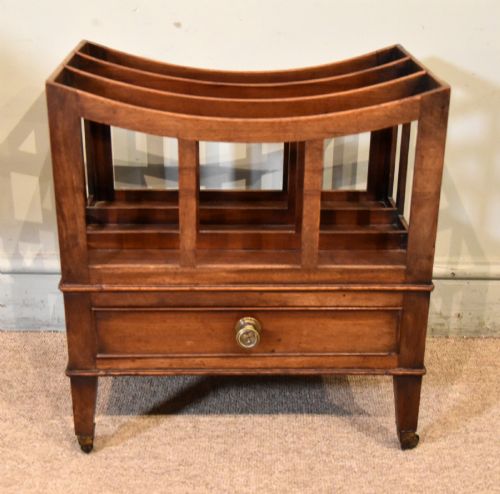
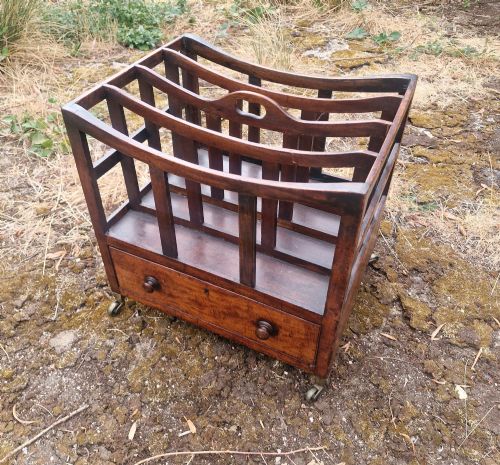
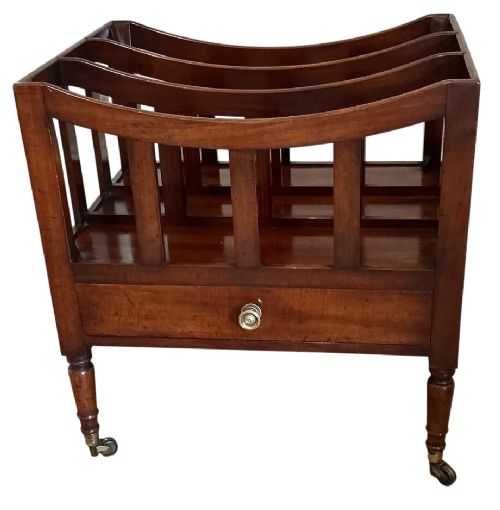
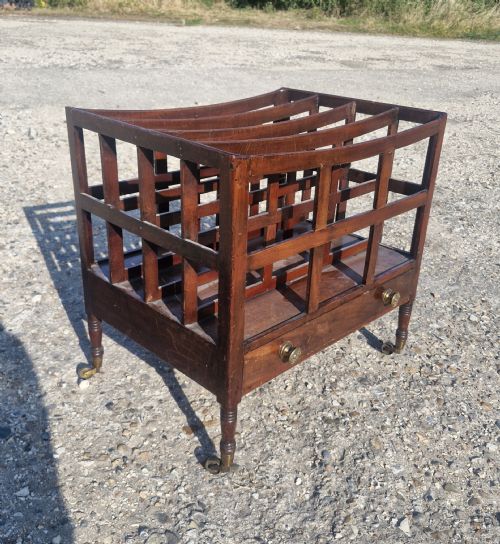
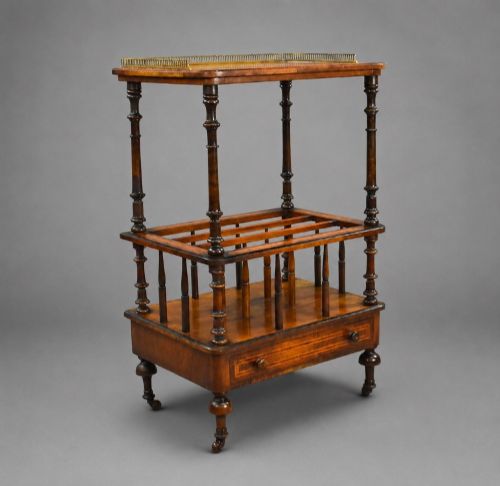
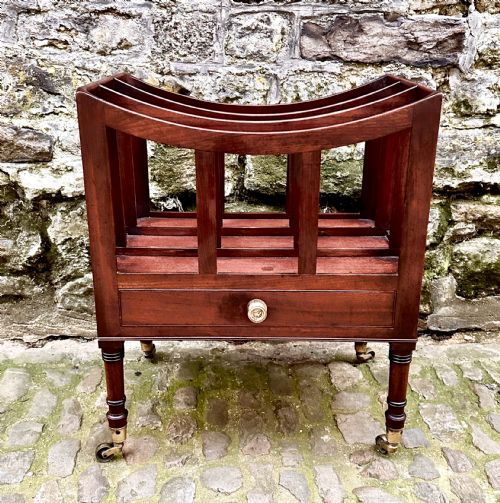
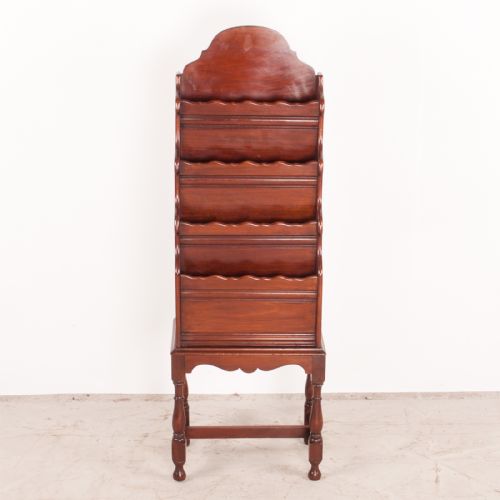
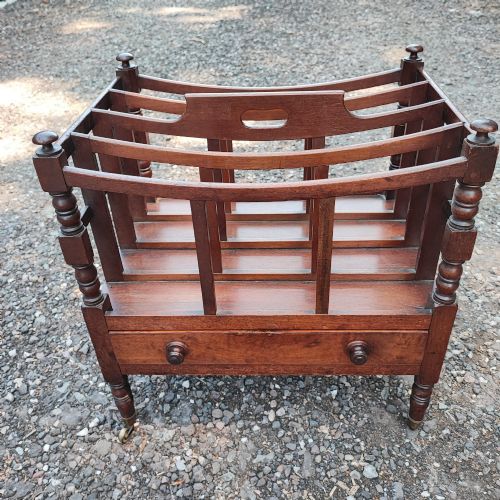
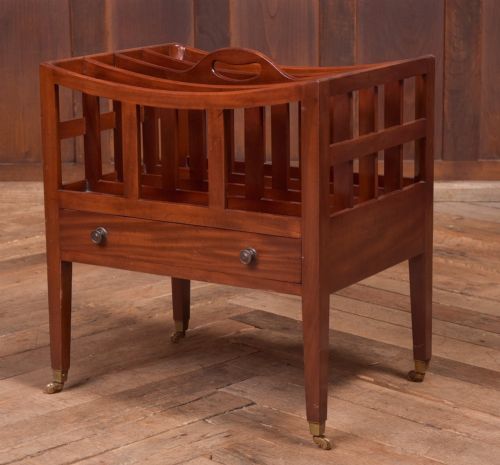
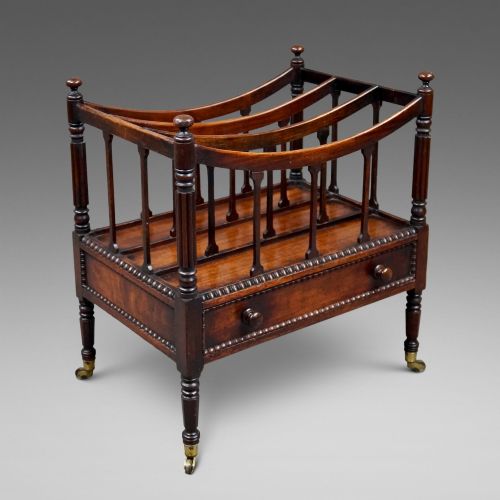
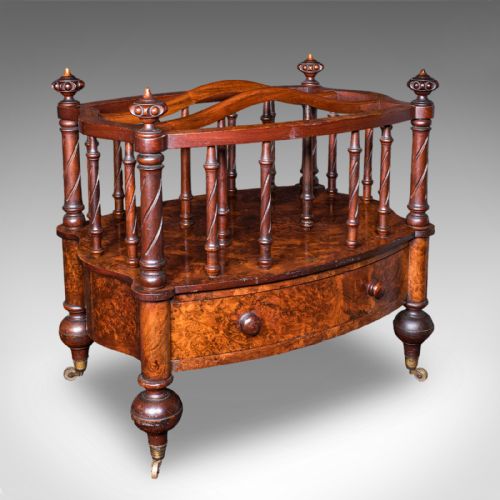
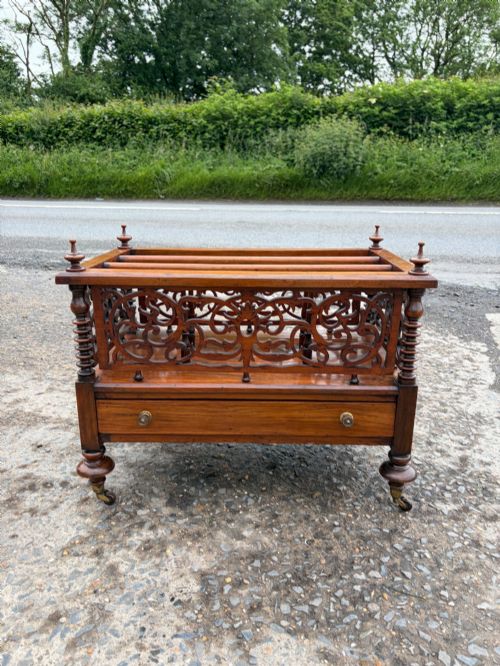
A wooden music canterbury stand holds scores and periodicals within partitioned dividers, bringing practical refinement to a parlour.
Wooden Music Canterbury Stand
A wooden music canterbury stand serves as a dedicated piece of furniture designed to organise sheet music, periodicals, and newspapers in domestic interiors. The pieces encountered on this page span from the Georgian and Regency eras through the Victorian and Edwardian periods, reflecting changing social habits in music-making and reading.
Most examples appear in forms such as traditional partitioned racks, combined magazine and music holders, or versatile occasional tables with integrated storage. Buyers frequently encounter variations in mahogany, burr walnut, and rosewood, often elevated on castors or turned legs for mobility around the room.
How they were made
Cabinet makers utilised dense hardwoods including mahogany, walnut, and rosewood to construct the structural framework and slatted divisions of each stand. Timber selection governed both the durability of the vertical partitions and the aesthetic finish of the visible surfaces.
Joinery techniques involved precise mortise and tenon construction for the frame, alongside delicate turning for legs and pillars. Brass castors, ceramic elements, and subtle inlay work frequently complemented the primary wood, adding structural mobility and decorative contrast.
Some nineteenth-century makers mounted these stands on castors so they could follow the pianist around the room.
What varies in quality
The degree of refinement in timber selection and cabinet work marks the distinction between standard items and superior examples. Figured veneers, such as burr walnut and Cuban mahogany, together with finely carved or inlaid details, indicate a higher grade of production.
Structural integrity of the slatted dividers and the smoothness of any integrated drawers or castors reveal the maker's original standard. Pieces retaining their original brass mounts and uncompromised timber patination command greater appreciation.
Henry Ogden & Son
The Wooden Music Canterbury Stand Glossary
- Canterbury
- A low, freestanding piece of furniture featuring partitioned uprights designed to hold sheet music, books, or newspapers. The form originated in the late eighteenth century and evolved through the Regency and Victorian periods.
- Whatnot
- An open set of slender shelves used for displaying ornaments, books, or small objects. In cabinet making, this term often pairs with canterbury when storage and display functions combine.
- Division
- One of the vertical partitions or slats forming the separate bays within a canterbury rack. These divisions support stacked scores or periodicals upright.
- Castor
- A small wheel mounted on a swivel assembly attached to the base of furniture feet. They allowed heavy stands to roll easily across carpets in nineteenth-century drawing rooms.
- Inlay
- A decorative technique where contrasting woods, brass, or other materials are set into the surface of the primary timber to form geometric or floral patterns.
Wooden Music Canterbury Stand: Frequently Asked Questions
How were canterburys used historically?
These stands kept sheet music near pianos and organised daily newspapers or magazines in sitting rooms. Their open partitions allowed musicians to quickly select scores during practice or performance.
Because they often featured castors, residents could easily wheel the stand across the room to wherever musicians gathered around an instrument.
How do I identify a Regency canterbury?
Regency canterburys often exhibit clean classical lines, boat-shaped frames, or elegant turned legs fitted with brass castors. Woods like rosewood and mahogany predominate during this period.
Maker details from this era frequently emphasise simple elegance, pillar supports, and sturdy partitions designed for heavy folios.
How do I care for antique walnut furniture?
Protect antique walnut surfaces by keeping them away from direct sunlight and maintaining stable room humidity. Gentle dusting with a dry, soft cloth preserves the original timber patination.
Avoid placing damp items directly onto the wood to prevent staining the polished veneer or damaging the historic finish.