
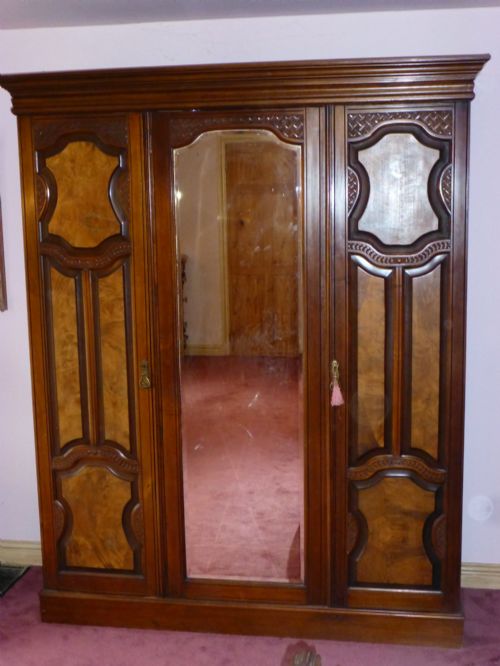
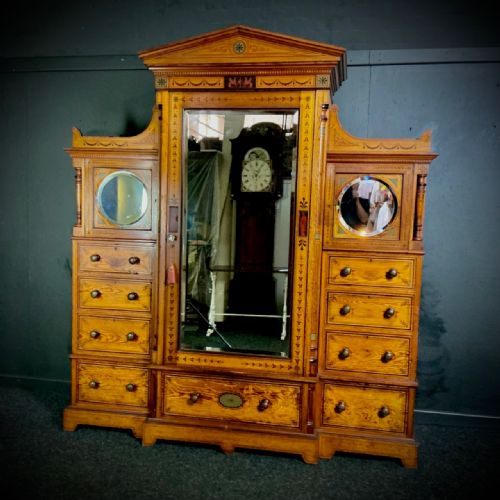
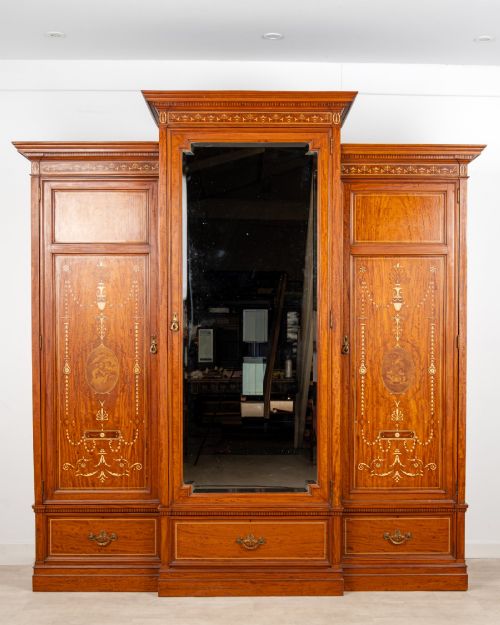
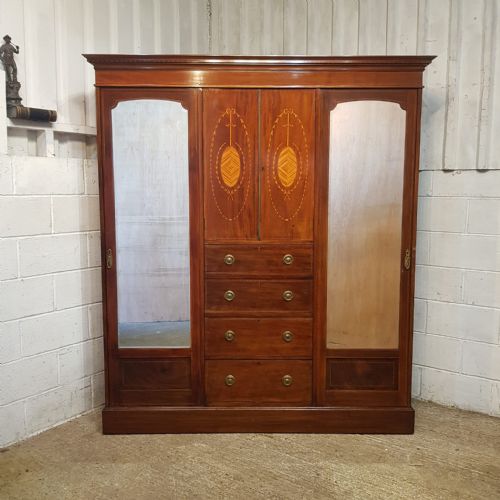

Wooden Mirrored Armoire
A wooden mirrored armoire offers generous proportions and practical hanging space, bringing substantial storage and reflective light into a bedroom.
Wooden Mirrored Armoire
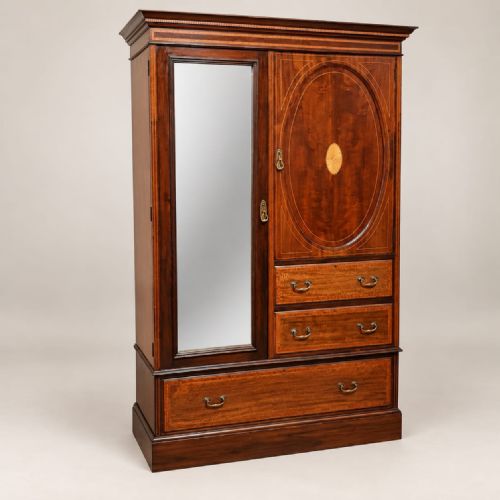
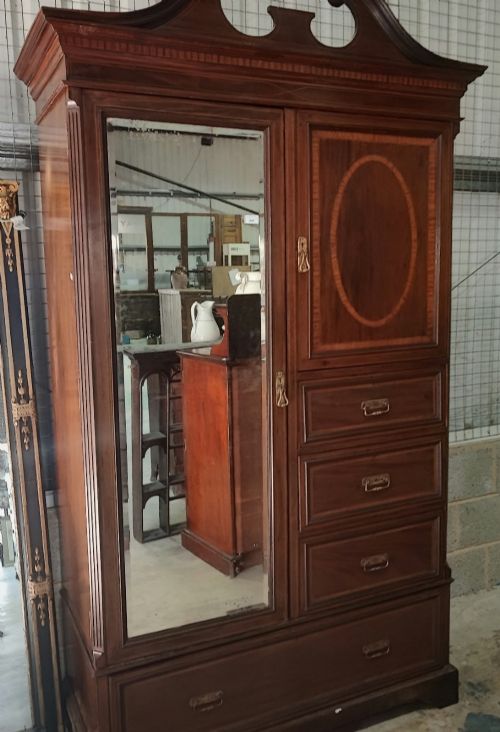
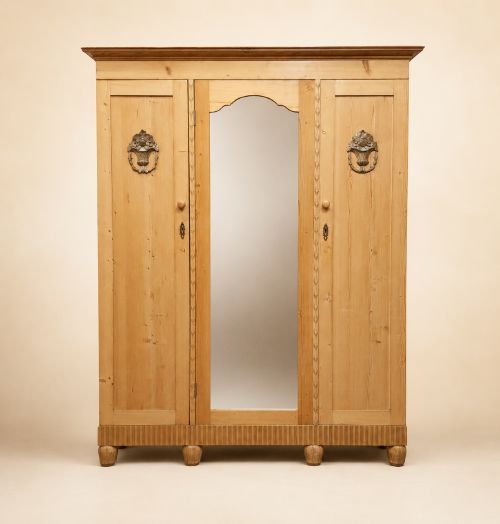
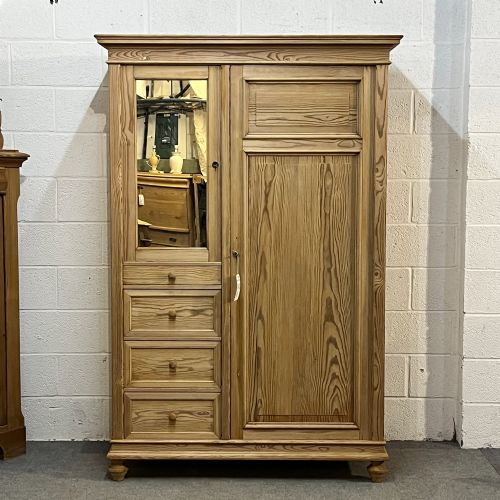
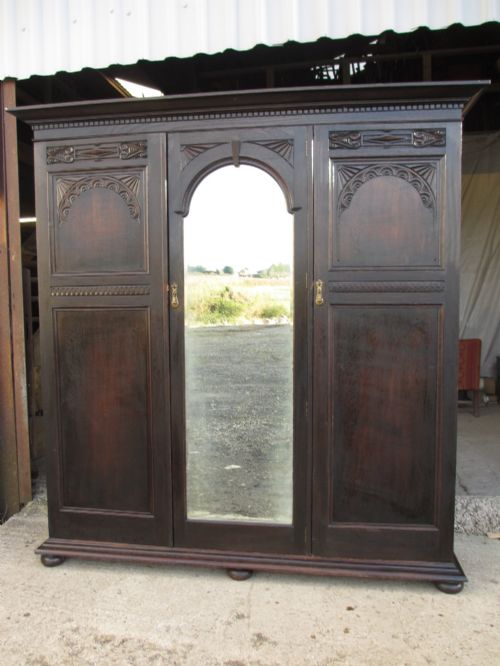
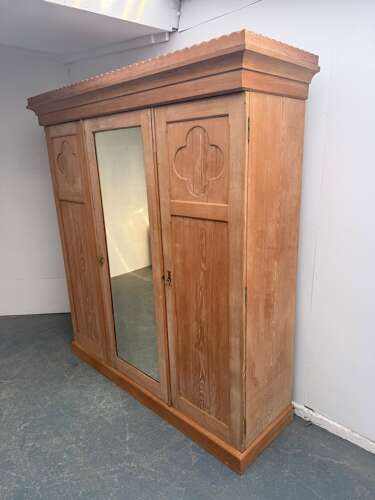
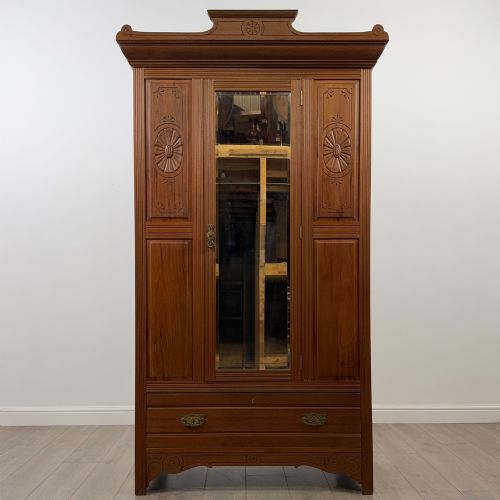
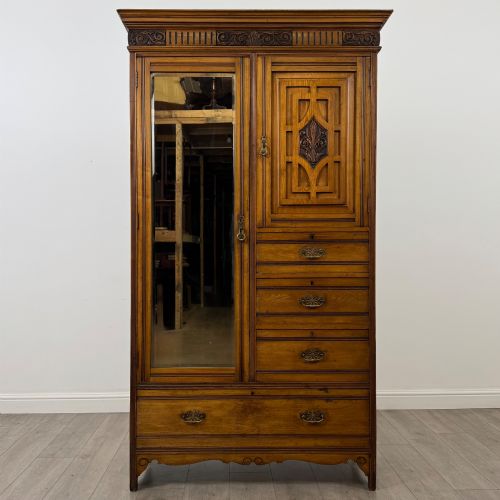
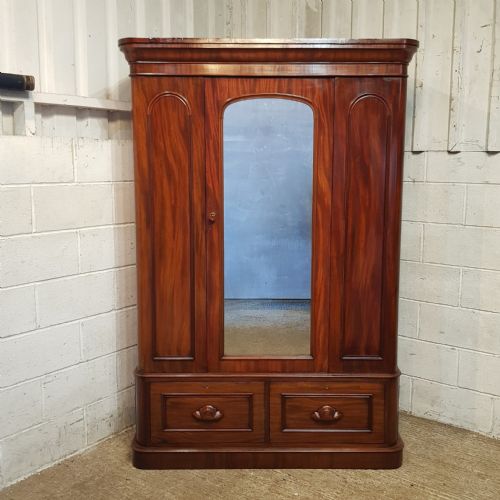
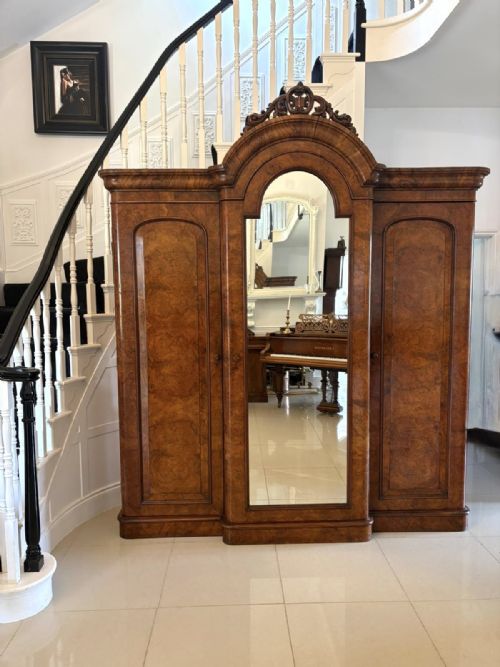
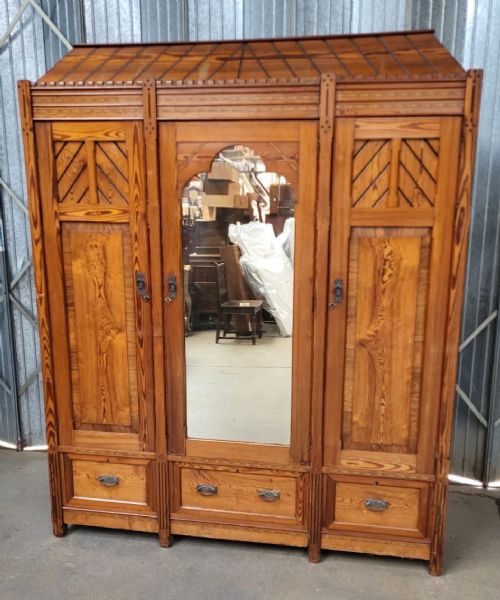
A wooden mirrored armoire primarily manifests as Victorian and Edwardian wardrobes, compactums, and triple door configurations spanning the nineteenth and early twentieth centuries.
Buyers encounter substantial pieces constructed from mahogany, walnut, burr walnut, oak, and ash, often incorporating fitted interior drawers and hanging compartments.
French regional examples also appear alongside British iterations, ranging from large breakfront designs down to miniature furniture and wall cabinets.
Materials and construction methods
Cabinet makers utilised solid timbers such as mahogany, oak, and pine for structural integrity, frequently applying figured veneers like burr walnut and satinwood to visible exterior panels.
Glass mirror plates were bevelled and set securely into large hinged doors, complemented by brass hardware, locks, and internal sliding linen trays.
Keep an eye out for miniature wooden mirrored armoires, created as master cabinet makers' scale models or elaborate nineteenth-century doll wardrobes.
Distinctions in construction and finish
Quality rests upon the selection of timber veneers, the precision of marquetry inlay, and the structural soundness of heavy panelled doors holding large mirror glass.
Superior examples exhibit fine hand-carving, original brass fittings, and sophisticated interior configurations such as combination compactum drawers rather than simple hanging space.
Edwards and Roberts·Holland and Sons·Maple and Co·Wylie Lochhead
The Wooden Mirrored Armoire Glossary
- Compactum
- A large fitted wardrobe containing a combination of hanging space, shelves, and internal drawers.
- Burr Walnut
- A highly prized wood veneer showing intricate, swirling grain patterns formed from tree growths.
- Breakfront
- A piece of furniture where the central section projects forward from the flanking outer sections.
- Aesthetic Movement
- A late nineteenth-century design style emphasising artistic visual qualities over heavy historic revivalism.
- Satinwood
- A durable, lustrous timber native to the tropics, frequently used for light-coloured decorative veneers.
Wooden Mirrored Armoire: Frequently Asked Questions
How do I fit a large wooden mirrored armoire?
Most of these large wardrobes dismantle into smaller component parts, including a separate cornice, base, and side panels, allowing them to be moved between rooms.
Professional assembly ensures the frame remains square so the heavy mirrored doors swing correctly without catching.
What is the difference between a wardrobe and an armoire?
Historically, armoires originated on the continent as large cupboards for storing arms or garments, while British wardrobes evolved into dedicated clothes closets.
In modern usage, the terms overlap significantly when describing tall wooden storage furniture featuring mirrored doors.
How do I date an Edwardian mirrored wardrobe?
Edwardian pieces typically date between nineteen hundred and nineteen ten, featuring lighter timbers such as satinwood, ash, and inlaid mahogany.
Stylistic cues often include softer art nouveau carving or neoclassical satinwood painted motifs rather than the dense, dark mass of earlier Victorian furniture.
Can the mirror glass be replaced if damaged?
Original bevelled mirror glass adds authenticity, but specialist restorers can cut and fit replacement glass into antique frames when necessary.
Retaining the original plate glass with its subtle imperfections helps preserve the historical character of the piece.