




Wooden Millinery Stand
These wooden millinery stand examples are practical workshop tools and display pieces that bring genuine workshop character to a room.
Wooden Millinery Stand
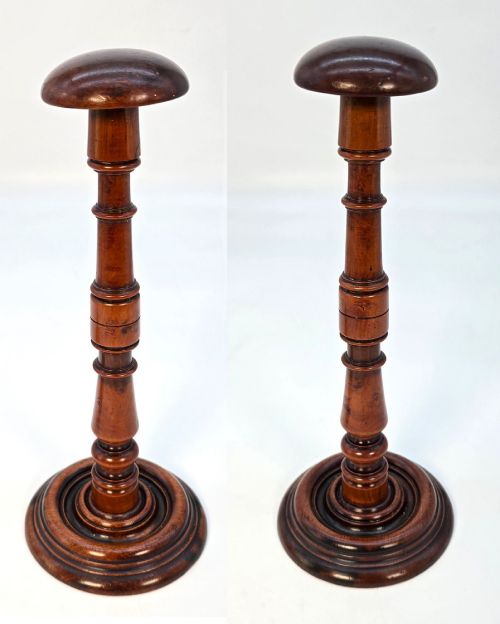
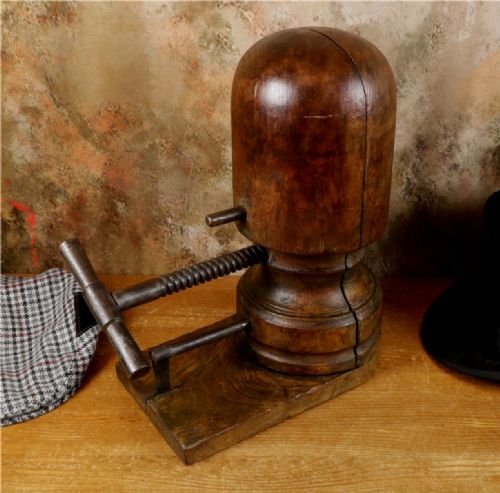
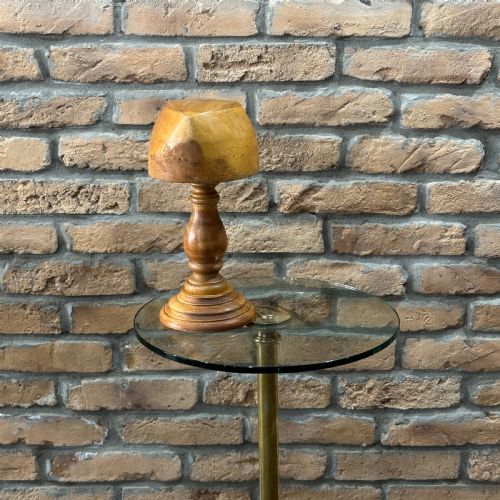
When you search for a wooden millinery stand, you are looking at functional objects once used for shaping, sizing, and displaying hats and wigs. The selection includes hat blocks, hat stretchers, hat stands, wig display stands, and carved folk art style milliner heads.
The versions you are most likely to meet on this page range from Georgian mahogany wig stands and 19th century French fruitwood forms to solid beech 1920s hat blocks and golden oak Arts and Crafts shop display stands. These pieces span periods from the Georgian era through Victorian industrial, traditional haberdashery, and 1920s Art Deco styles.
How they were made
These pieces rely on durable timbers suited to heavy workshop use and repeated contact with damp felt and straw. Makers utilised wood, oak, fruitwood, walnut, beech, mahogany, and hardwood, often combining them with iron or cast iron fittings.
Construction techniques include hand carving, turning, and joinery designed for utility. Surviving examples show the honest marks of daily work in hatting workshops and millinery shops.
Current listings feature items from the Georgian period, the 19th century, and the 1920s, constructed in oak, walnut, fruitwood, beech, and mahogany.
What varies in quality
Quality in a wooden millinery stand rests on the depth of the carving, the choice of timber, and the integrity of the form. Sculptural pieces like carved folk art style milliner heads show artistic detail beyond standard production items.
The character of the surface finish defines the appeal of these objects. Original workshop wear, patination from handling, and honest timber grain distinguish pieces that served a working trade from decorative reproductions.
The Wooden Millinery Stand Glossary
- Hat block
- A solid form carved from wood over which a hat is shaped and blocked during manufacture. These often reflect specific period silhouettes.
- Millinery form
- A shaped wooden block or head used in the creation and display of hats. They served both as working tools and shop displays.
- Hat stretcher
- A mechanical tool utilised by hatters and outfitters to adjust the size of a hat. They feature wooden expanding sections operated by threaded metal rods or handles.
- Haberdashery
- Items associated with the trade of selling hats, small wares, and sewing materials. Pieces from this context were built for commercial shop use.
Wooden Millinery Stand: Frequently Asked Questions
What is a wooden millinery stand?
A wooden millinery stand is a vintage workshop tool or display piece originally used by hatters and wig makers. They include carved heads, hat blocks, and adjustable stretchers.
These items were essential equipment in nineteenth and early twentieth century hat shops and workrooms for shaping, sizing, and exhibiting headwear.
How were these stands used?
Milliners utilised these stands to hold damp felt or straw securely while shaping brims and crowns. Hat stretchers were used inside finished hats to increase or adjust the inner circumference.
Beyond the workshop, merchants employed them on shop counters and in windows to display finished millinery to customers.
How do I date a hat block?
Dating relies on timber types, construction methods, and the style of the form which often mirrors period hat silhouettes. Georgian and nineteenth century pieces frequently feature dense hardwoods like mahogany and fruitwood.
Later items from the 1920s often utilise solid beech or oak in distinct Art Deco or Arts and Crafts aesthetic forms.
Can I use these for display?
These pieces suit modern interior display for hats, wigs, scarves, and accessories in domestic or retail settings. Their sculptural wooden forms bring historical workshop character into a room.
They require no special care beyond stable indoor placement away from excessive moisture and direct heat sources.