

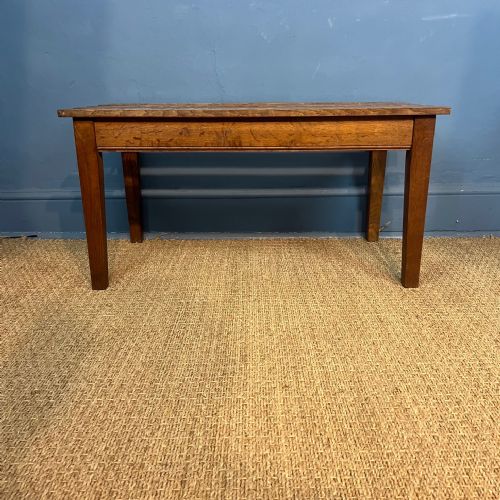
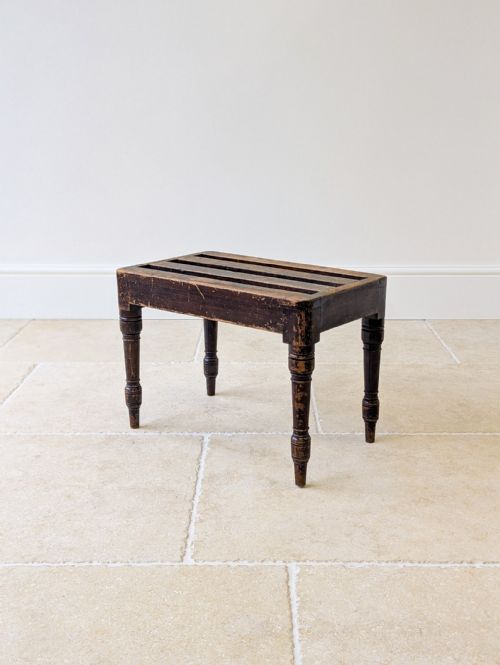
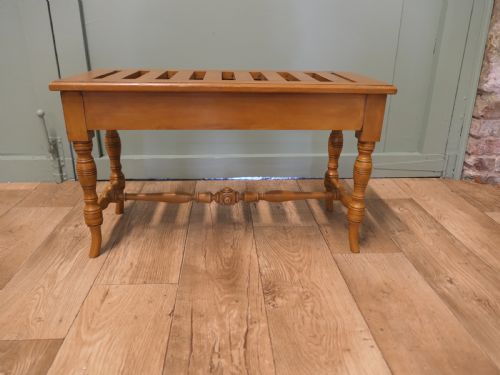
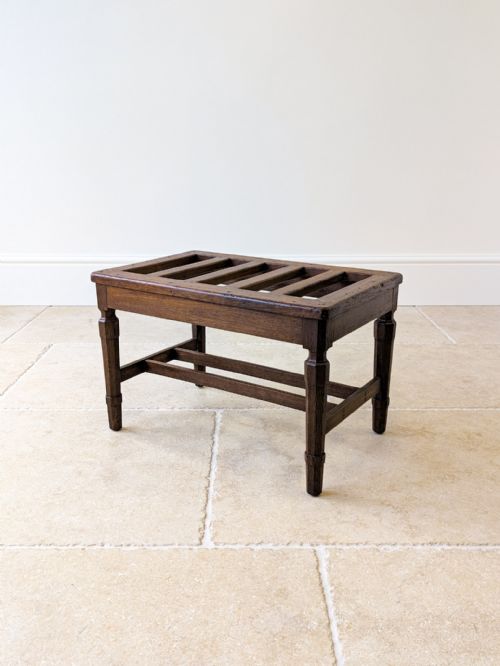

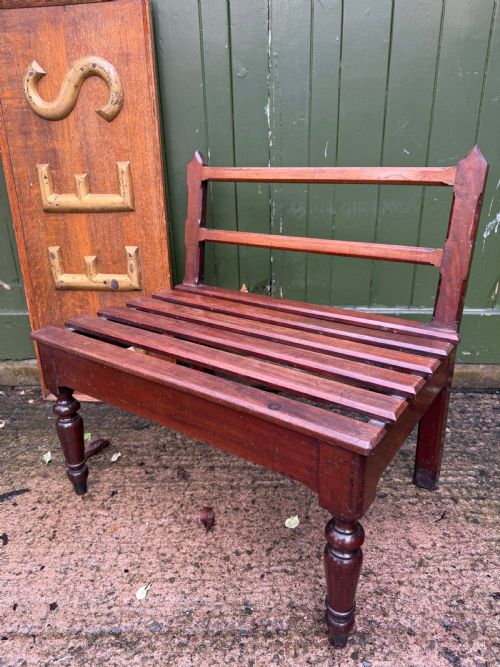


Wooden Luggage Benches
These wooden luggage benches offer a practical surface for cases and guest rooms alike, crafted from honest timbers like oak and mahogany.
Wooden Luggage Benches
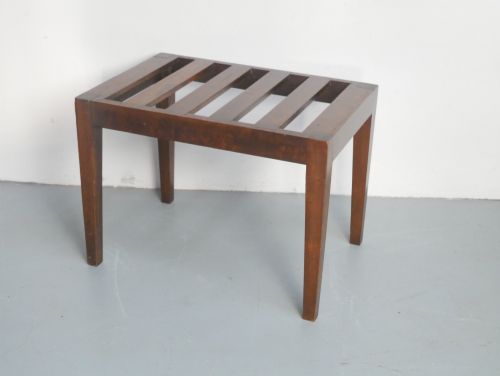
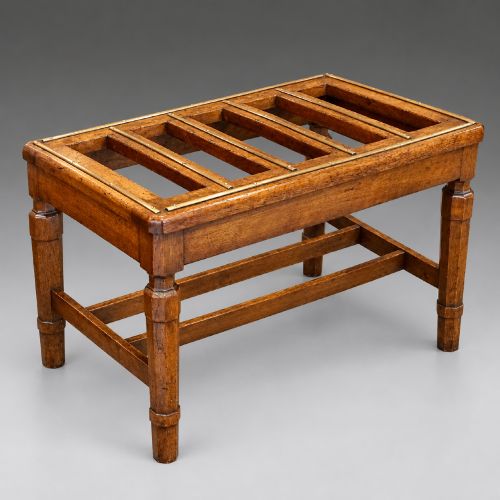
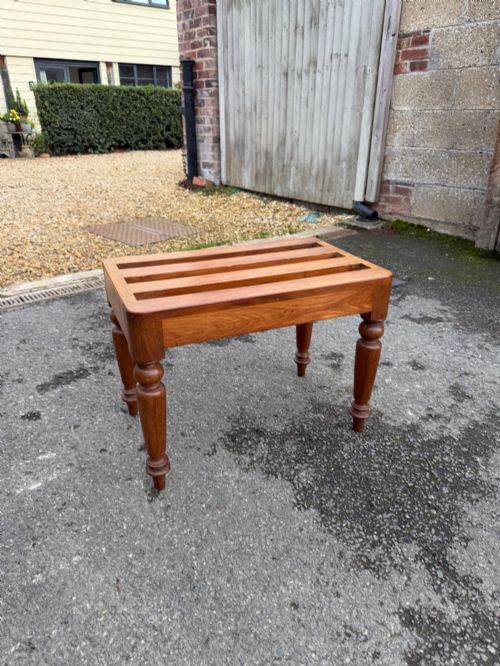
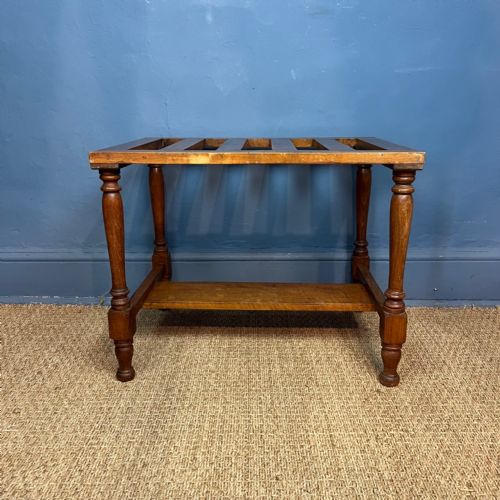
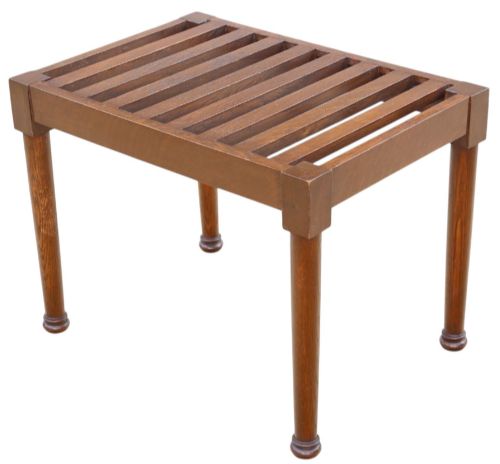
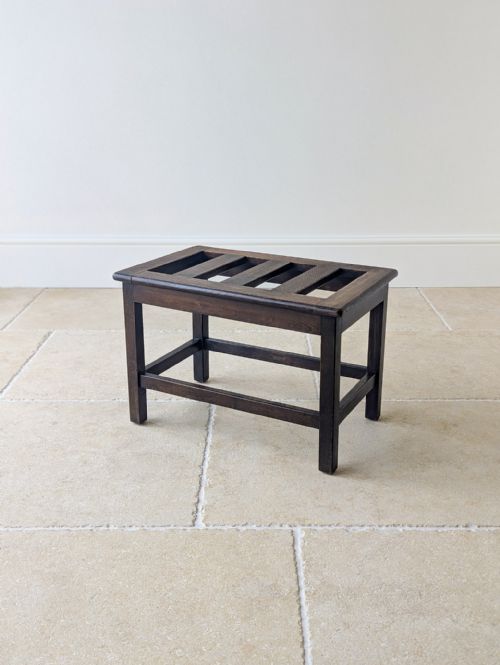
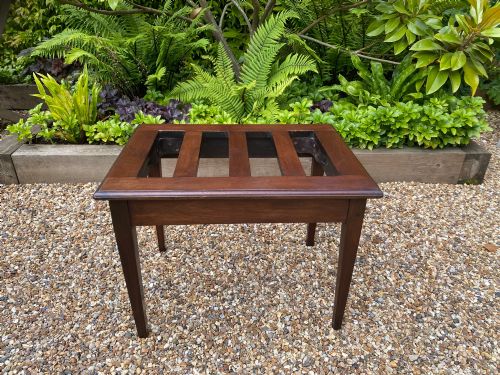
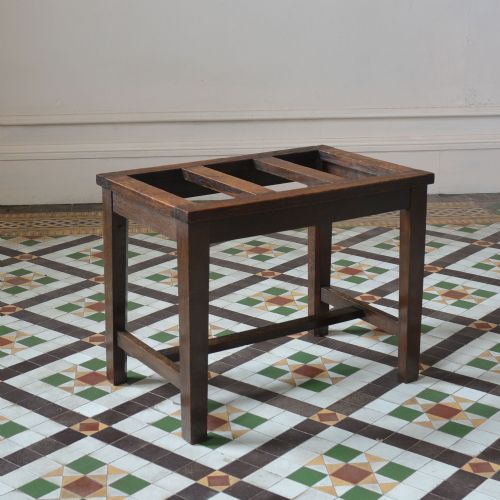
Wooden luggage benches take the form of sturdy stands and racks designed to hold travel cases at a convenient height, sparing guests from bending to the floor. These pieces span the Victorian and Edwardian eras alongside the early twentieth century, reflecting the domestic routines of country houses and hotels.
The most common version met on this page is the oak luggage stand, often featuring slat tops and folding or fixed legs. Examples range from simple utilitarian ash and beech frames to deeper mahogany and yew wood proportions equipped with raised rear upstands.
How they were made
Construction relies heavily on durable hardwoods such as oak, mahogany, and beech, joined to withstand the weight of heavy travel trunks. Secondary materials like brass fittings and iron brackets appear on specific pieces to reinforce joints and folding mechanisms.
Wood surfaces receive various finishes including traditional polishing, staining, and occasional painted pine treatments. Makers also employed carving on Edwardian uprights, while simpler frames kept the focus on straightforward slat construction.
Wooden Luggage Benches Retail Price Guide 2026
Typical asking prices for wooden luggage benches among the pieces listed under this phrase on Sellingantiques today, from the lower quarter to the upper quarter. They describe what is for sale here now, not the wider market.
Listings feature timbers including oak, mahogany, beech, ash, yew, and pine, alongside metal accents in brass and iron.
What varies in quality
The distinction between standard utility items and finer pieces lies in the choice of timber selection and the refinement of the joinery. Dense grain in quartersawn oak or rich figuring in mahogany denotes a higher grade of manufacture intended for prominent guest quarters.
Subtleties such as raised rear upstands, turned legs, and maker signatures elevate certain examples above basic hotel or domestic furniture. The rigidity of the frame and the quality of the original brass hardware further separate ordinary workshop output from superior pieces.
Brown and Lamont·Beatty Bros Fergus Canada·Waring and Gillow
The Wooden Luggage Benches Glossary
- Upstand
- A raised barrier at the rear of a luggage stand designed to prevent bags from sliding backward against walls. This feature appears on deeper proportions.
- Luggage rack
- An alternative term for a stand, usually comprising a slatted wooden top set on folding or rigid legs. These were standard bedroom furniture in country houses.
- Slat top
- A surface made from parallel strips of wood spaced apart to reduce weight while supporting heavy cases. Oak and mahogany are typical timber choices for these slats.
- Country-house style
- A robust aesthetic focused on practical utility and durable timbers like oak and ash. Pieces in this style were built for heavy daily use in large estates.
Wooden Luggage Benches: Frequently Asked Questions
What were wooden luggage benches used for?
These stands provided a clean, elevated surface for guests to unpack suitcases in bedrooms without placing heavy bags on beds or upholstery.
Hotels and large country houses utilised them extensively to manage guest luggage efficiently and protect floor coverings.
How do I care for a wooden luggage bench?
Keep the wood nourished with appropriate wax or polish and avoid placing damp items directly onto the dry timber slats.
Position the stand away from direct heat sources to prevent the joints from drying out or the wood from splitting.
Can these stands support heavy modern suitcases?
Most period stands are constructed from robust hardwoods like oak and mahogany, designed to bear the weight of heavy nineteenth-century leather trunks.
Check that the structural joints and any folding braces remain tight before loading modern luggage onto the rack.
How do I distinguish Victorian from Edwardian stands?
Victorian examples tend to display heavier proportions, darker finishes, and utilitarian construction in oak, mahogany, or ash.
Edwardian pieces often introduce lighter golden oak tones, simpler lines, or subtle decorative carvings typical of the Arts and Crafts influence.