


Wooden Low Chairs
Wooden low chairs are low-slung vernacular seats built for fireside ease, and these pieces span country Windsors and Victorian nursing chairs.
Wooden Low Chairs
Wooden low chairs encompass a diverse range of vernacular seating designed with a reduced seat height for comfort near the hearth or for specific domestic tasks. When searching for wooden low chairs, buyers encounter everything from robust country armchairs to delicate bedroom seating.
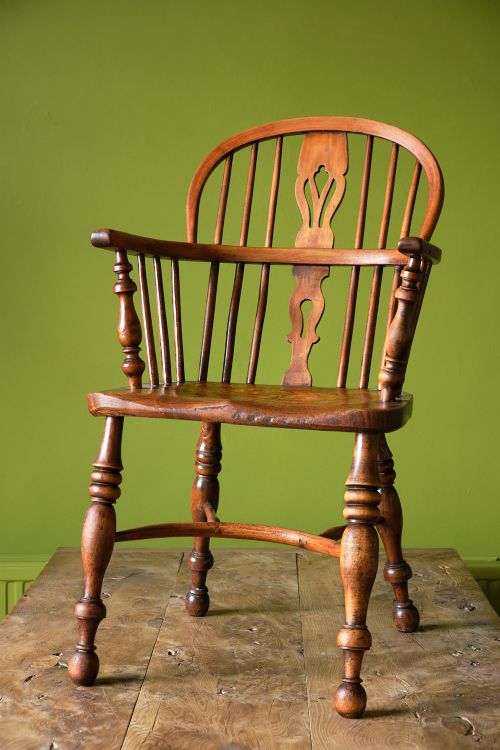
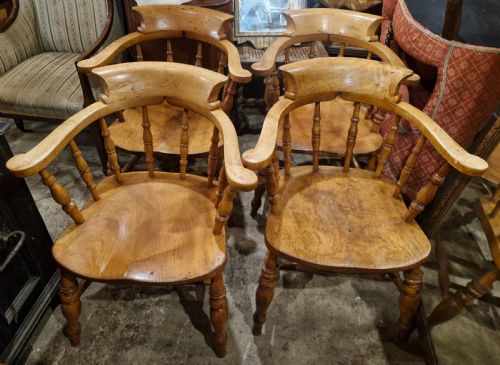
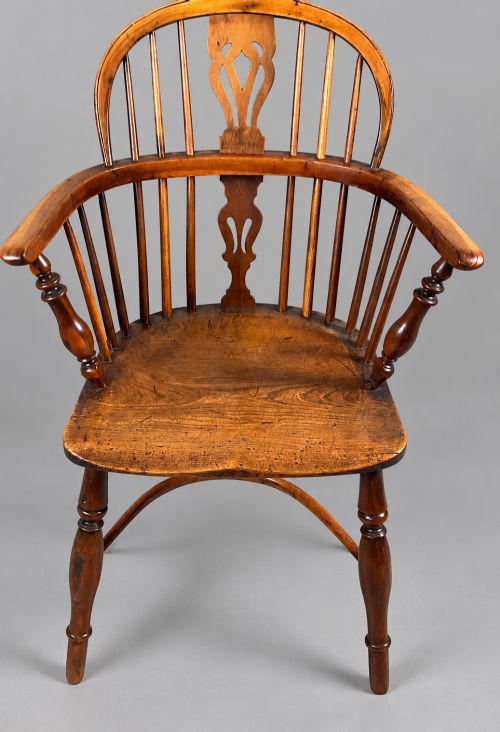
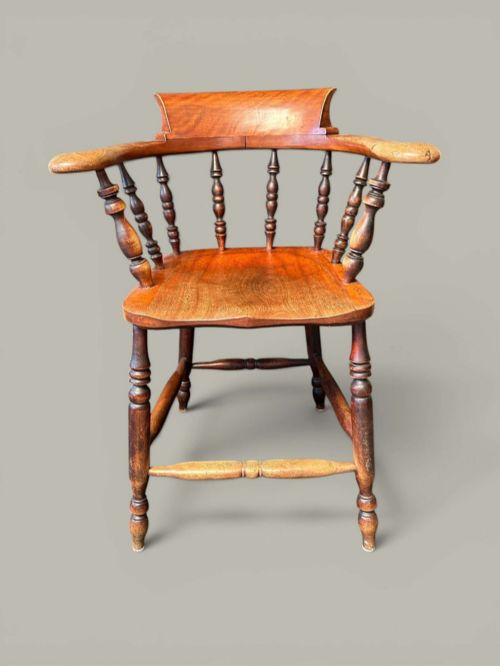
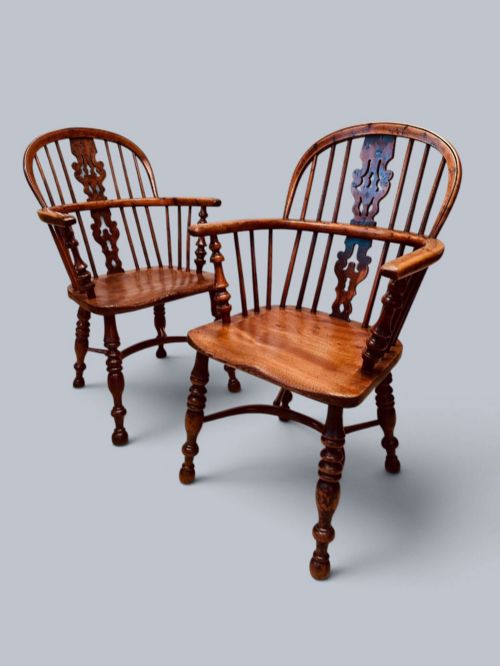
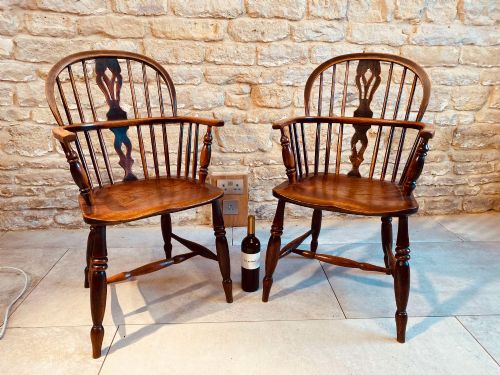
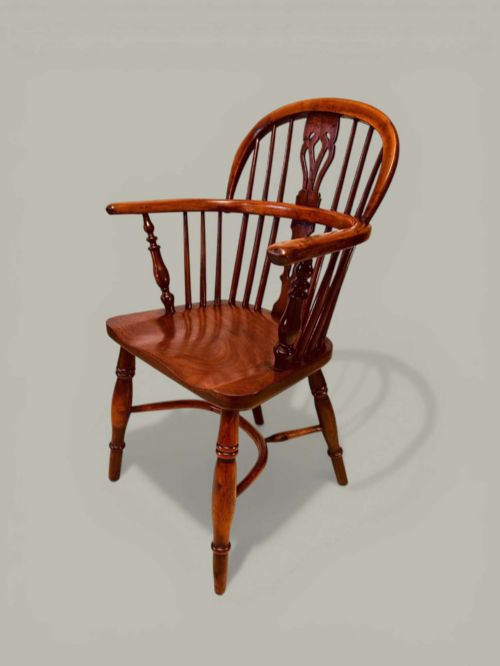
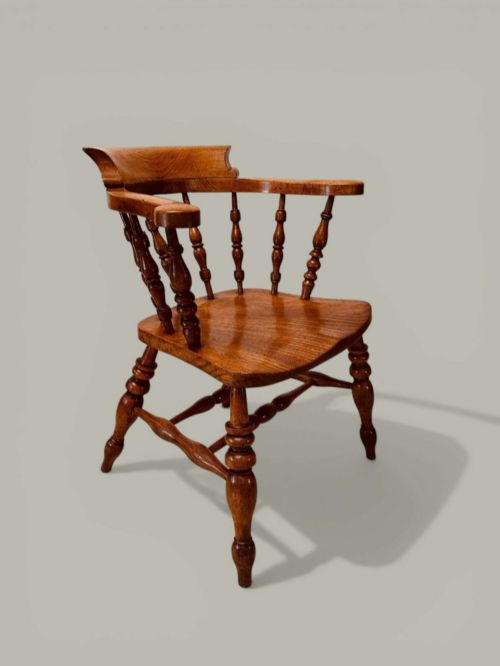
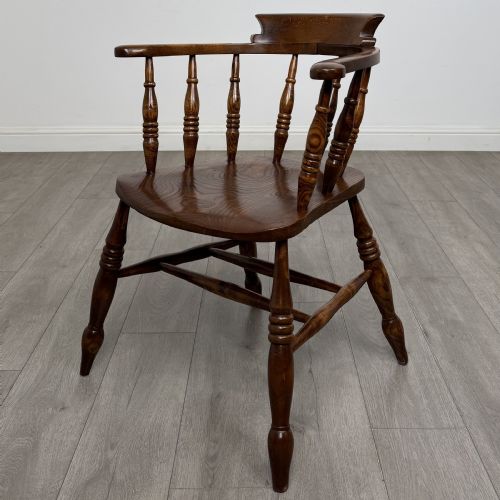
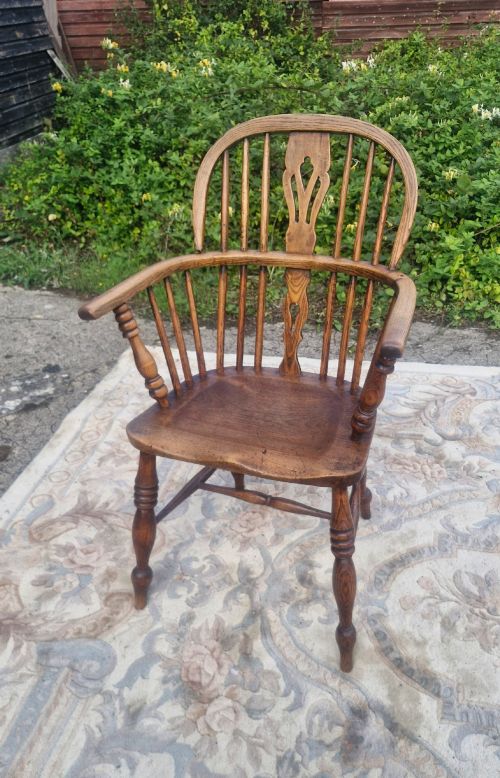
The selections on this page lean heavily towards English country traditions, featuring low back Windsor armchairs, smoker's bows, and captain's chairs. These forms originate from regional workshops and provincial makers spanning the eighteenth, nineteenth, and early twentieth centuries.
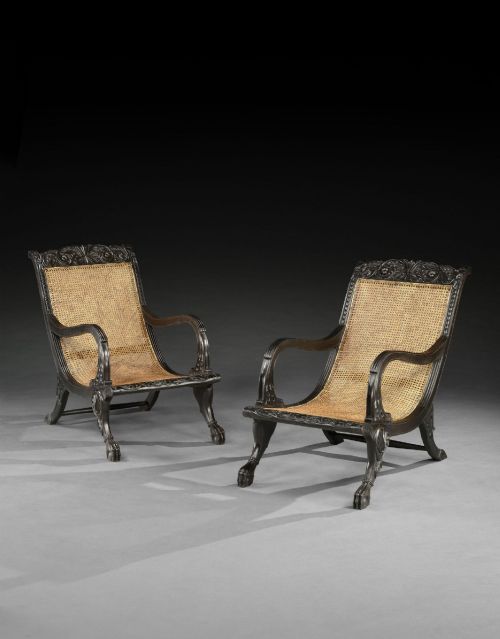
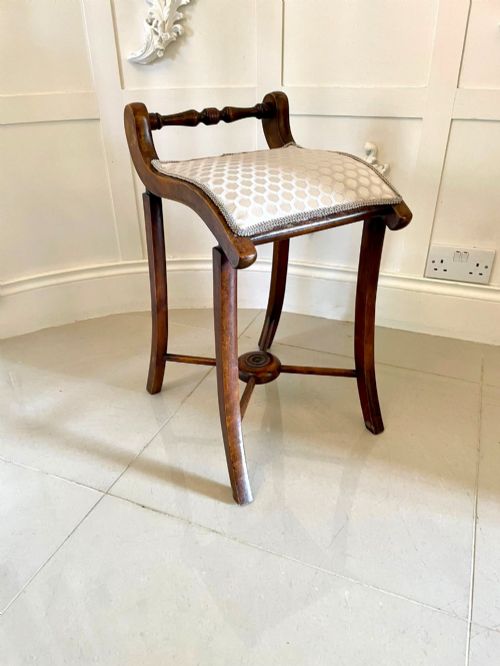
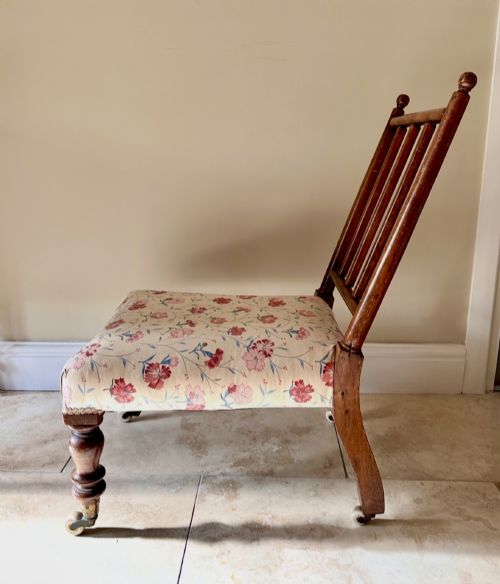
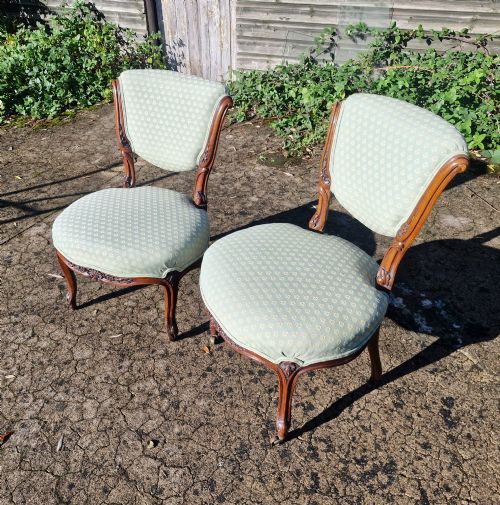
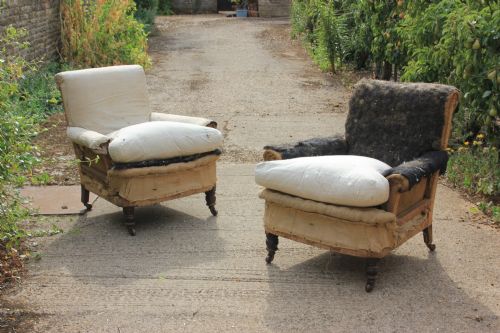
Beyond the kitchen and parlour seating, the category includes upholstered Victorian nursing chairs, music chairs, and slipper chairs. These alternative forms bring lower seating profiles into more formal reception rooms and private chambers.
How wooden low chairs were made
Construction relies heavily on traditional timber combinations, pairing sturdy elm seats with ash, beech, or yew for spindles, backs, and legs. This multi-wood approach utilises the specific properties of each timber, such as the split-resistance of elm for solid saddles and the flexibility of ash or yew for steam-bent hoops.
Many provincial examples utilise Windsor techniques, where turned legs and back spindles are wedged directly into a thick, sculpted wooden seat. Other variations incorporate upholstery over frames of walnut, beech, or ebonised wood, sometimes accented with brass details or rush seating.
Wooden Low Chairs Retail Price Guide 2026
Typical asking prices for wooden low chairs among the pieces listed under this phrase on Sellingantiques today, from the lower quarter to the upper quarter. They describe what is for sale here now, not the wider market.
Some nineteenth-century smoker's bows were built with extra-generous seat clearances to accommodate bulky Victorian waistcoats.
What varies in quality
Quality in these pieces is dictated by the integrity of the timber selection, the depth of the sculpted seat, and the crispness of any turned components. A richly figured yew grain or a well-figured burr back splat elevates an ordinary frame into a superior example.
Structural honesty and original patination separate ordinary utilitarian furniture from exceptional survivals. Untouched surfaces displaying deep, aged patinas carry greater visual weight than heavily stripped or over-restored timber.
Rockley maker·Gabbitass Worksop maker·Liberty Morris & Co·Prior
The Wooden Low Chairs Glossary
- Windsor chair
- A chair built with a solid wooden seat into which the legs and back elements are dowelled directly. These sturdy forms often feature steam-bent bows and spindle backs.
- Smoker's bow
- A low-backed Windsor variant featuring a continuous curved arm rail supported by turned spindles. They were common in inns, offices, and country homes.
- Nursing chair
- A low-seated upholstered chair designed for comfort during childcare. Their reduced height allowed the sitter to tend to infants easily.
- Slipper chair
- An upholstered bedroom chair characterised by its low seat. They originated for ladies' dressing rooms to assist with footwear.
- Spindle-back
- A chair back constructed from multiple slender, turned wooden rods. This method provides lightweight strength to the upper frame.
Wooden Low Chairs: Frequently Asked Questions
What are wooden low chairs?
Wooden low chairs are traditional seats built with a reduced height for fireside comfort or specific domestic tasks.
They include country Windsor armchairs, smoker's bows, and low-slung upholstered bedroom chairs from various historical periods.
How were wooden low chairs used?
These pieces were placed near fireplaces, in parlours, or in bedrooms for casual seating, nursing, or dressing.
Their lower profiles provided practicality and ease of movement in domestic spaces.
Which woods are most common?
Elm is frequently used for solid, contoured seats due to its resistance to splitting under stress.
Ash, beech, and yew appear regularly in the turned legs, spindles, and bentwood hoops.
How do I date a wooden low chair?
Dating relies on identifying regional vernacular styles, tool marks, timber ageing, and structural construction methods.
Nineteenth-century examples often combine machine-turned components with hand-finished elements, whereas earlier pieces show more rustic hand-tooling.